Mercedes Benz SSK Rebuild

Highlights
Data & Facts
This Automobile
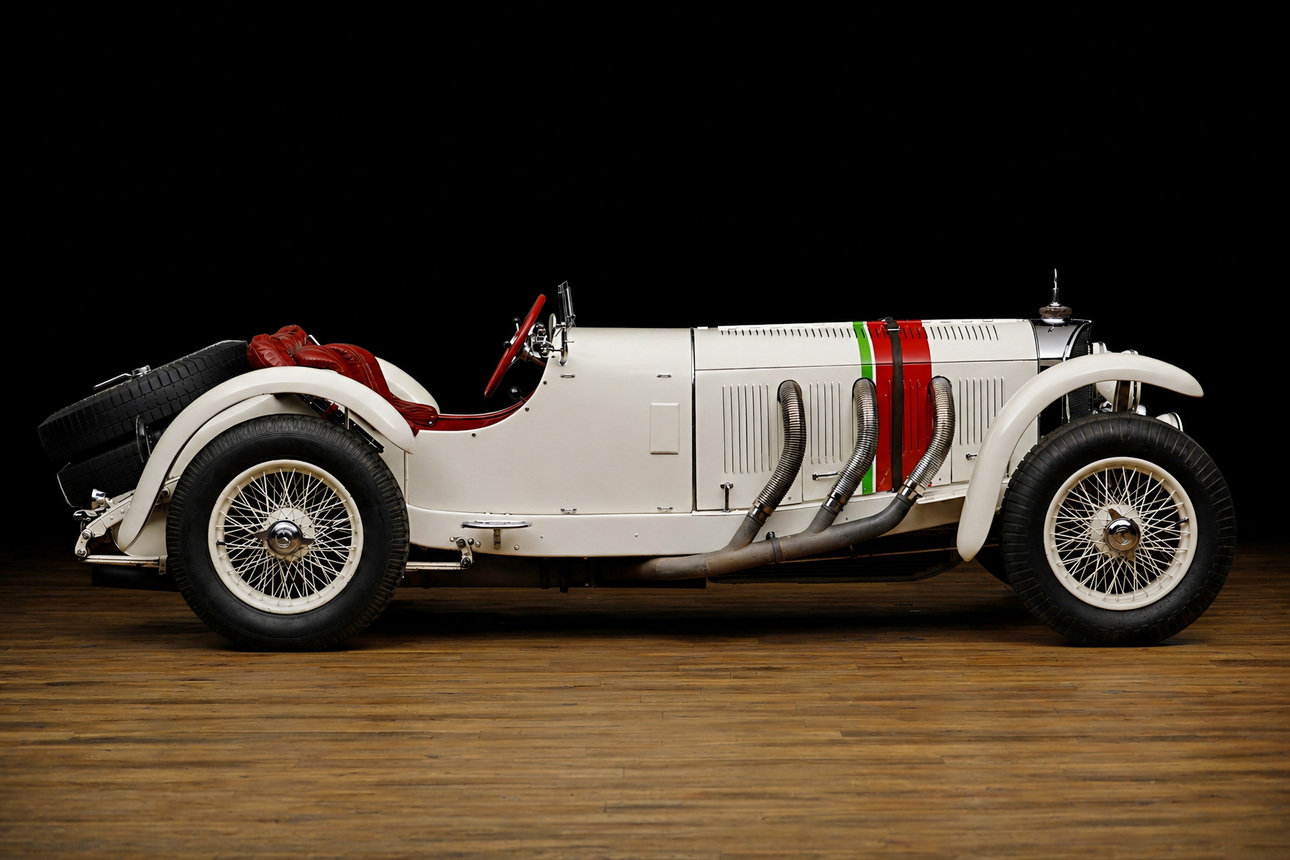
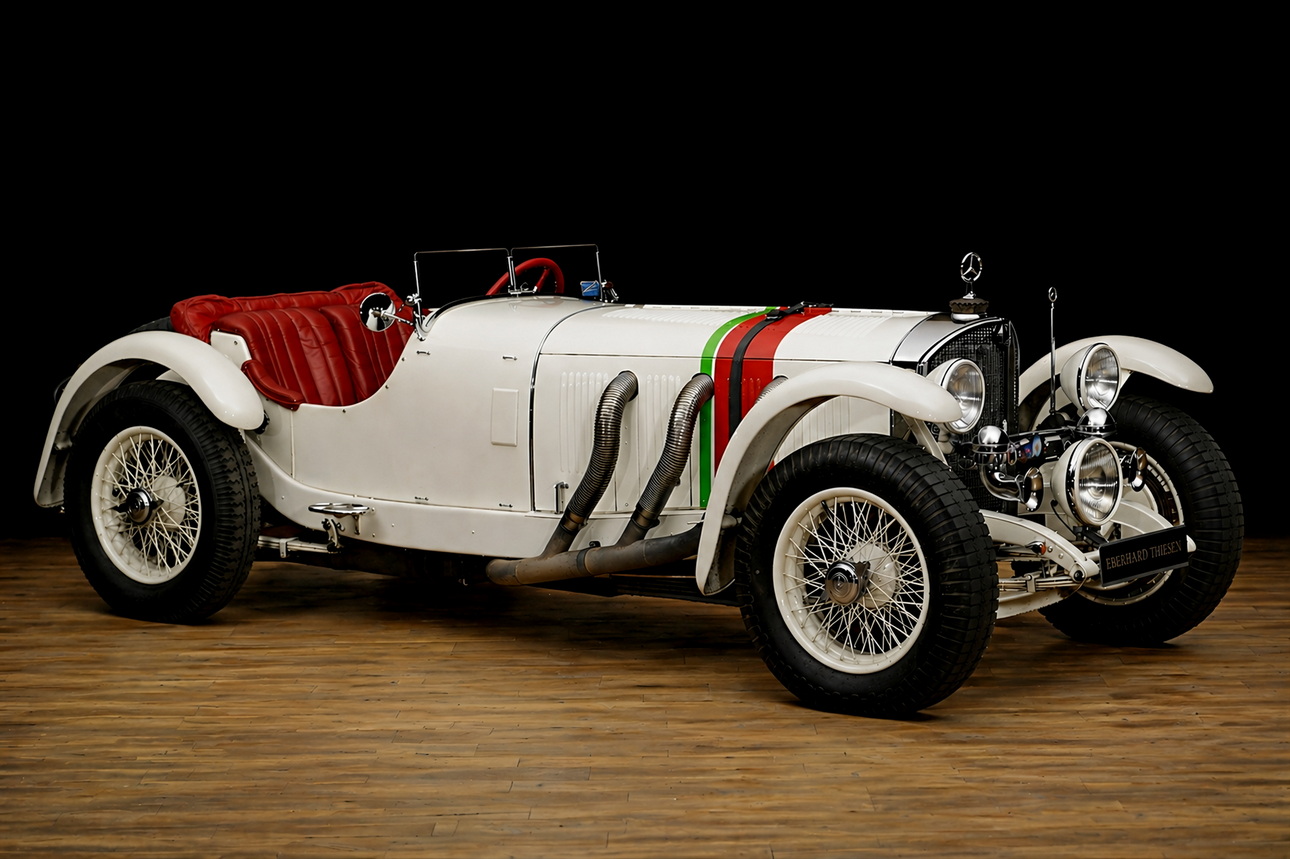
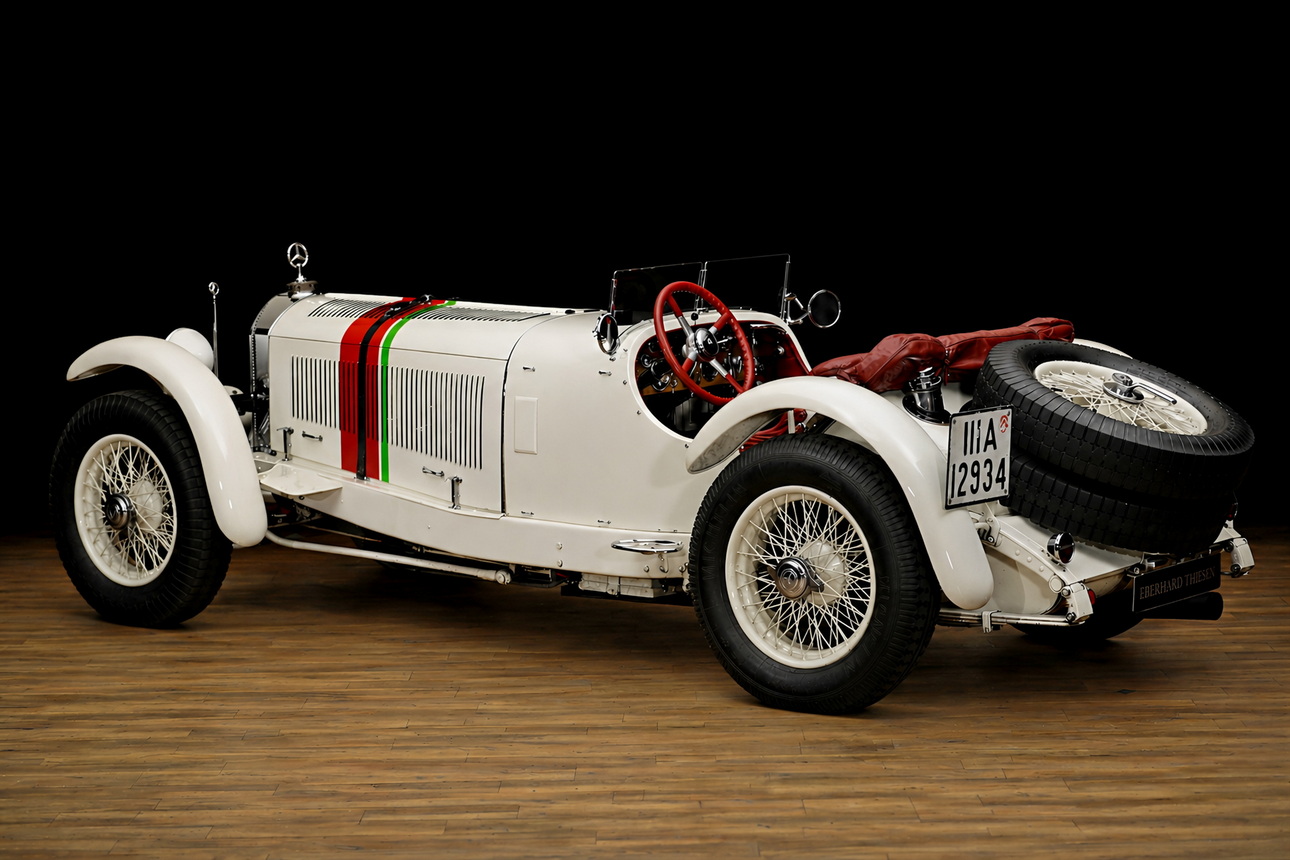
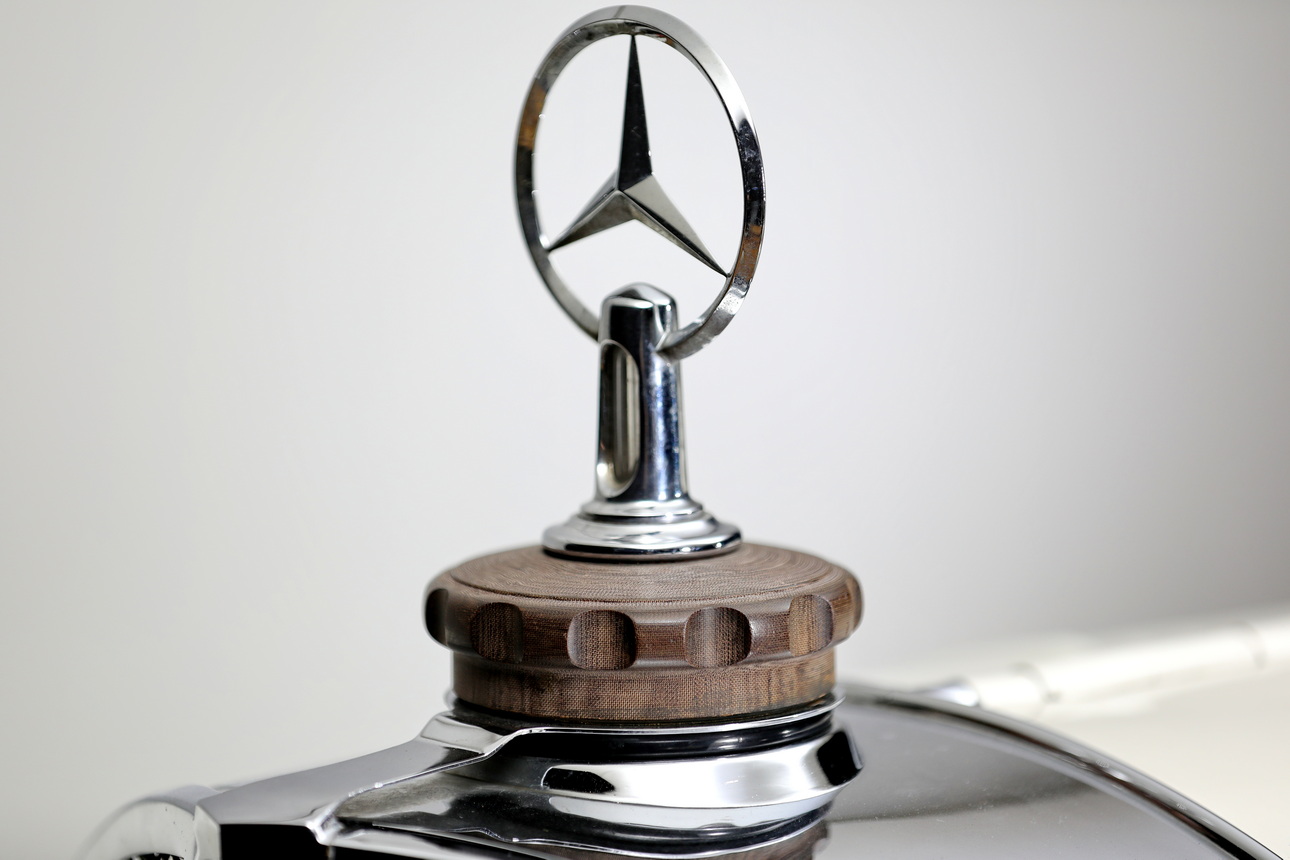
The legendary Mercedes-Benz SSK (Super Sport Kurz) was and remains one of the most prestigious models ever built by the brand. The six-cylinder inline engine with a displacement of 7,065 cm³ – designed by Ferdinand Porsche – delivered between 140 and 180 hp depending on the version, and with the Roots supercharger activated, an outstanding 200 to 250 hp. Speeds of around 200 km/h were only possible for a few (racing) sports cars at the time. Thus, the SSK (and SSKL), piloted by drivers such as Rudolf Caracciola and Manfred von Brauchitsch, secured international victories such as at the 1931 Mille Miglia and in numerous hill climbs.
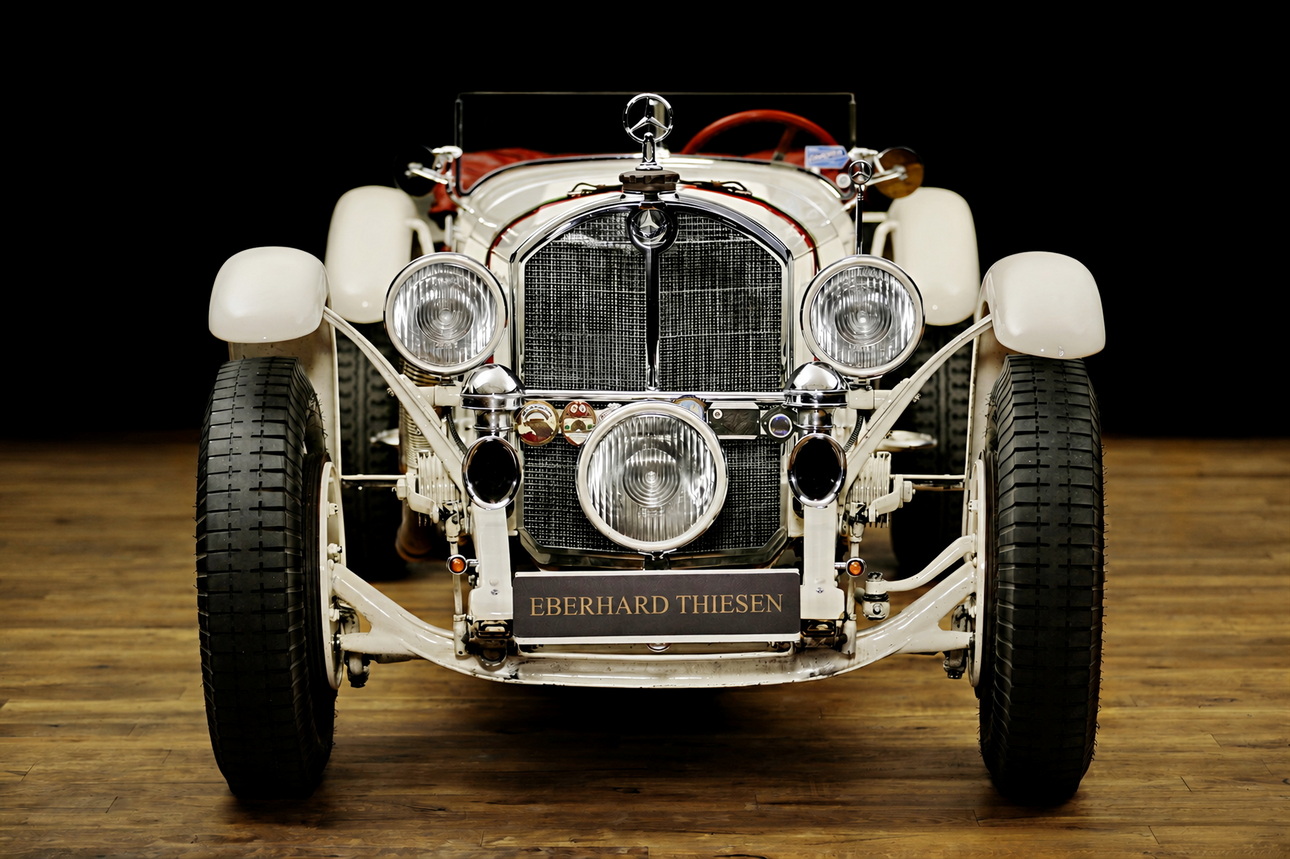
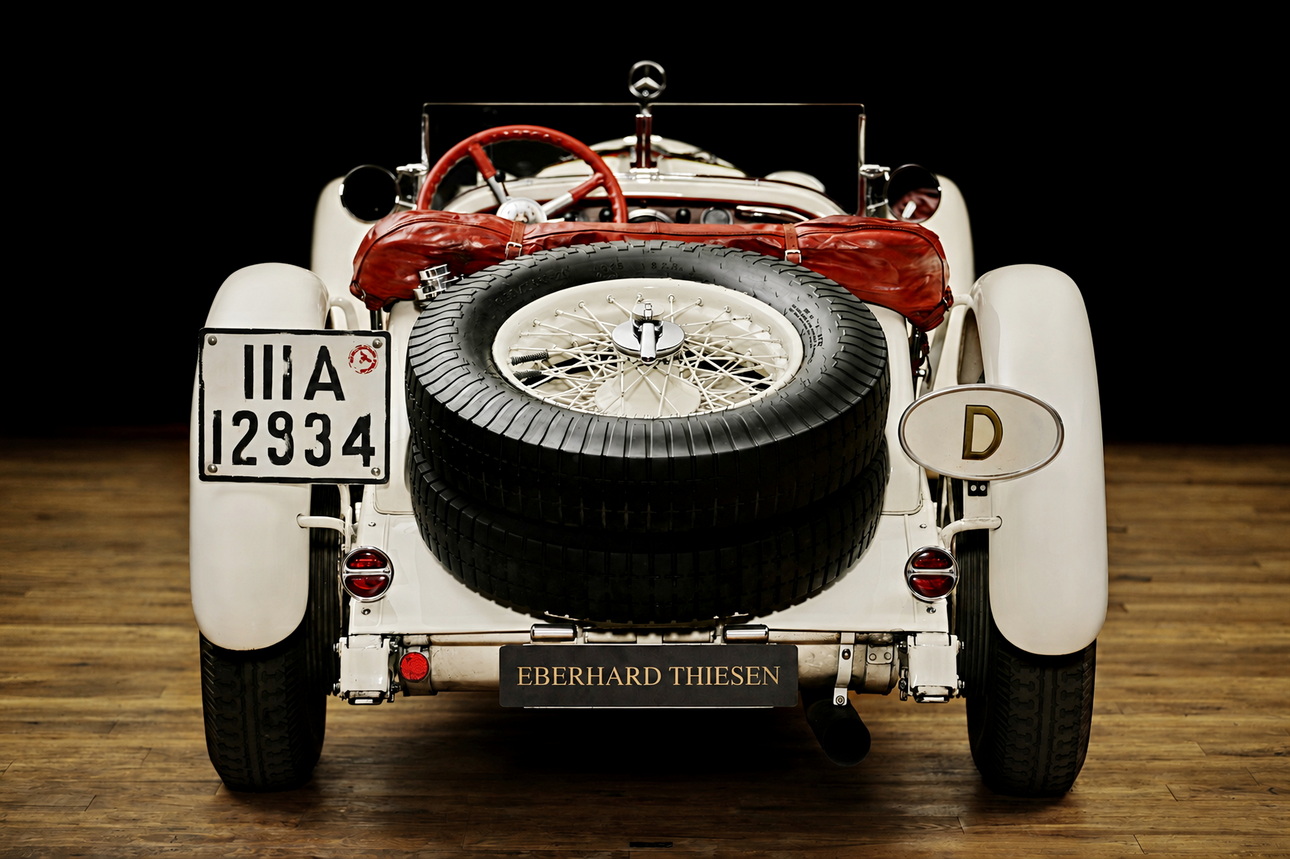
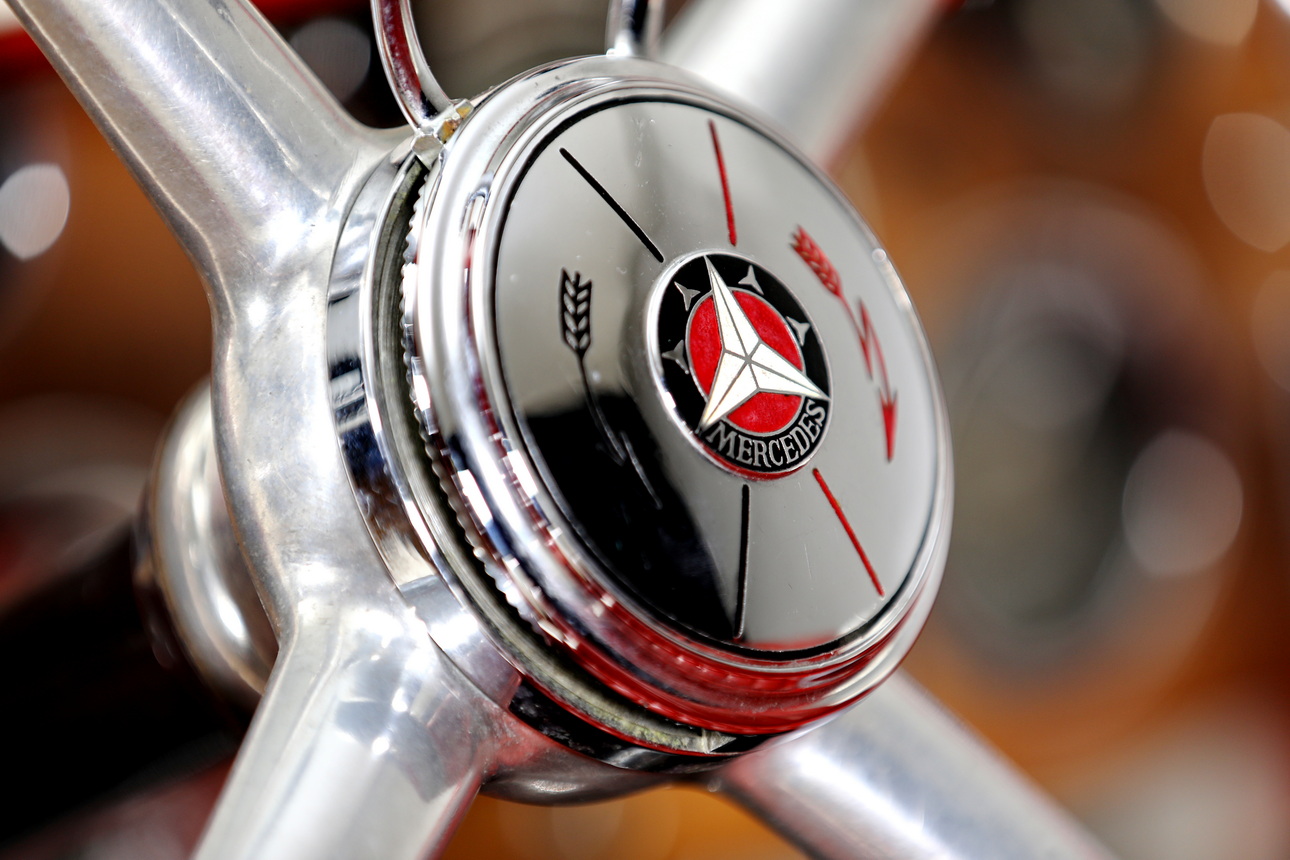
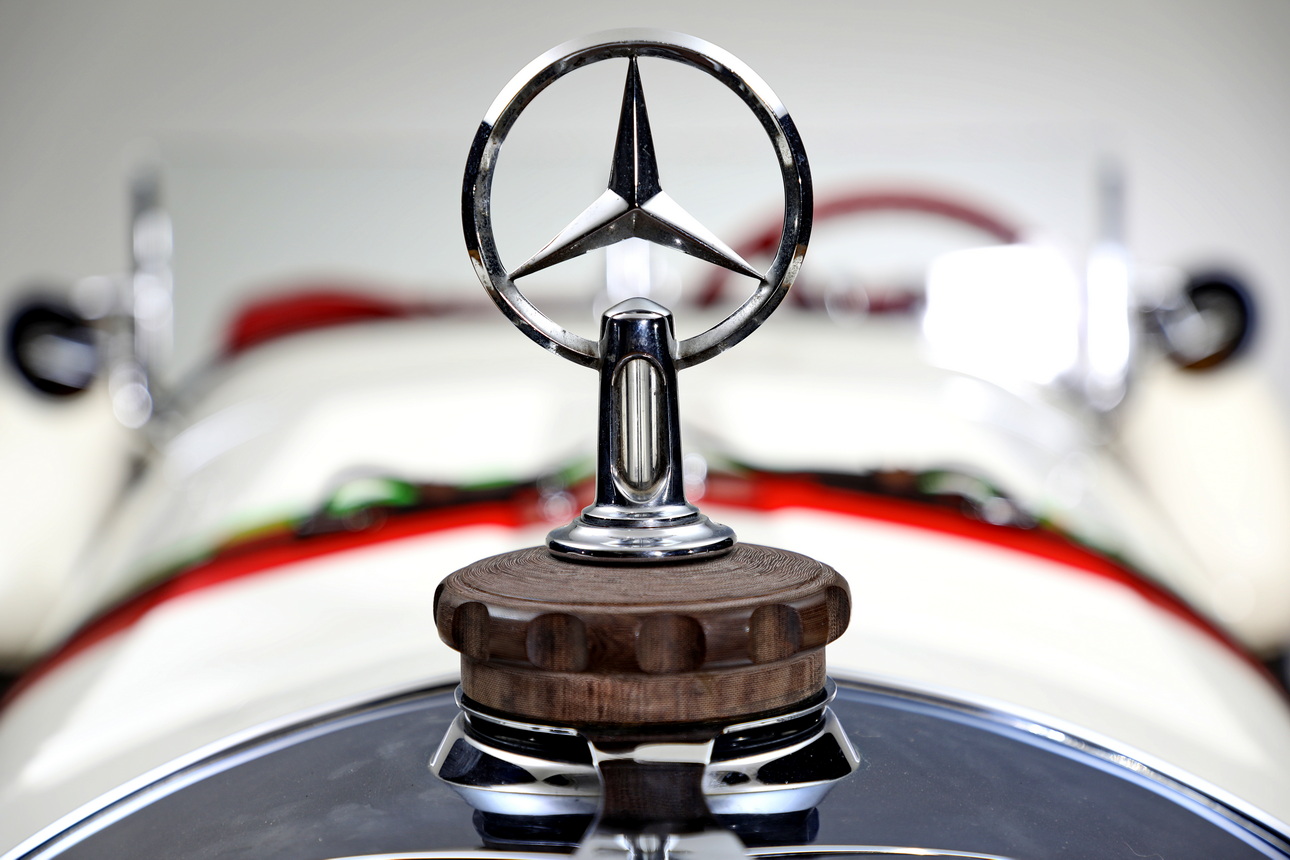
This example is a high-quality, faithful ‘reconstruction’ of a SSK, carried out in 2003 by a renowned specialist in Germany using a range of original parts. As early as 1994, the restoration specialist had acquired the car in the USA in a severely damaged condition, where it had been part of a collection since 1978. The front and centre transverse members of the chassis are original. Thanks to the chassis number stamped on the centre transverse member, this car has received (or retained) its identity. The early history of this chassis number is also documented in detail.
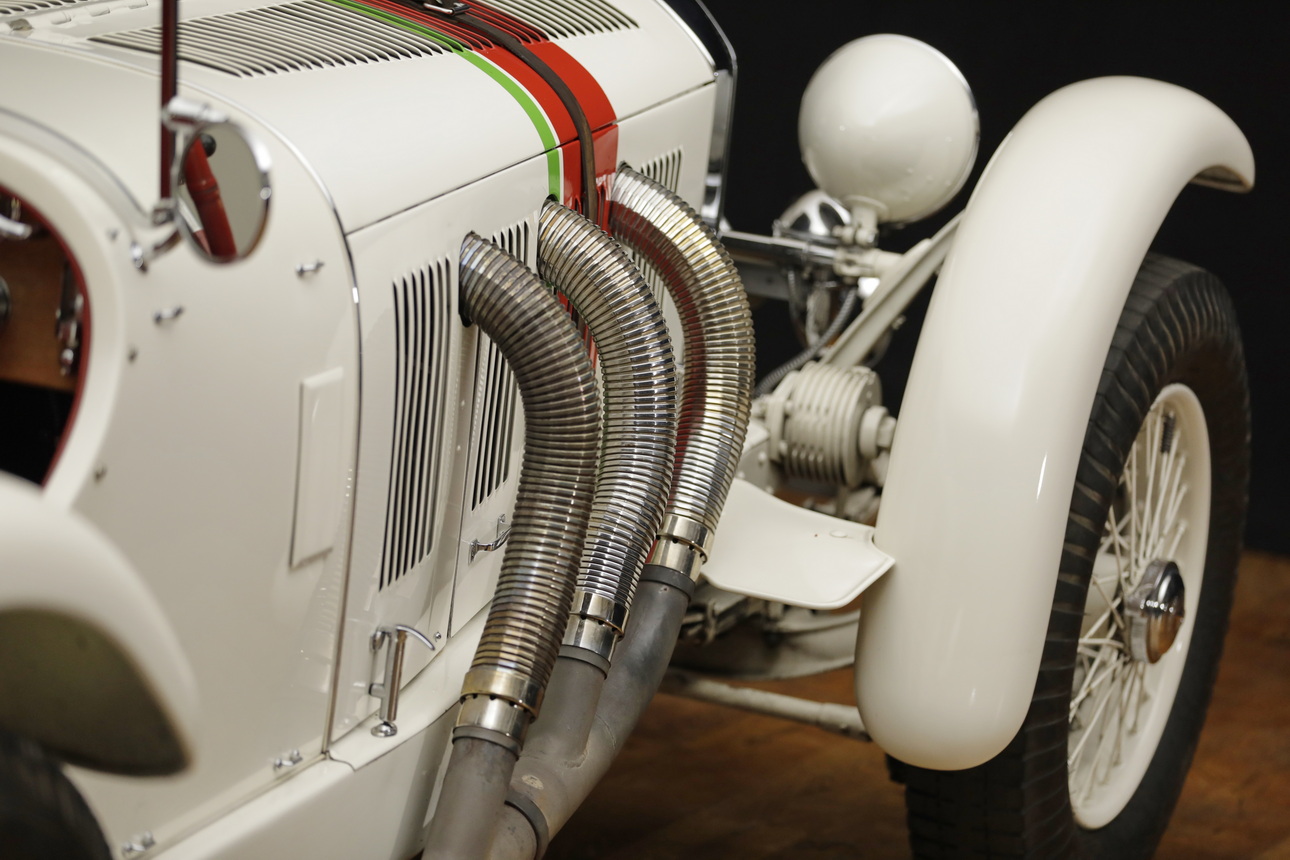
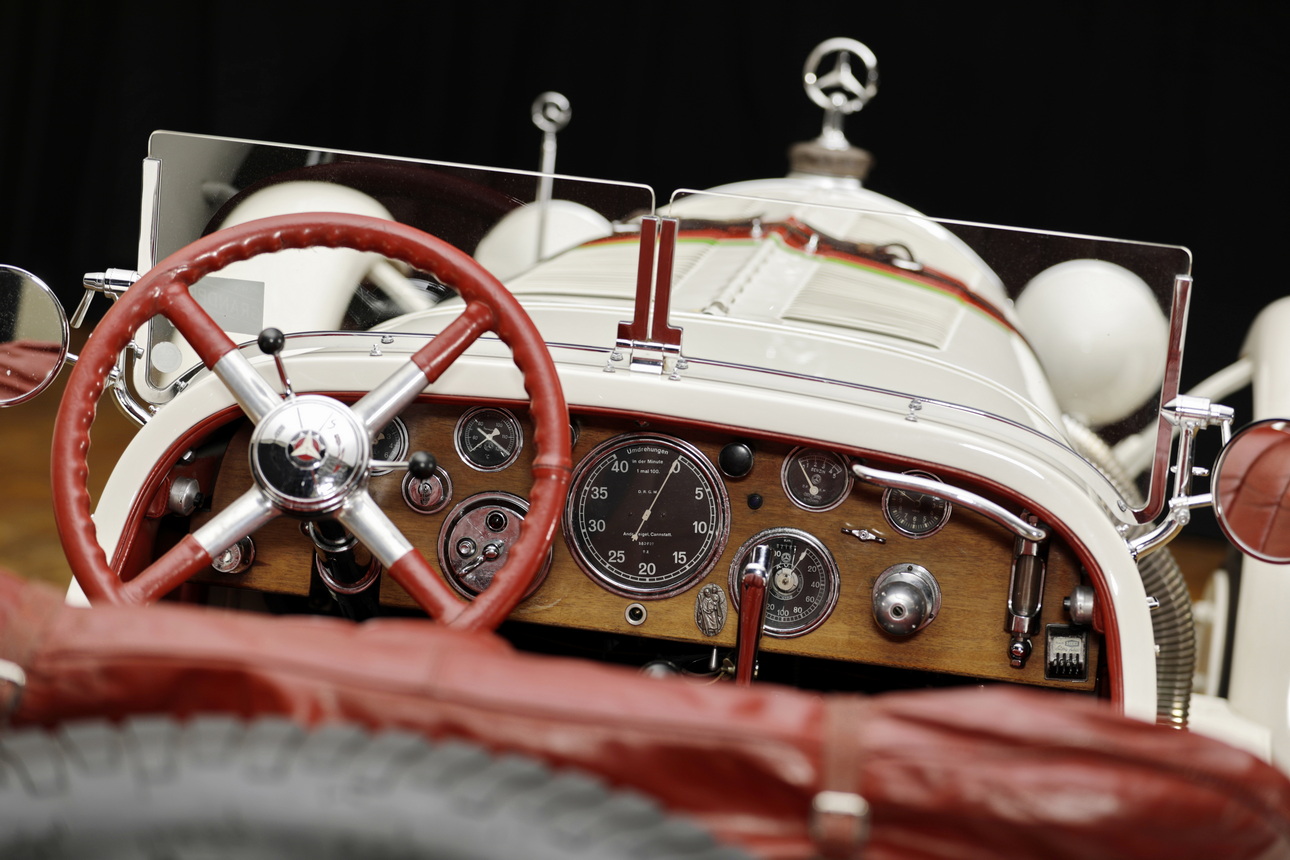
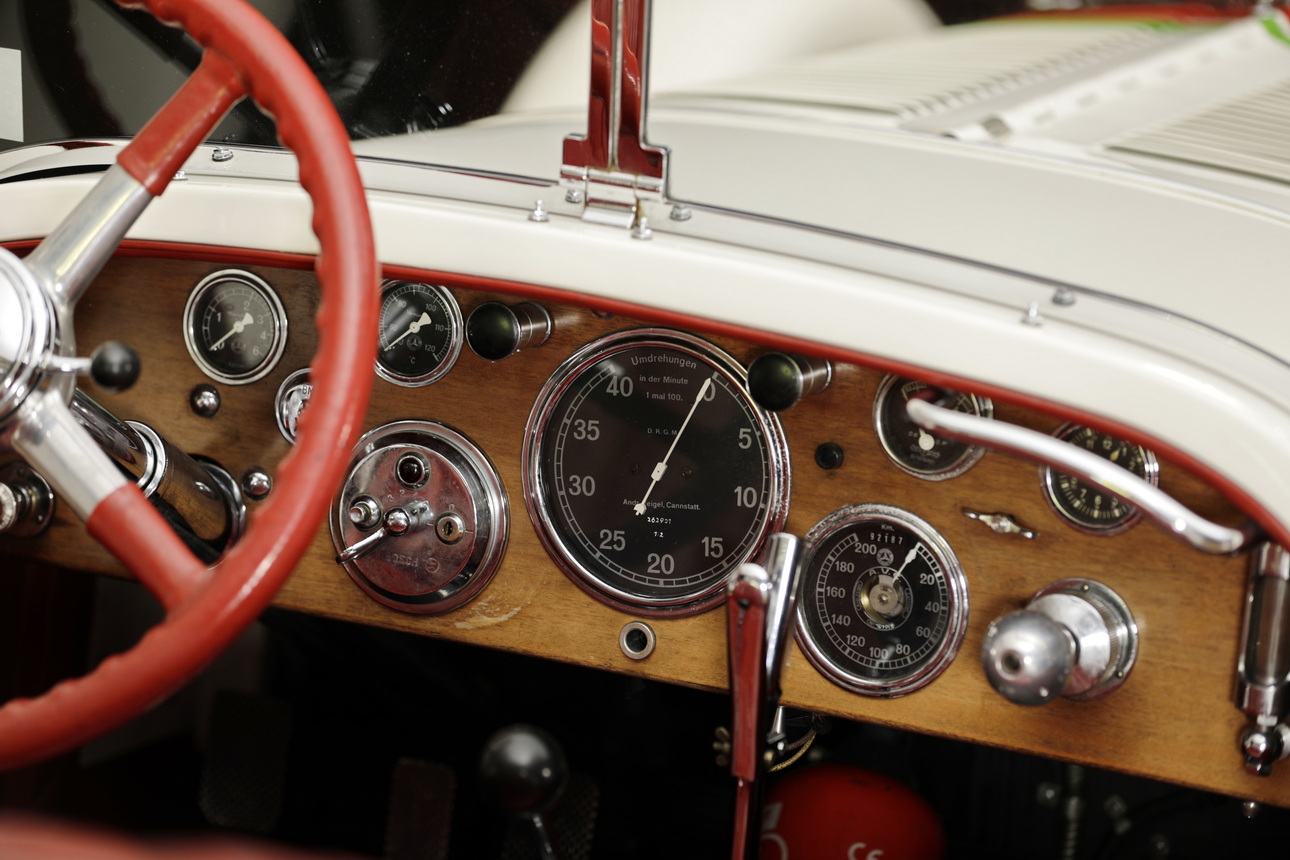
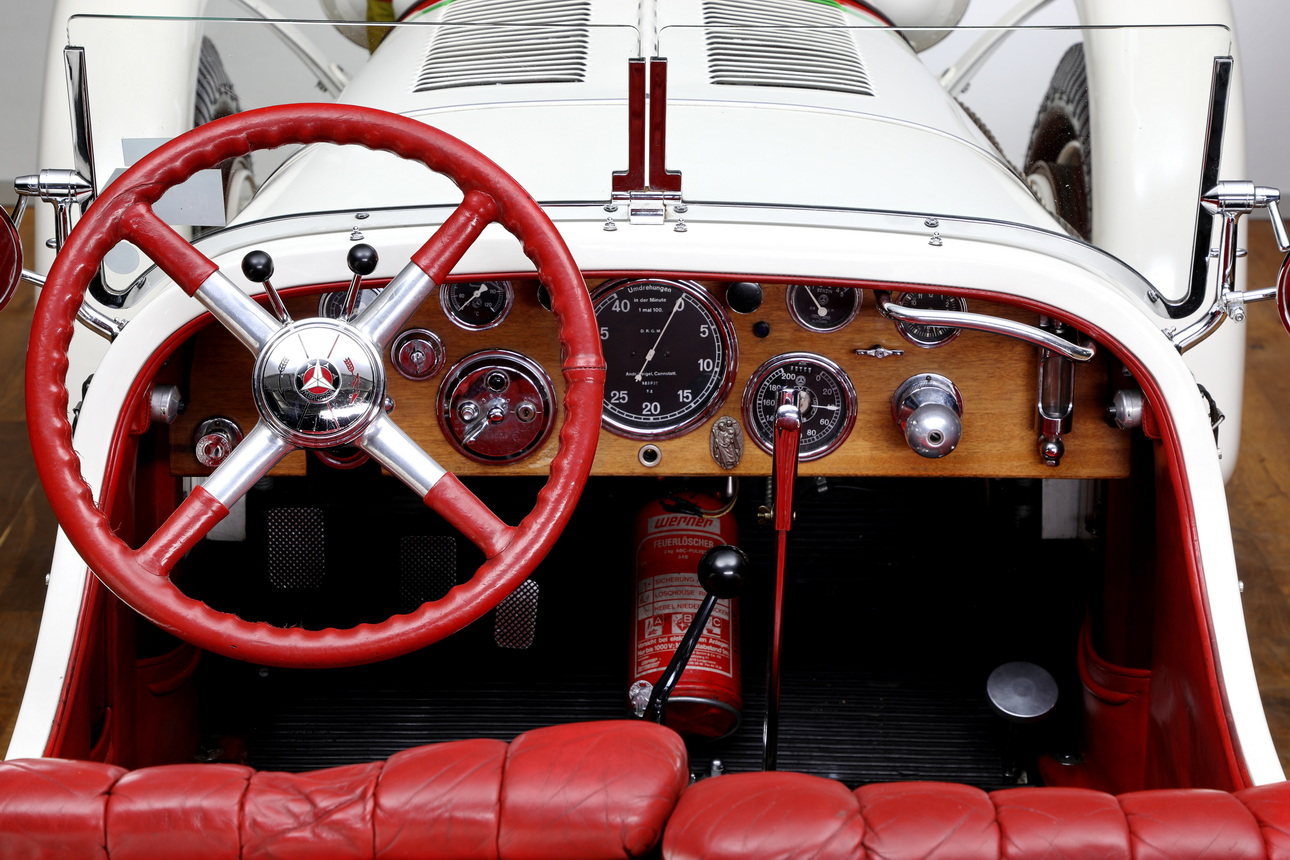
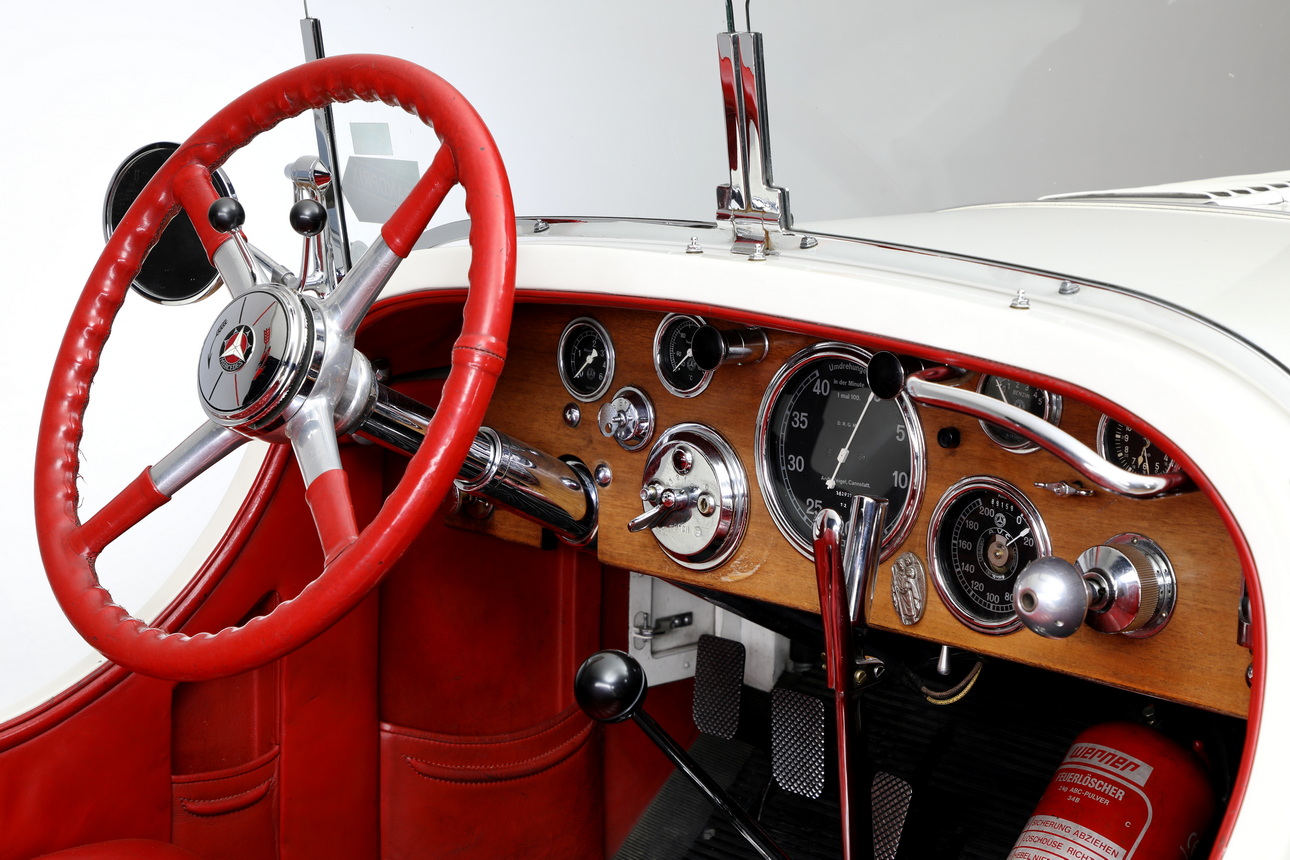
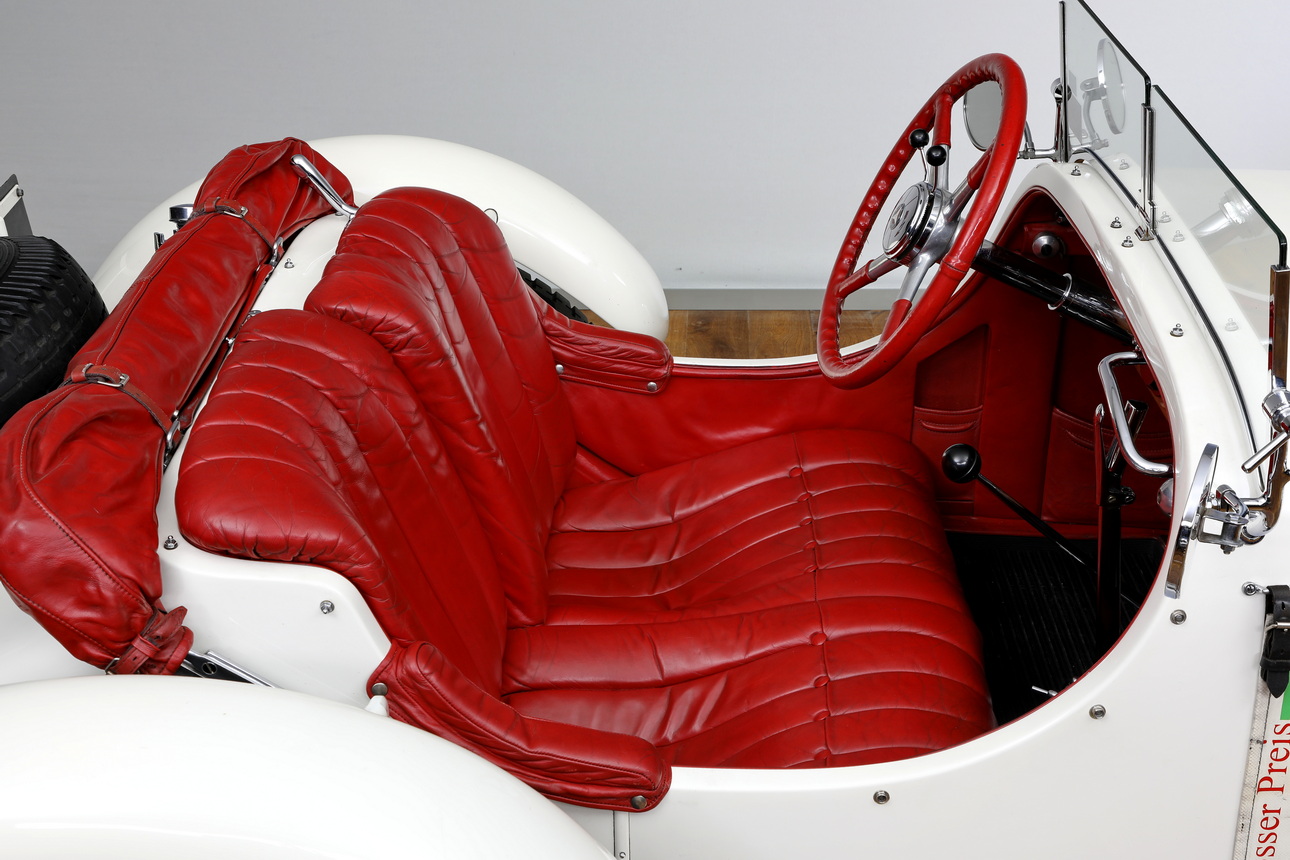
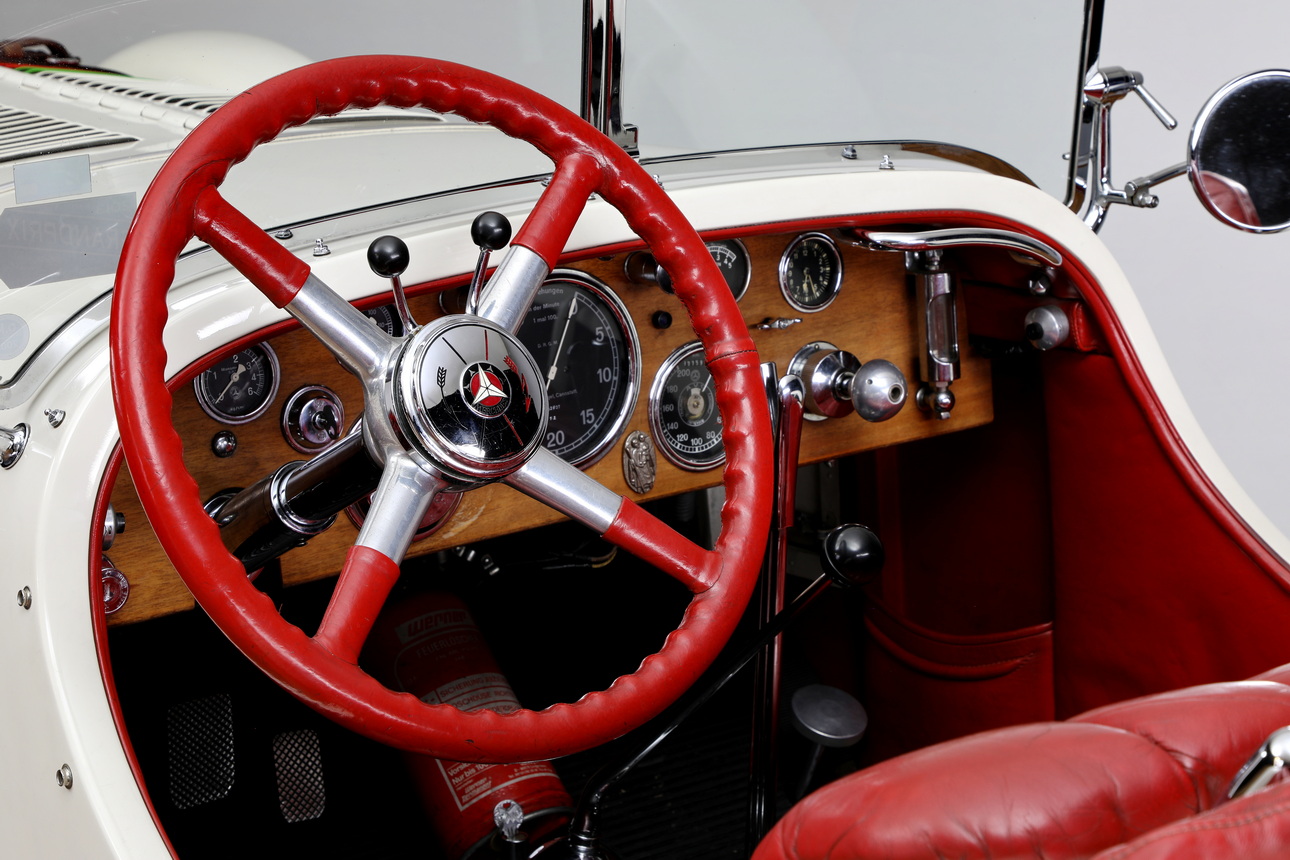
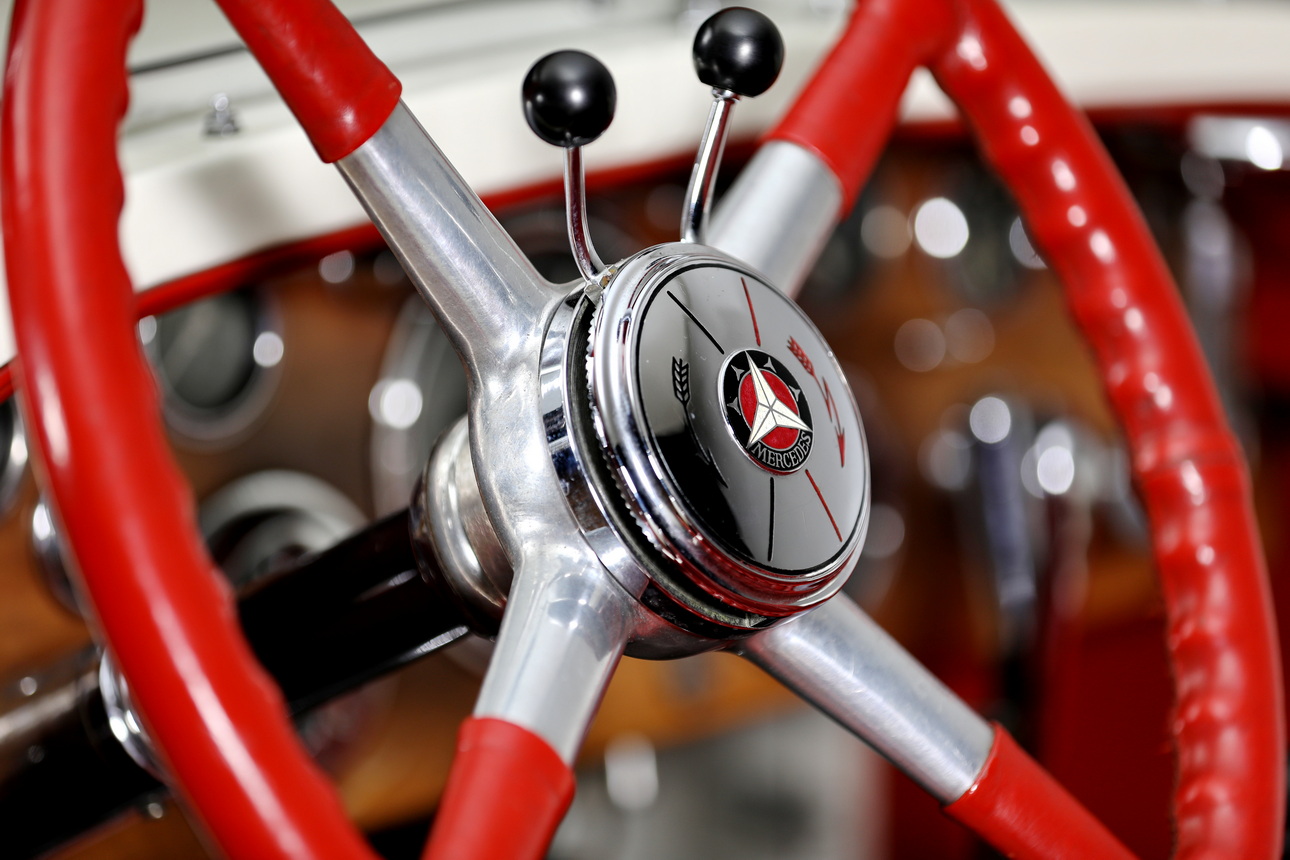
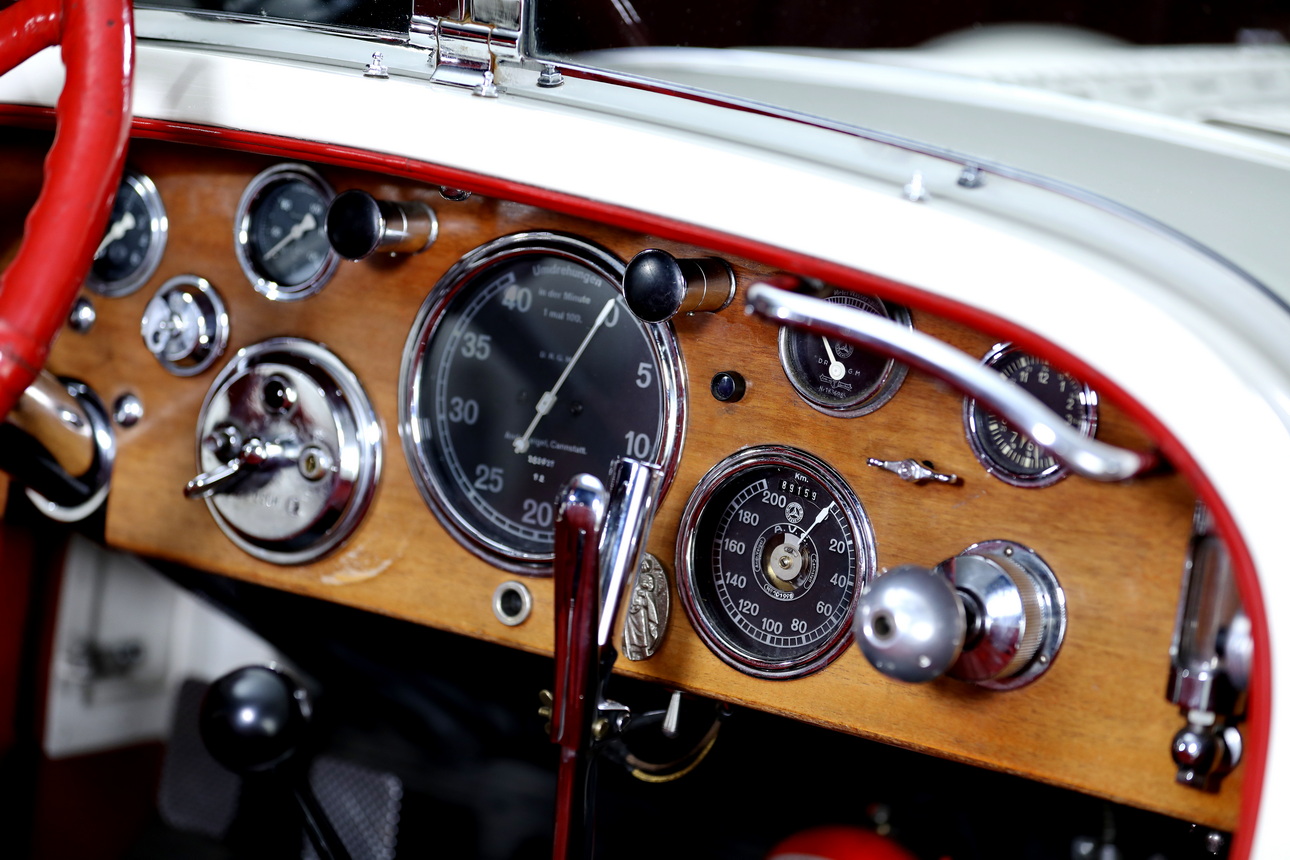
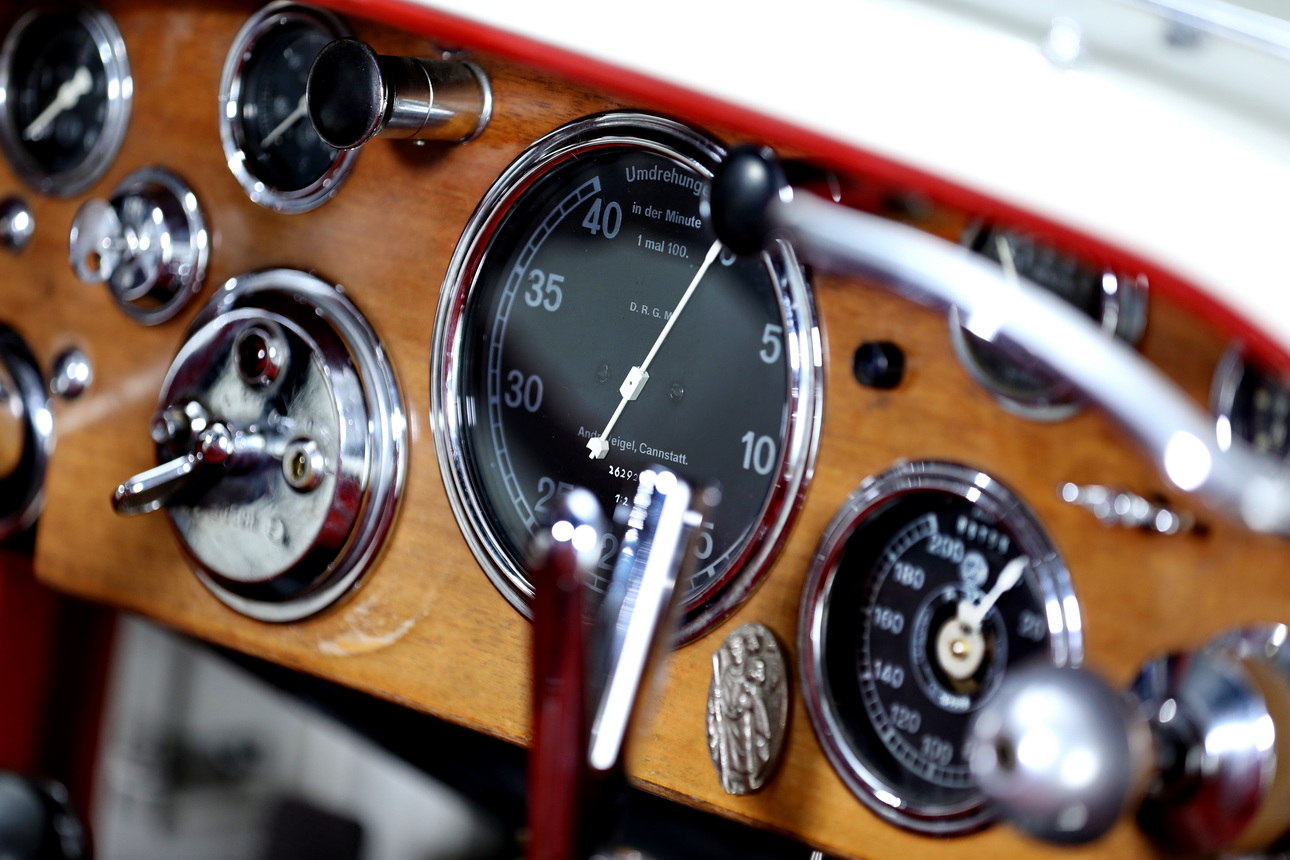
During the 2003 rebuild, numerous components of the existing chassis (including chassis cross-members, spring hangers, engine mounts, radiator brackets, cardan shaft, tie rods and front axle) were extensively refurbished and reused, whilst other parts, such as the chassis side members, were newly constructed. All add-on components of the chassis, such as the brakes, rear axle, wheels and steering, were newly manufactured to the relevant specifications and fitted. The body and the existing engine were no longer usable. The bodywork was designed and constructed to typical SSK specifications on a new wooden frame, with all details faithful to the original. The same applies to the interior and the dashboard.
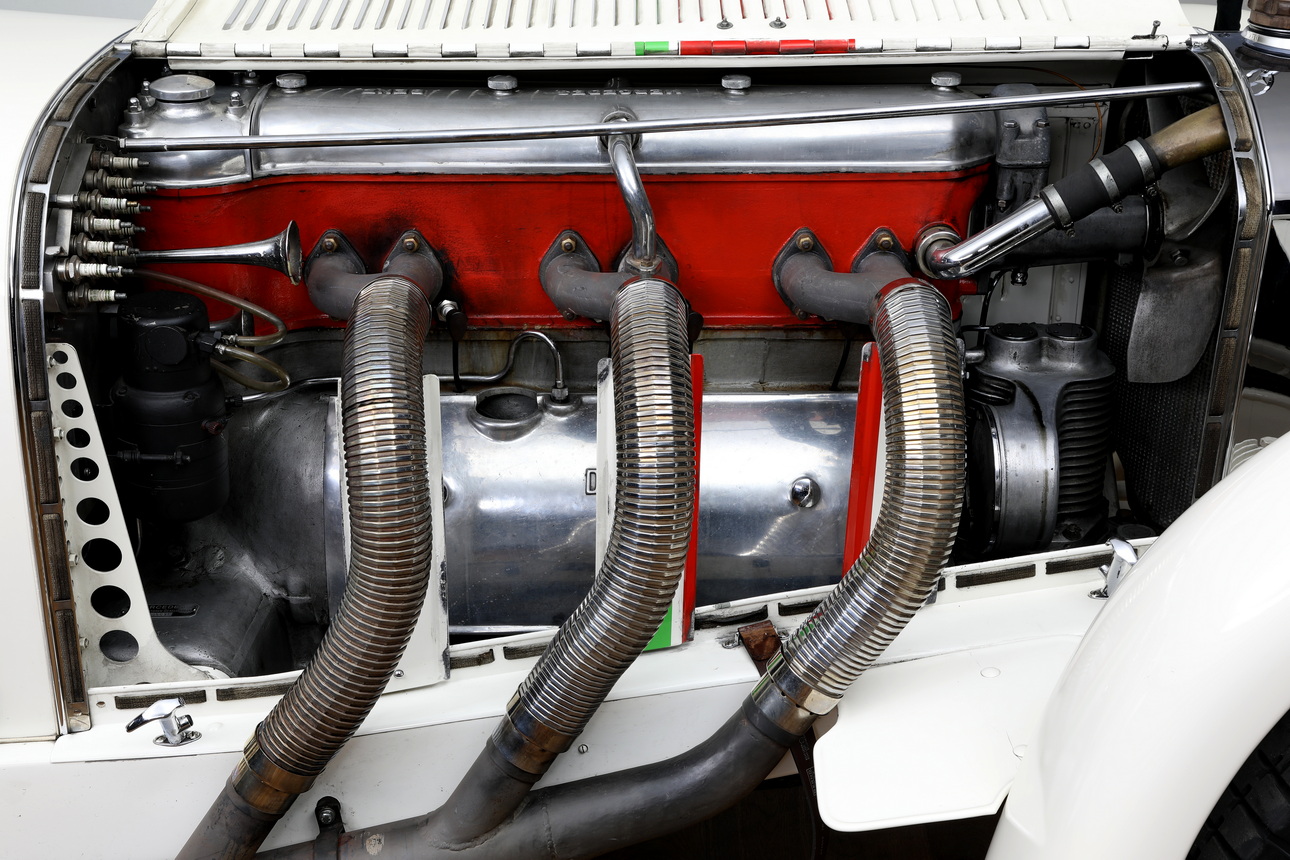
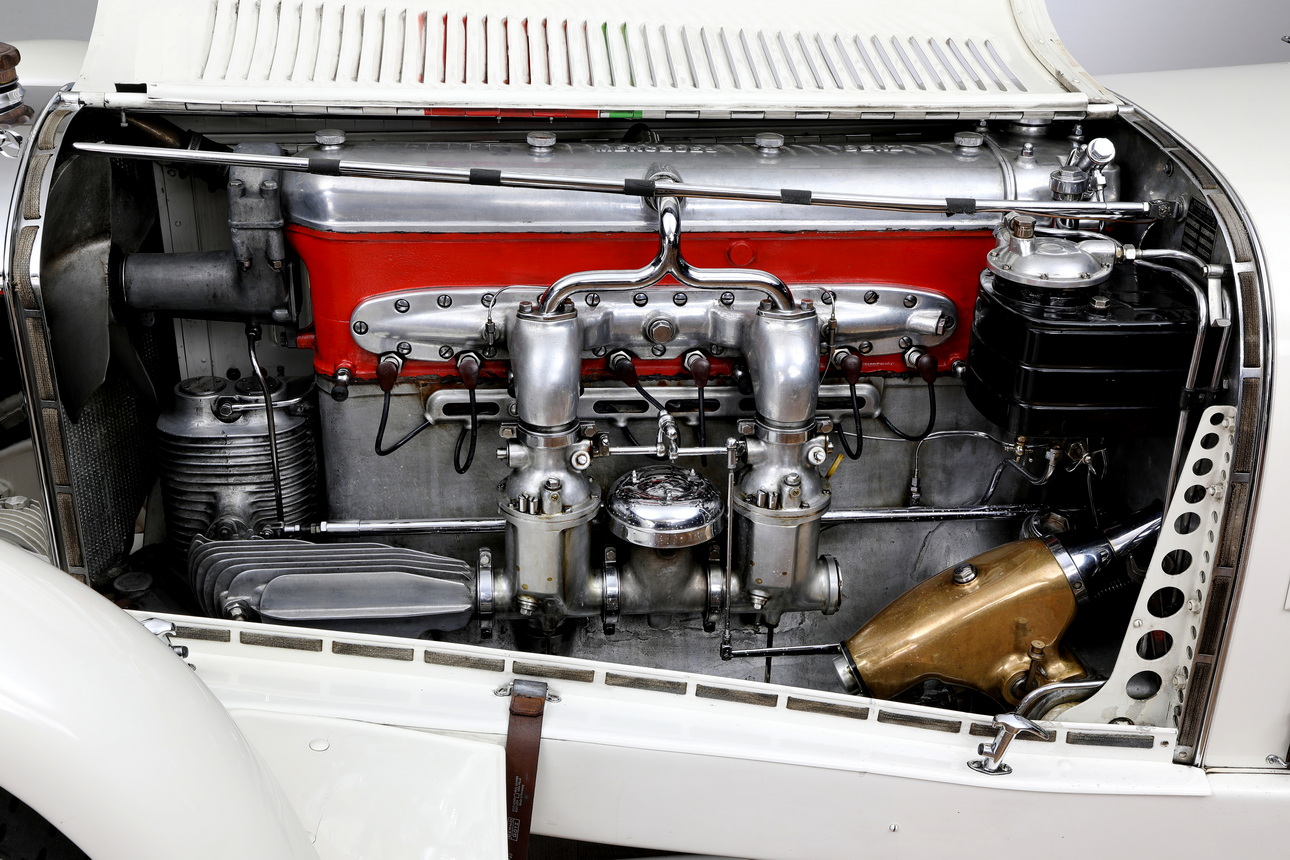
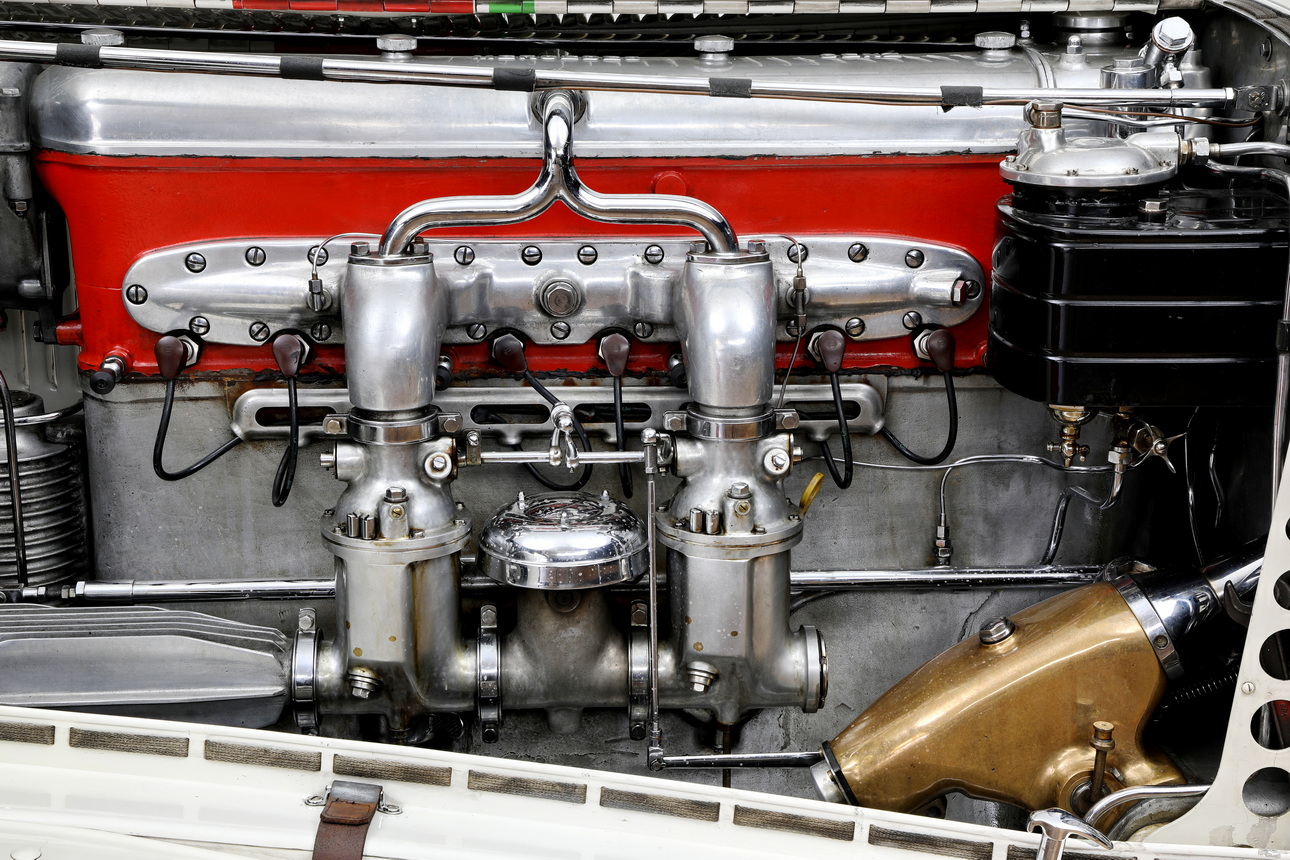
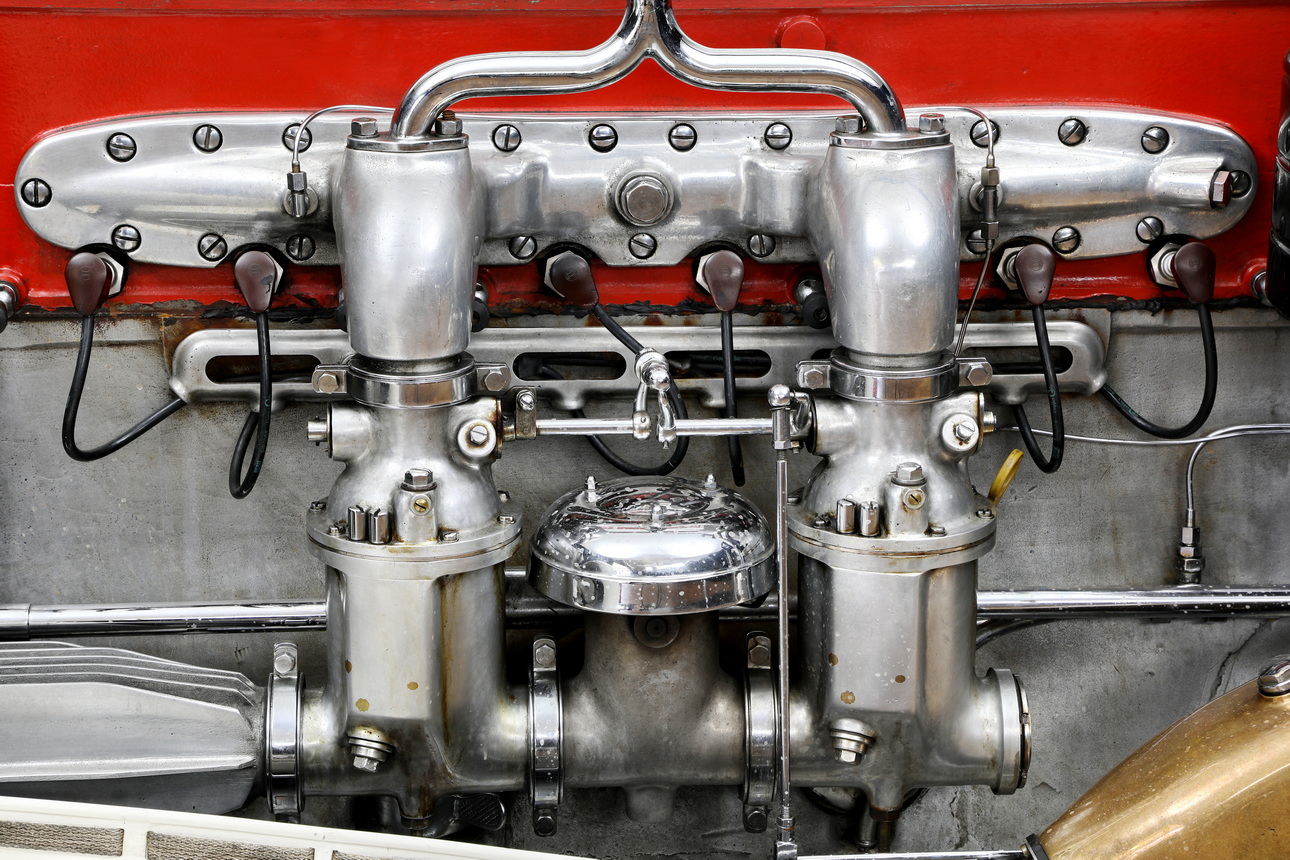
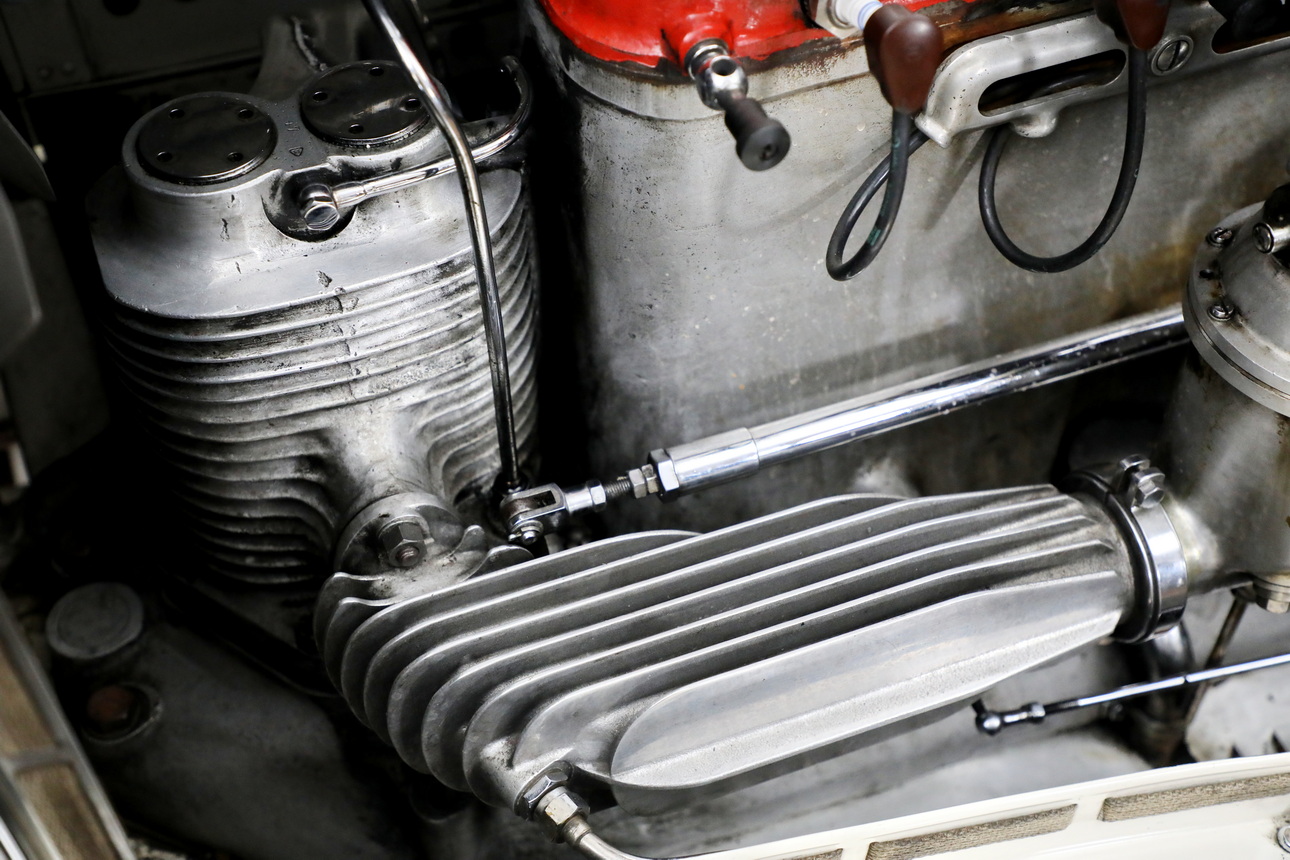
According to Mercedes-Benz, the engine block is an original, late-production unit from a 1929 Mercedes 630 K model. As with the later S/SS/SSK models, this engine block already had the mounting flange for a twin-carburettor system cast directly onto the engine. Thanks to its ‘wet’ cylinder liners, it was ideally suited for boring out from 6.3 litres to 7.1 litres (as in the SSK). This modification results in impressive performance and power delivery. The cylinder head is a faithful reconstruction. All the restoration work has been documented in a photo record.
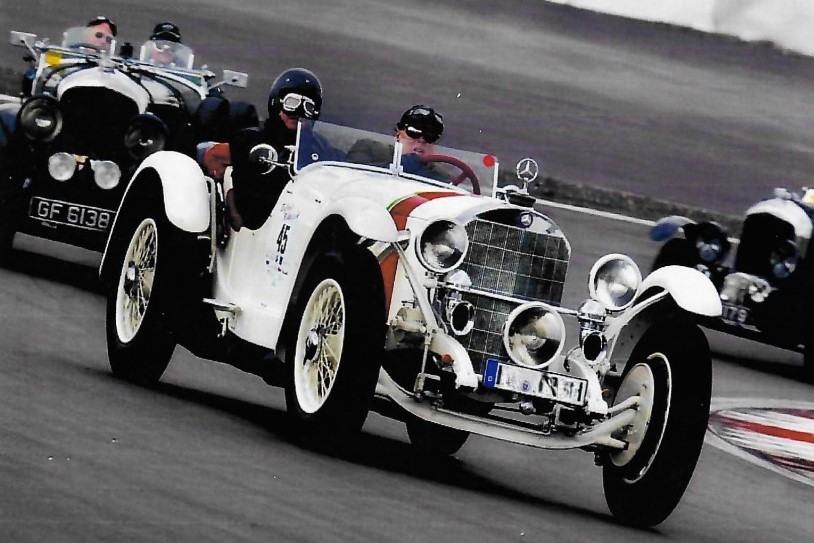
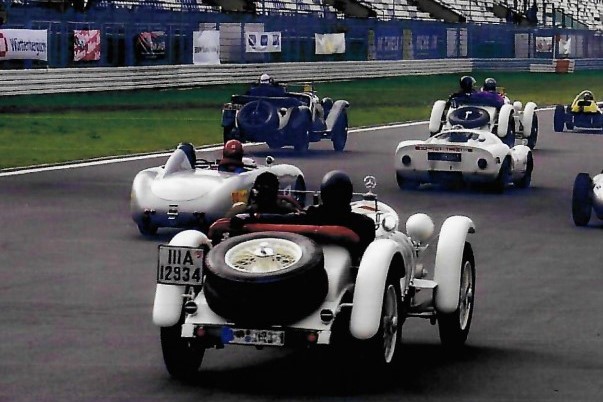
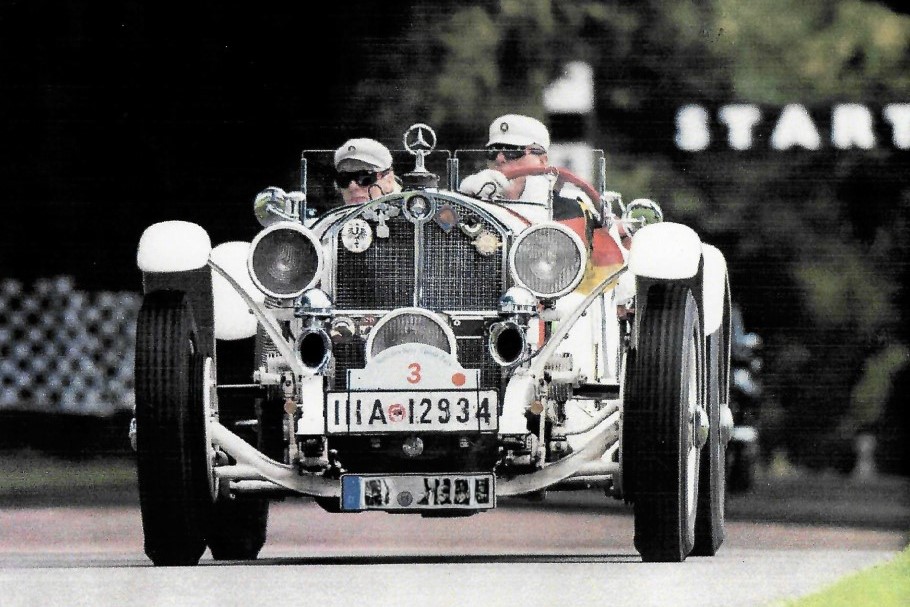
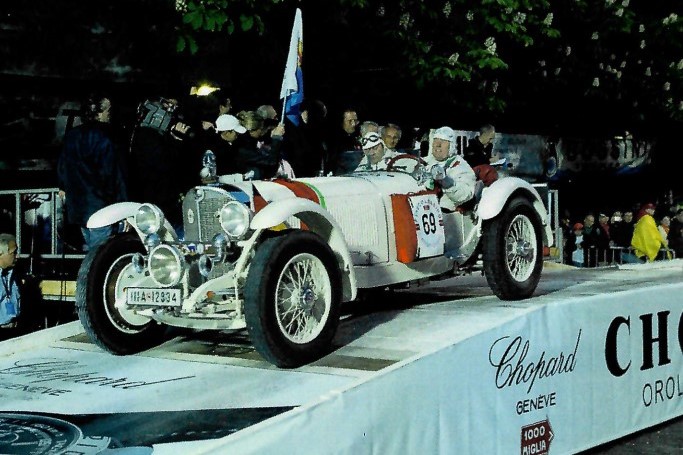
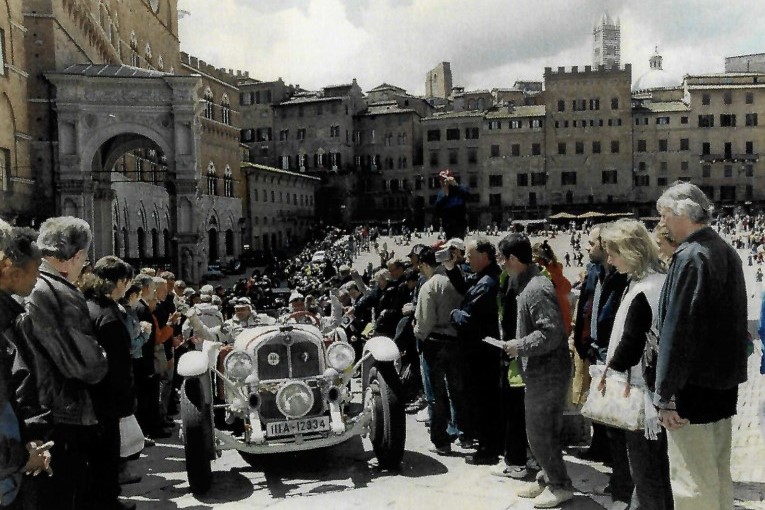
Once completed, the SSK was used extensively by its owner for almost 20 years, taking part in numerous driving events and being showcased at concours events. A FIVA passport and a ‘Historical Technical Passport’ by the DMSB were issued for this purpose. Participations include, amongst others, the Mercedes-Benz Classic Days 2003 in Salzburg, the Eifel-Klassik (Oldtimer Grand Prix Nürburgring) 2003, the Mille Miglia 2004, the Taubensuhlrennen 2004, Heidelberg Historic 2004, Ländle Classic 2004, the Mercedes-Benz Classic Days at Brooklands in 2008. These activities are comprehensively documented with photos, participant lists and articles Following the owner’s death, the SSK was sold in early 2023 via EBERHARD THIESEN to a collector and Mercedes enthusiast in Berlin, who also took part in various driving events with this striking racing car.
Therefore, this is a rare opportunity to acquire a high-quality, true-to-original recreation of one of the rarest and most iconic historic racing cars in automobile history. The car impresses with its extreme performance and power delivery and, despite its sleek racing bodywork, is an imposing appearance. This example has been driven actively ever since it was rebuilt and today it is still perfectly suited to and ready for exactly that purpose. An experienced driver can look forward to a unique driving experience that takes him back to the great and adventurous racing of the late 1920s and early 1930s.
Model History
The Mercedes ‘SSK’ (Super Sport Kurz) is one of the most legendary and successful pre-war racing cars. It was based on the ‘S’ (Sport) and ‘SS’ (Super Sport) types and, together with these, formed the W06 model series (1927–1933). The SSK had a shortened wheelbase, giving it significantly greater manoeuvrability and agility.
Even before the SSK, the Type S, introduced in 1927, was a new, high-performance sports car with motorsport ambitions that lived up to its purpose from the very start: at the inaugural race at the Nürburgring in June 1927, Rudolf Caracciola and Adolf Rosenberger took first and second place in a Type S. Derived from the ‘K’ model introduced in 1926, the S type was given a new chassis. Thanks to curved bends on the front and rear axles, the frame was significantly lower. The engine was set back by 30 cm, thereby improving the axle load distribution. It could also be mounted significantly lower, noticeably improving handling – a crucial factor for racing. The engine was a new development by Ferdinand Porsche as chief engineer. It was a large-capacity inline six-cylinder with 6.8-litre of displacement and a twin-carburettor system producing 180 hp with a switchable Roots supercharger. The displacement led to the unofficial designation ‘680 S’.
As early as 1928, the engine was enlarged to 7.1 litres and installed in the chassis of the ‘S’ type. This model was given the designation ‘SS’ for ‘Super Sport’ and is also known as the ‘710 SS’ in terms of displacement. This engine had three output levels: initially with 140/200 hp and from 1930 with a higher compression ratio even 160/200 hp. A racing camshaft was developed for motorsport, which produced an output of 170/225 hp.
The creation of the SSK can be traced back to the use in hill climbs. As short, agile cars have an advantage in this discipline, the chassis of a Type S was shortened in mid-1928 to a wheelbase of 2,950 mm. The short chassis was then fitted with the new 7.1-litre engine from the SS. After Rudolf Caracciola had initially won the Gabelbach race (setting a record for this circuit) in Thuringia in July 1928 with the agile racing car, and had gone on to win convincingly at Schauinsland near Freiburg in August, at Mont Ventoux in southern France and at Semmering near Vienna, this confirmed the concept of shortening the chassis specifically for hillclimb racing. Subsequently, the SSK – originally intended as a pure factory racing car – was manufactured in a small series and thus was made available to talented private racing drivers as well. The SSK was added to the sales program from October 1928.
From then on, the SSK made up a large part of the Mercedes works team’s racing programme and was also successfully entered by privateers in the sports and racing car classes at a wide variety of motorsport competitions at home and abroad. These led to victories at the Ulster Tourist Trophy (1929), the Irish Grand Prix (1930), the German Grand Prix (1931) and the Argentine Grand Prix (1931). Particularly legendary is Rudolf Caracciola’s overall victory in the 1931 Mille Miglia with a Mercedes SSKL, when he became the first non-Italian to break the winning streak of the national car manufacturers. Other well-known drivers of the SSK included Manfred von Brauchitsch, Hans Stuck and Sir Henry Birkin (one of the so-called ‘Bentley Boys’). In 1932, Hans Stuck became International Alpine Champion and Hillclimb Champion of Brazil in the SSK.
According to official data from Mercedes-Benz, only around 33 examples of the iconic two-seater SSK were built between 1928 and 1932. A number of wealthy, sports-minded customers had the SSK chassis, which was available ex-works, fitted with a convertible body so that they could drive the SSK as a fast sports car in everyday life.
This Automobile
The legendary Mercedes-Benz SSK (Super Sport Kurz) was and remains one of the most prestigious models ever built by the brand. The six-cylinder inline engine with a displacement of 7,065 cm³ – designed by Ferdinand Porsche – delivered between 140 and 180 hp depending on the version, and with the Roots supercharger activated, an outstanding 200 to 250 hp. Speeds of around 200 km/h were only possible for a few (racing) sports cars at the time. Thus, the SSK (and SSKL), piloted by drivers such as Rudolf Caracciola and Manfred von Brauchitsch, secured international victories such as at the 1931 Mille Miglia and in numerous hill climbs.
This example is a high-quality, faithful ‘reconstruction’ of a SSK, carried out in 2003 by a renowned specialist in Germany using a range of original parts. As early as 1994, the restoration specialist had acquired the car in the USA in a severely damaged condition, where it had been part of a collection since 1978. The front and centre transverse members of the chassis are original. Thanks to the chassis number stamped on the centre transverse member, this car has received (or retained) its identity. The early history of this chassis number is also documented in detail.
During the 2003 rebuild, numerous components of the existing chassis (including chassis cross-members, spring hangers, engine mounts, radiator brackets, cardan shaft, tie rods and front axle) were extensively refurbished and reused, whilst other parts, such as the chassis side members, were newly constructed. All add-on components of the chassis, such as the brakes, rear axle, wheels and steering, were newly manufactured to the relevant specifications and fitted. The body and the existing engine were no longer usable. The bodywork was designed and constructed to typical SSK specifications on a new wooden frame, with all details faithful to the original. The same applies to the interior and the dashboard.
According to Mercedes-Benz, the engine block is an original, late-production unit from a 1929 Mercedes 630 K model. As with the later S/SS/SSK models, this engine block already had the mounting flange for a twin-carburettor system cast directly onto the engine. Thanks to its ‘wet’ cylinder liners, it was ideally suited for boring out from 6.3 litres to 7.1 litres (as in the SSK). This modification results in impressive performance and power delivery. The cylinder head is a faithful reconstruction. All the restoration work has been documented in a photo record.
Once completed, the SSK was used extensively by its owner for almost 20 years, taking part in numerous driving events and being showcased at concours events. A FIVA passport and a ‘Historical Technical Passport’ by the DMSB were issued for this purpose. Participations include, amongst others, the Mercedes-Benz Classic Days 2003 in Salzburg, the Eifel-Klassik (Oldtimer Grand Prix Nürburgring) 2003, the Mille Miglia 2004, the Taubensuhlrennen 2004, Heidelberg Historic 2004, Ländle Classic 2004, the Mercedes-Benz Classic Days at Brooklands in 2008. These activities are comprehensively documented with photos, participant lists and articles Following the owner’s death, the SSK was sold in early 2023 via EBERHARD THIESEN to a collector and Mercedes enthusiast in Berlin, who also took part in various driving events with this striking racing car.
Therefore, this is a rare opportunity to acquire a high-quality, true-to-original recreation of one of the rarest and most iconic historic racing cars in automobile history. The car impresses with its extreme performance and power delivery and, despite its sleek racing bodywork, is an imposing appearance. This example has been driven actively ever since it was rebuilt and today it is still perfectly suited to and ready for exactly that purpose. An experienced driver can look forward to a unique driving experience that takes him back to the great and adventurous racing of the late 1920s and early 1930s.
Model History
The Mercedes ‘SSK’ (Super Sport Kurz) is one of the most legendary and successful pre-war racing cars. It was based on the ‘S’ (Sport) and ‘SS’ (Super Sport) types and, together with these, formed the W06 model series (1927–1933). The SSK had a shortened wheelbase, giving it significantly greater manoeuvrability and agility.
Even before the SSK, the Type S, introduced in 1927, was a new, high-performance sports car with motorsport ambitions that lived up to its purpose from the very start: at the inaugural race at the Nürburgring in June 1927, Rudolf Caracciola and Adolf Rosenberger took first and second place in a Type S. Derived from the ‘K’ model introduced in 1926, the S type was given a new chassis. Thanks to curved bends on the front and rear axles, the frame was significantly lower. The engine was set back by 30 cm, thereby improving the axle load distribution. It could also be mounted significantly lower, noticeably improving handling – a crucial factor for racing. The engine was a new development by Ferdinand Porsche as chief engineer. It was a large-capacity inline six-cylinder with 6.8-litre of displacement and a twin-carburettor system producing 180 hp with a switchable Roots supercharger. The displacement led to the unofficial designation ‘680 S’.
As early as 1928, the engine was enlarged to 7.1 litres and installed in the chassis of the ‘S’ type. This model was given the designation ‘SS’ for ‘Super Sport’ and is also known as the ‘710 SS’ in terms of displacement. This engine had three output levels: initially with 140/200 hp and from 1930 with a higher compression ratio even 160/200 hp. A racing camshaft was developed for motorsport, which produced an output of 170/225 hp.
The creation of the SSK can be traced back to the use in hill climbs. As short, agile cars have an advantage in this discipline, the chassis of a Type S was shortened in mid-1928 to a wheelbase of 2,950 mm. The short chassis was then fitted with the new 7.1-litre engine from the SS. After Rudolf Caracciola had initially won the Gabelbach race (setting a record for this circuit) in Thuringia in July 1928 with the agile racing car, and had gone on to win convincingly at Schauinsland near Freiburg in August, at Mont Ventoux in southern France and at Semmering near Vienna, this confirmed the concept of shortening the chassis specifically for hillclimb racing. Subsequently, the SSK – originally intended as a pure factory racing car – was manufactured in a small series and thus was made available to talented private racing drivers as well. The SSK was added to the sales program from October 1928.
From then on, the SSK made up a large part of the Mercedes works team’s racing programme and was also successfully entered by privateers in the sports and racing car classes at a wide variety of motorsport competitions at home and abroad. These led to victories at the Ulster Tourist Trophy (1929), the Irish Grand Prix (1930), the German Grand Prix (1931) and the Argentine Grand Prix (1931). Particularly legendary is Rudolf Caracciola’s overall victory in the 1931 Mille Miglia with a Mercedes SSKL, when he became the first non-Italian to break the winning streak of the national car manufacturers. Other well-known drivers of the SSK included Manfred von Brauchitsch, Hans Stuck and Sir Henry Birkin (one of the so-called ‘Bentley Boys’). In 1932, Hans Stuck became International Alpine Champion and Hillclimb Champion of Brazil in the SSK.
According to official data from Mercedes-Benz, only around 33 examples of the iconic two-seater SSK were built between 1928 and 1932. A number of wealthy, sports-minded customers had the SSK chassis, which was available ex-works, fitted with a convertible body so that they could drive the SSK as a fast sports car in everyday life.