Mercedes Benz 300 SL Roadster

Highlights
Data & Facts
This Automobile
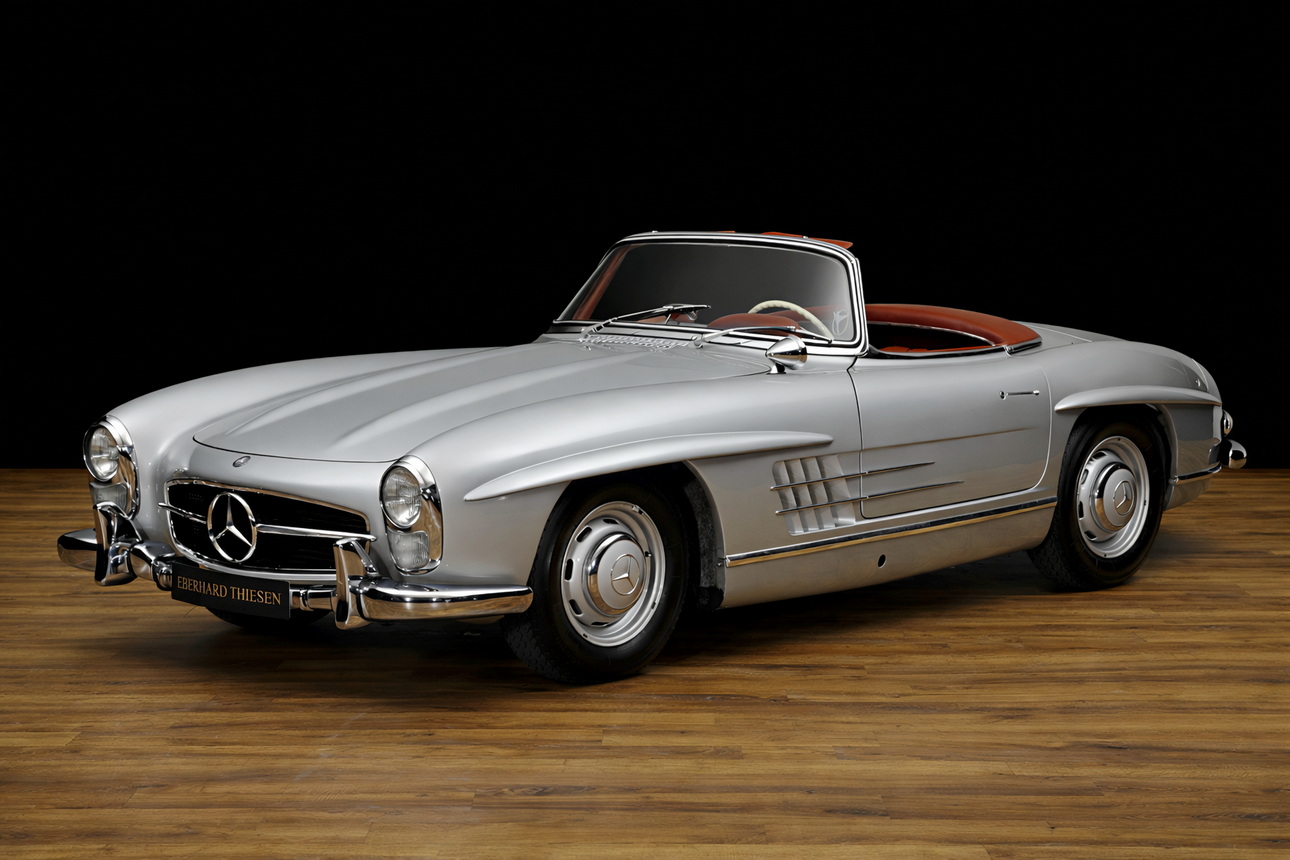
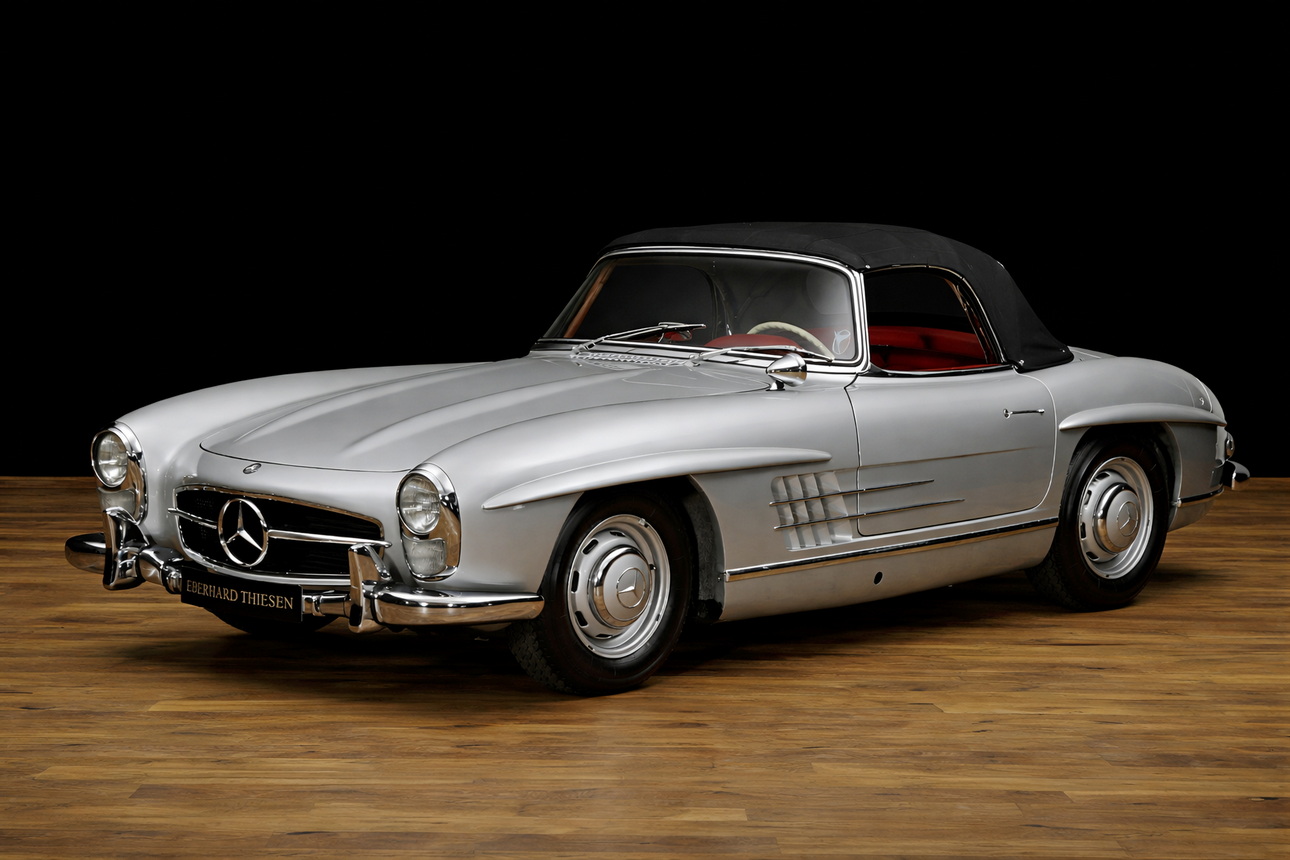
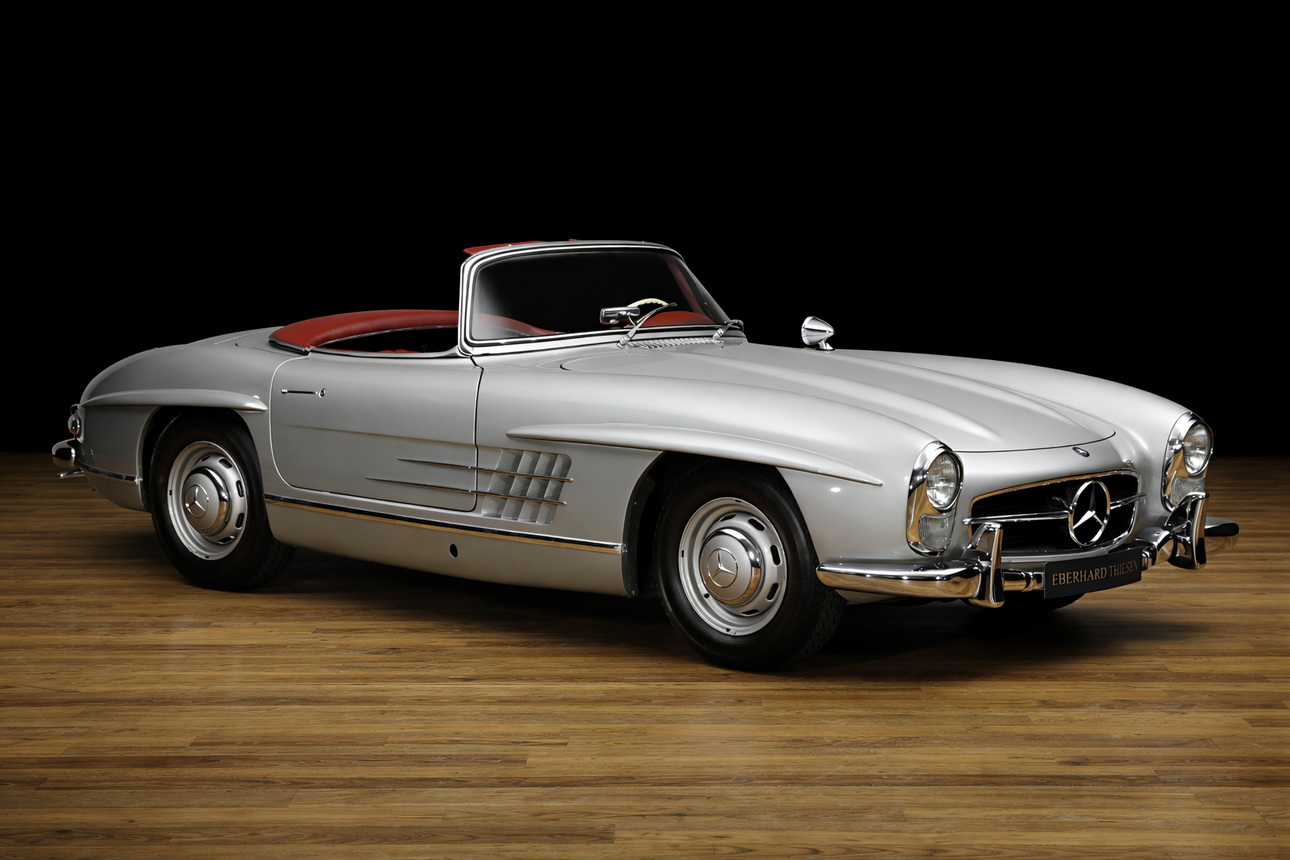
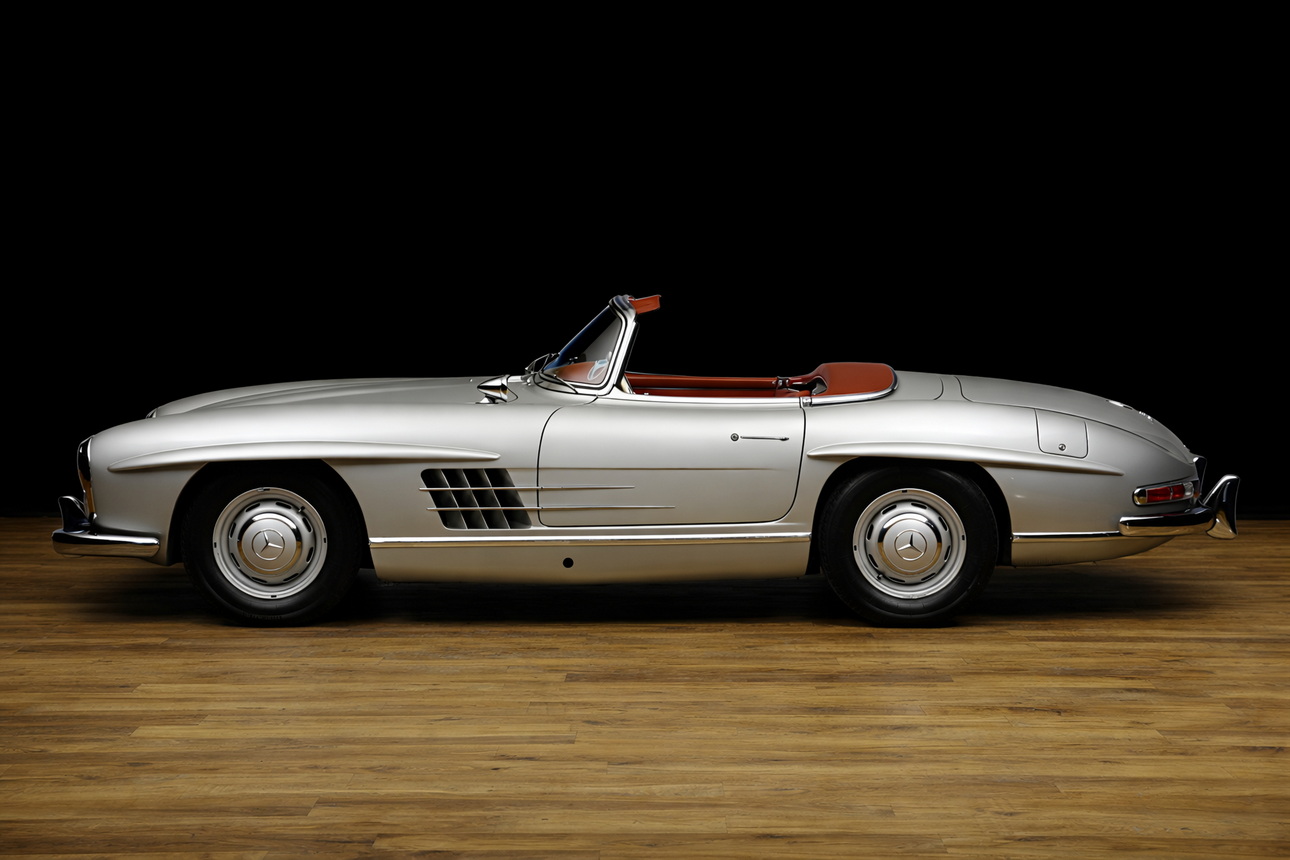
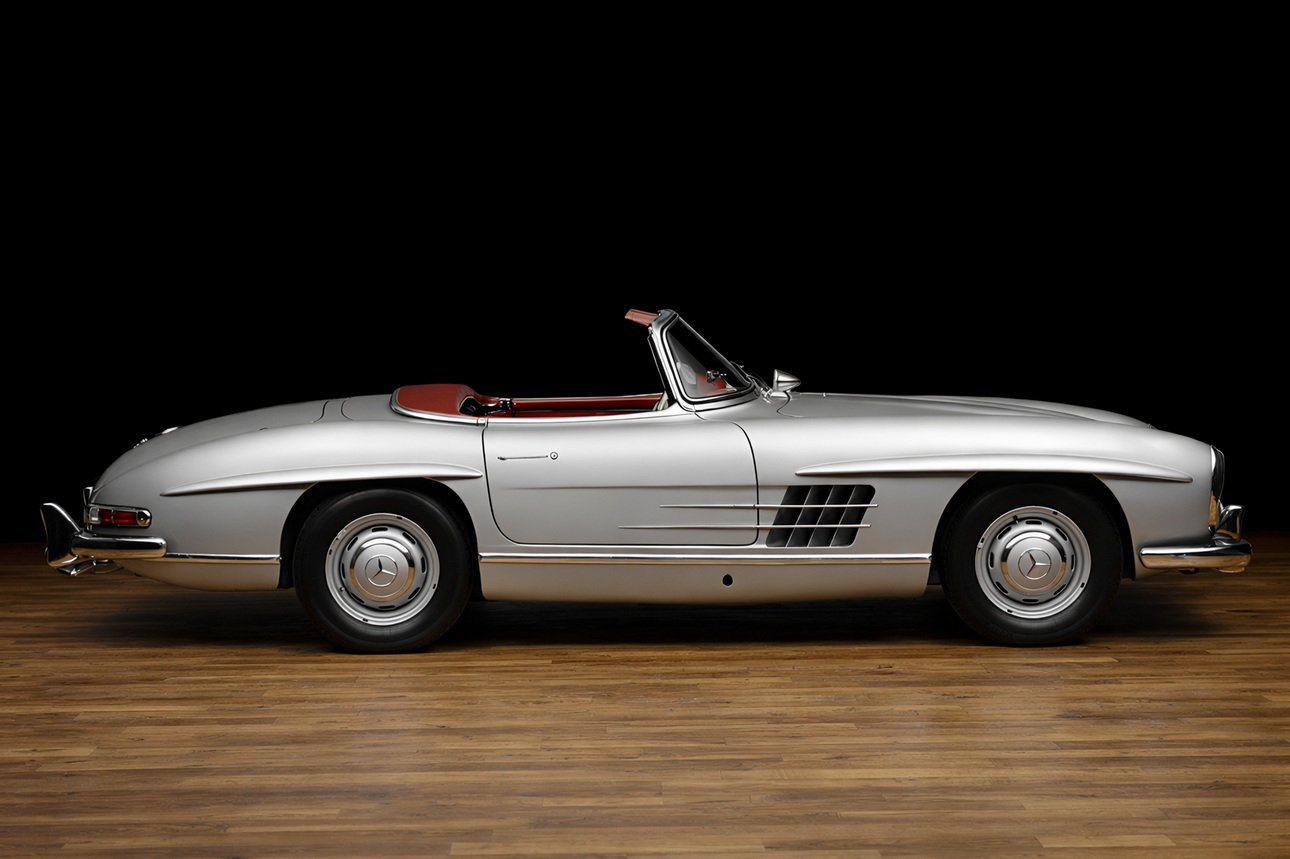
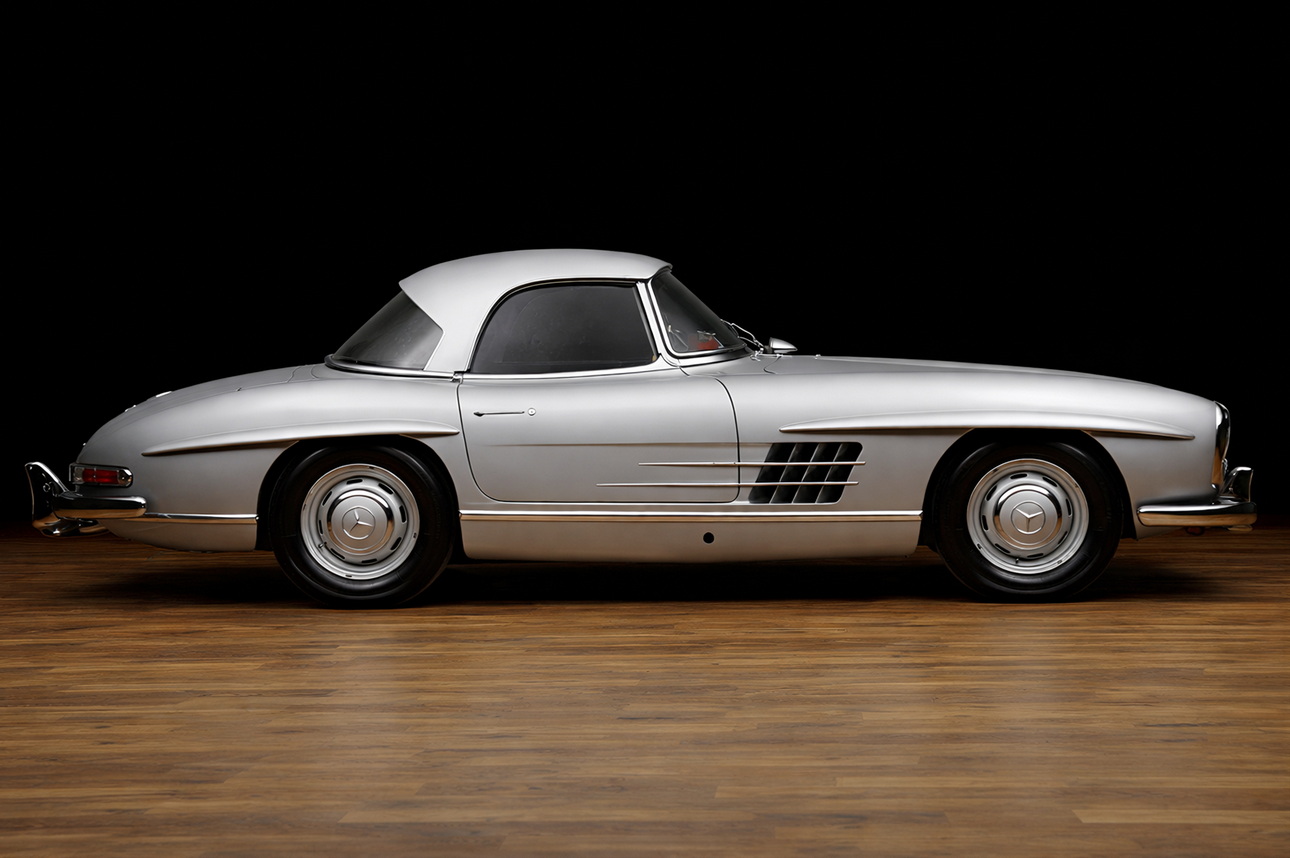
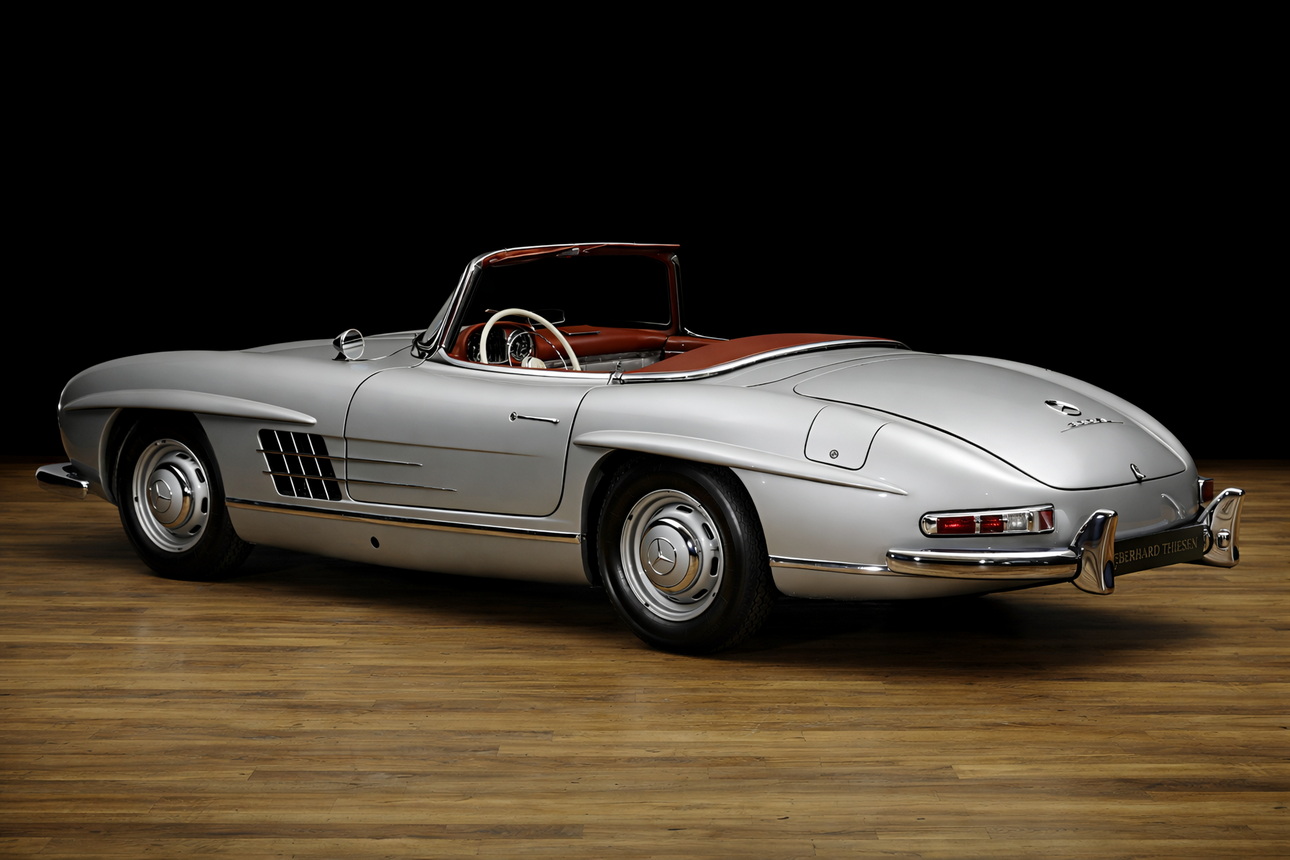
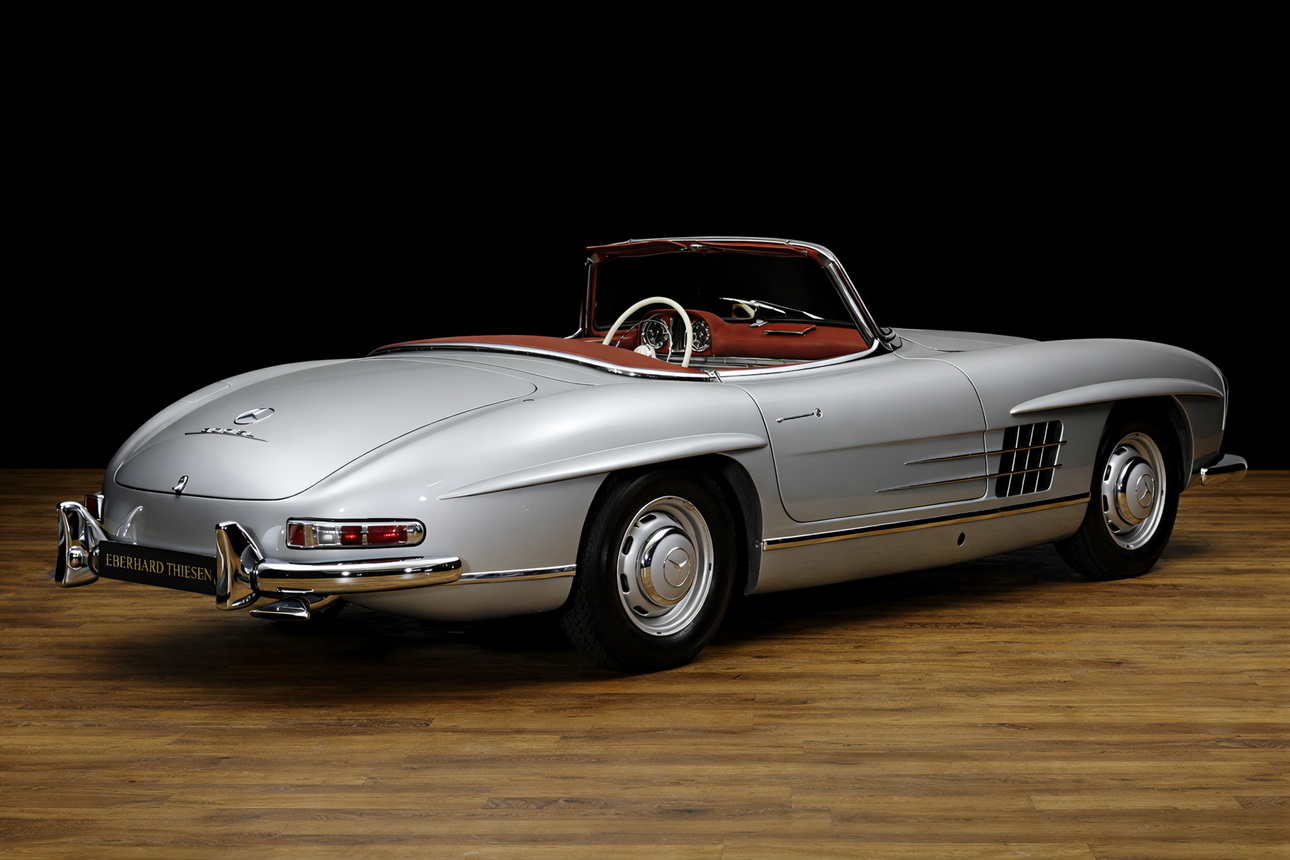
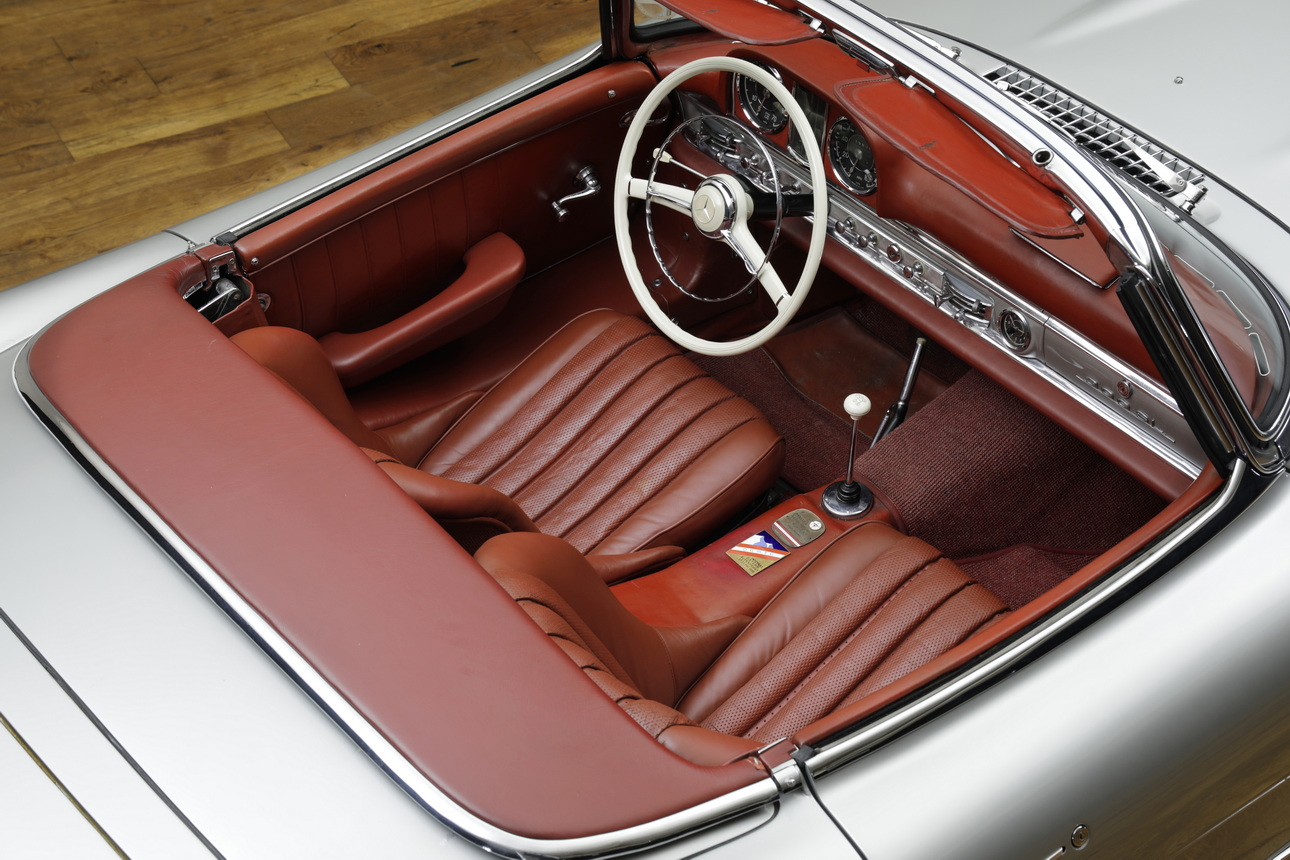
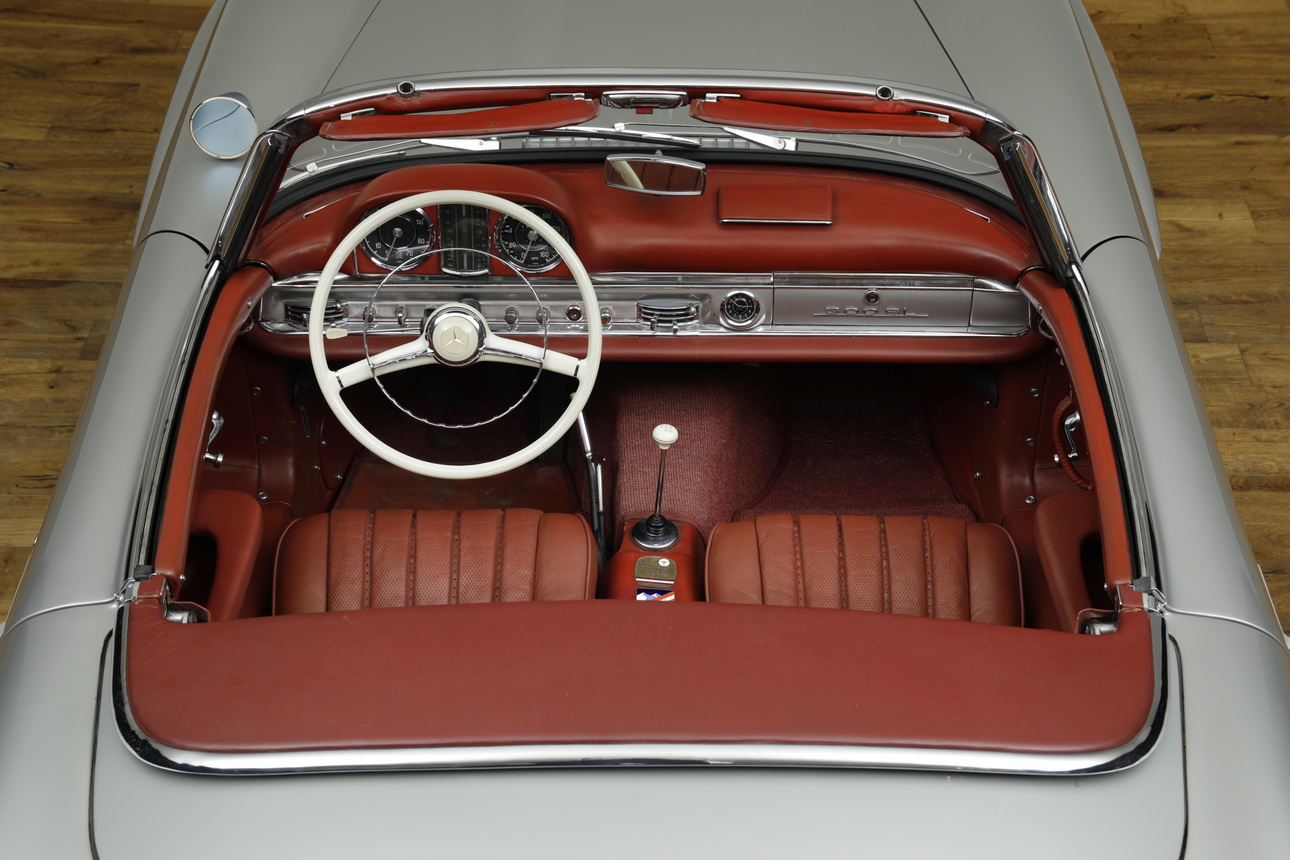
This Mercedes Benz 300 SL Roadster was completed at the factory in December 1959 and delivered to the Mercedes Benz dealership Carlo Saporiti in Milan, Italy. According to the available data card and delivery note, the original colour scheme was white (colour code 50) with a red leather interior (colour code 1088) and a black rubber fabric soft top (colour code 872). The equipment included a coupé roof (hardtop) in white (colour code 50). It was a special version for the USA with a rear axle ratio of 1:3.89 miles.
This specification is consistent with the further history of the car. According to the Mercedes Benz 300 SL Register, it probably went directly to its first owner in the USA, who kept the car until 1963. The second owner then kept the 300 SL for a full 16 years until 1989. The Gemini Motor Works company is listed as the third owner from 1991 to 1995. In 1995, the 300 SL was purchased by an Austrian and imported from the USA. He then added the car to his small private classic car museum and also used it occasionally for trips. In 2018, the 300 SL was purchased by his son. Such a small number of owners, with only four (or five respectively), is relatively rare.
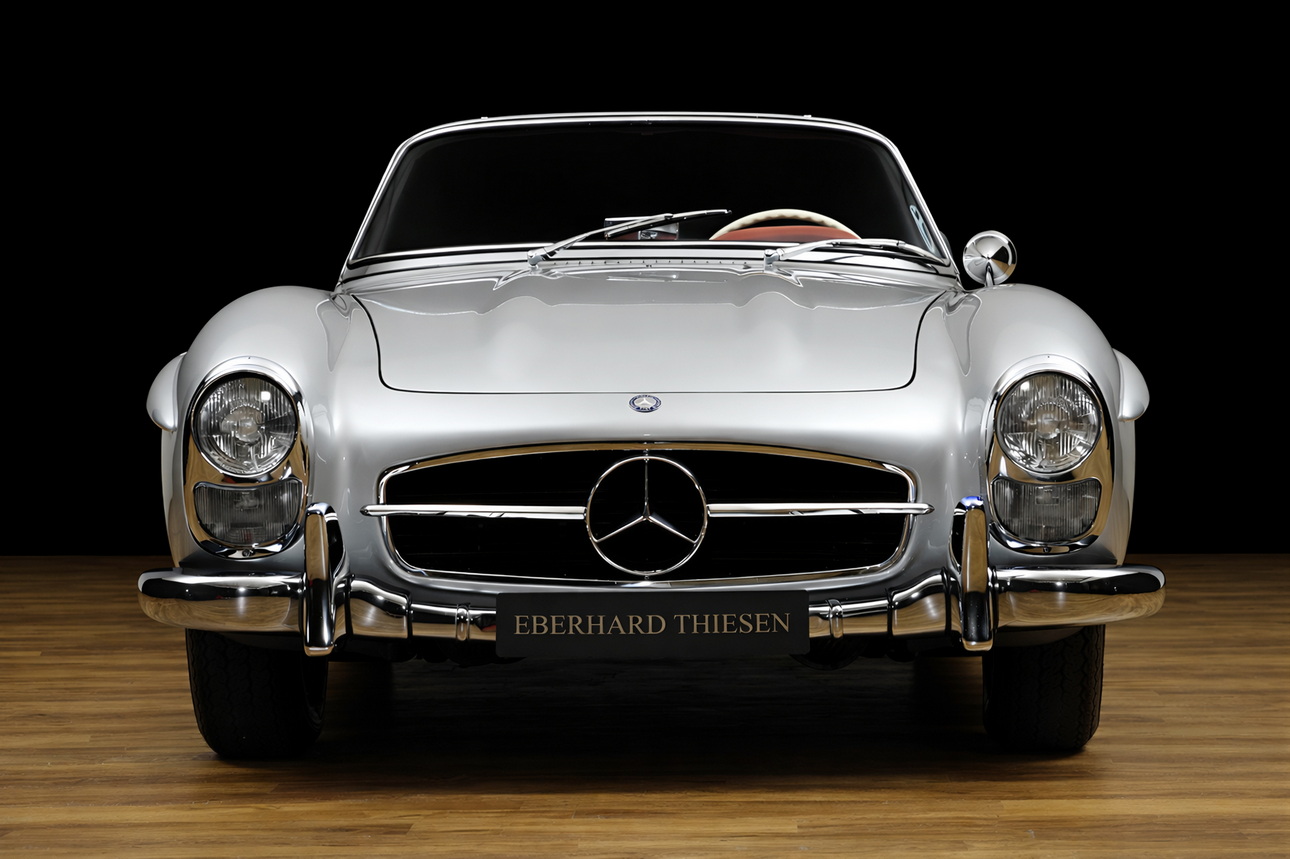
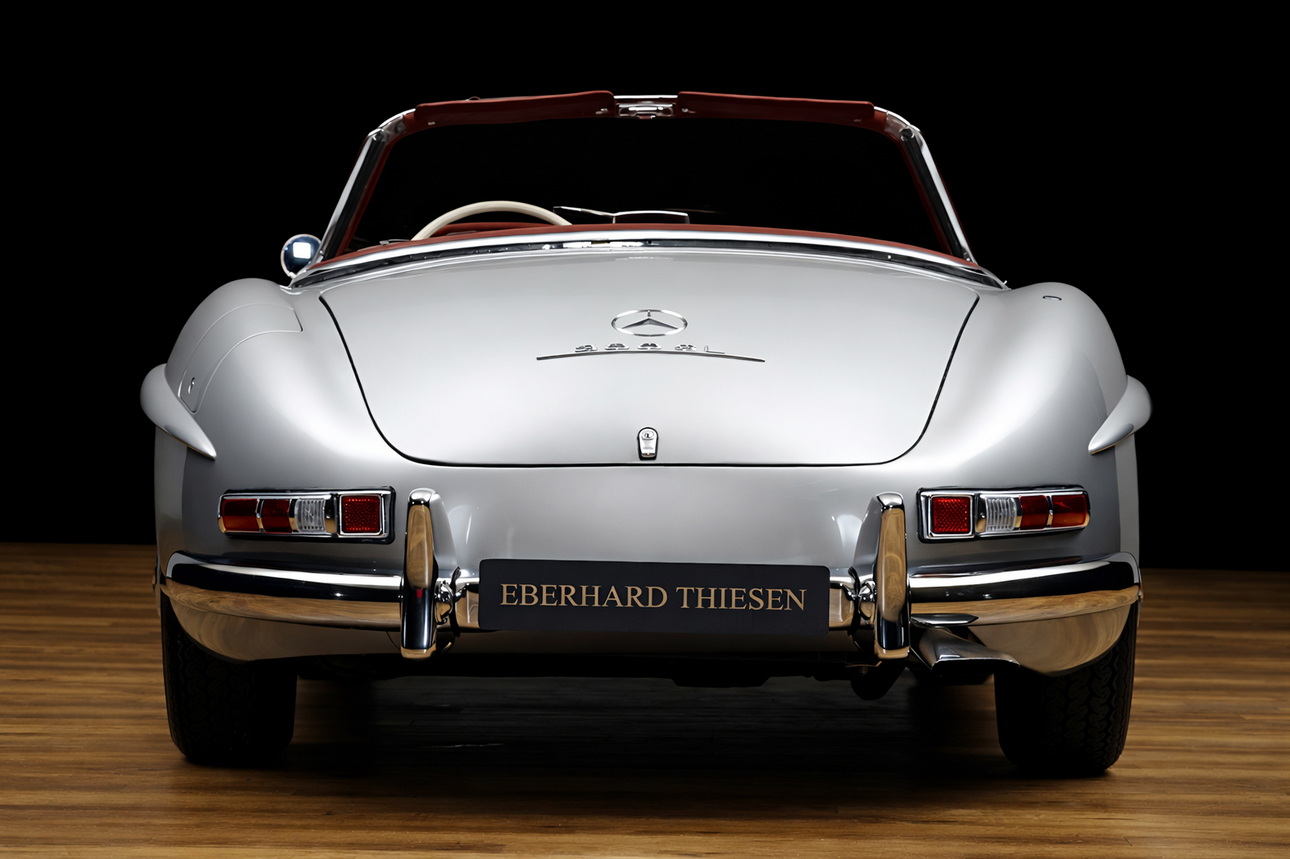
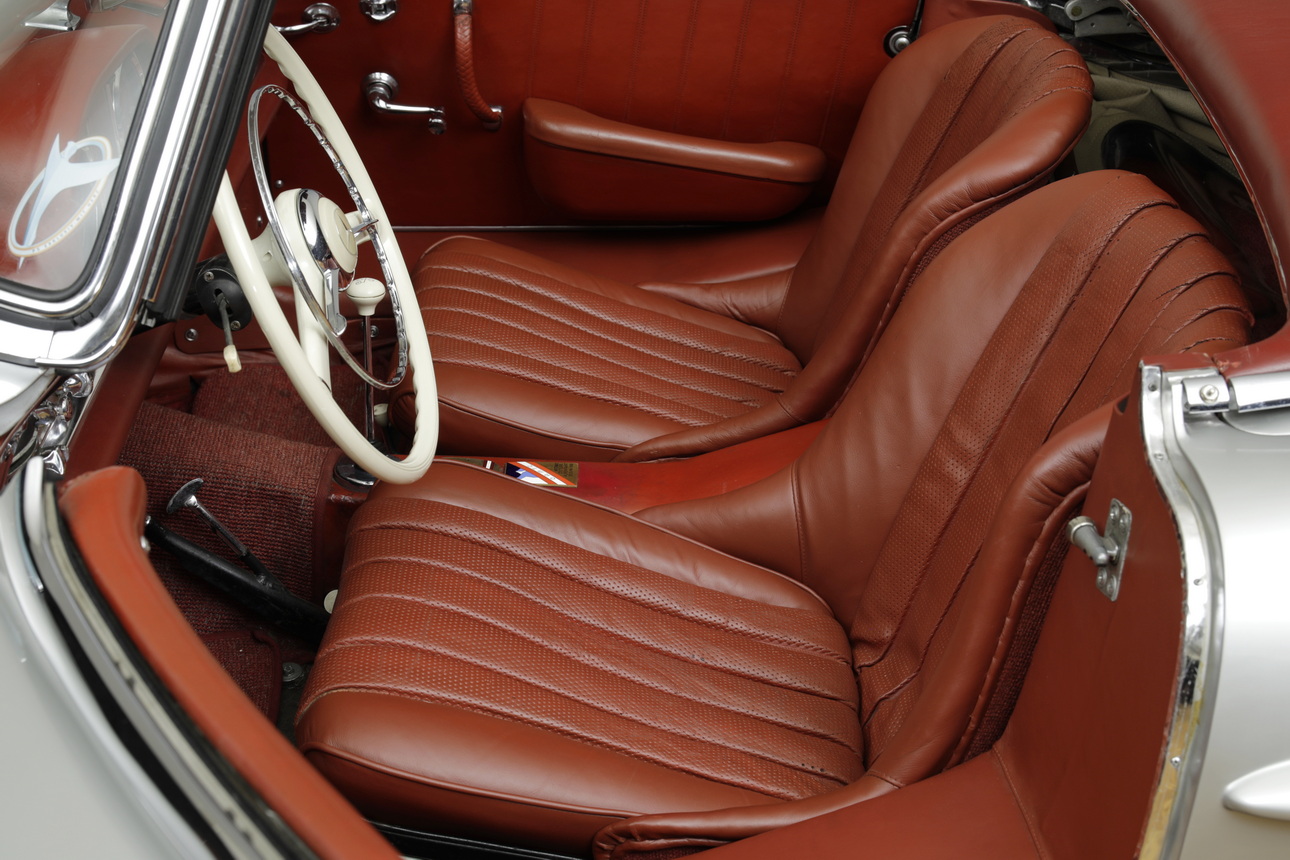
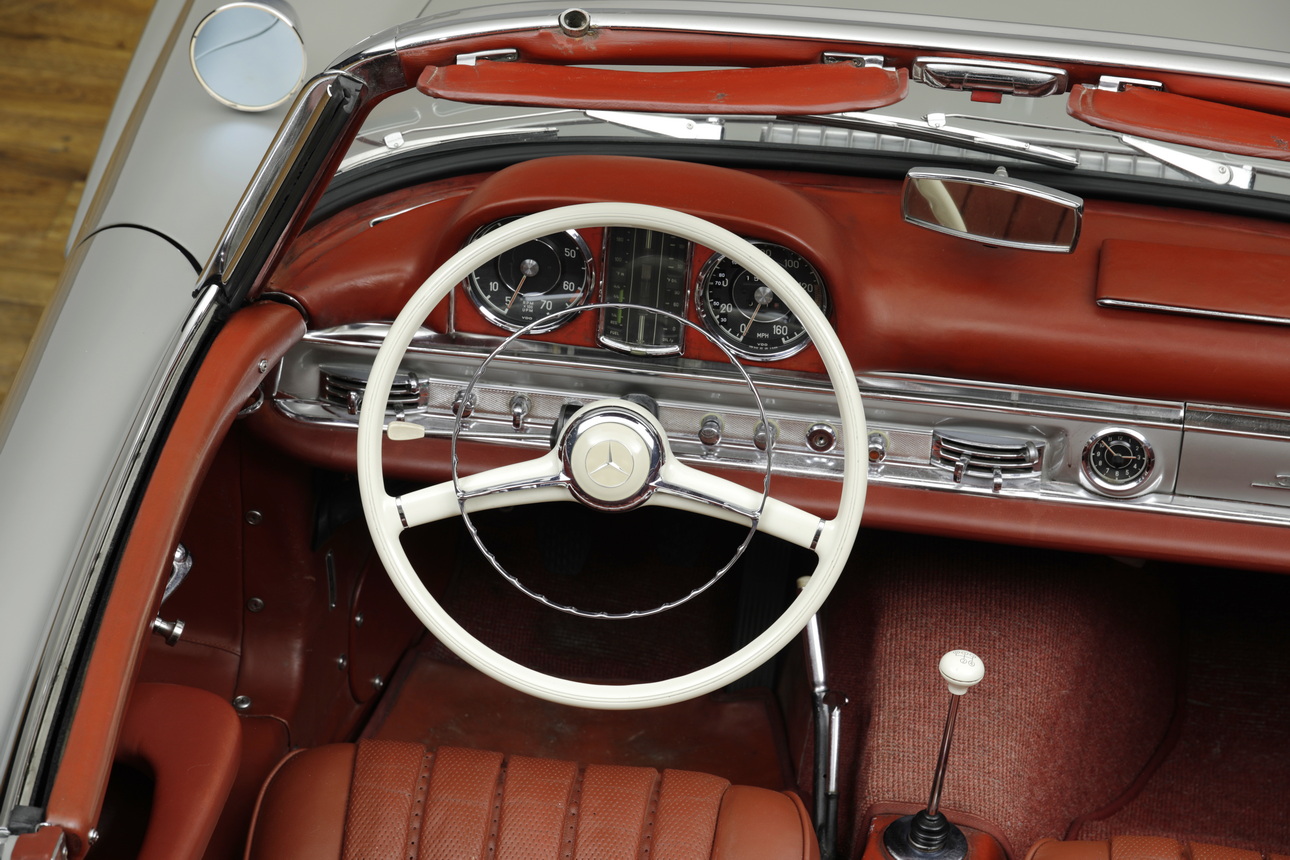
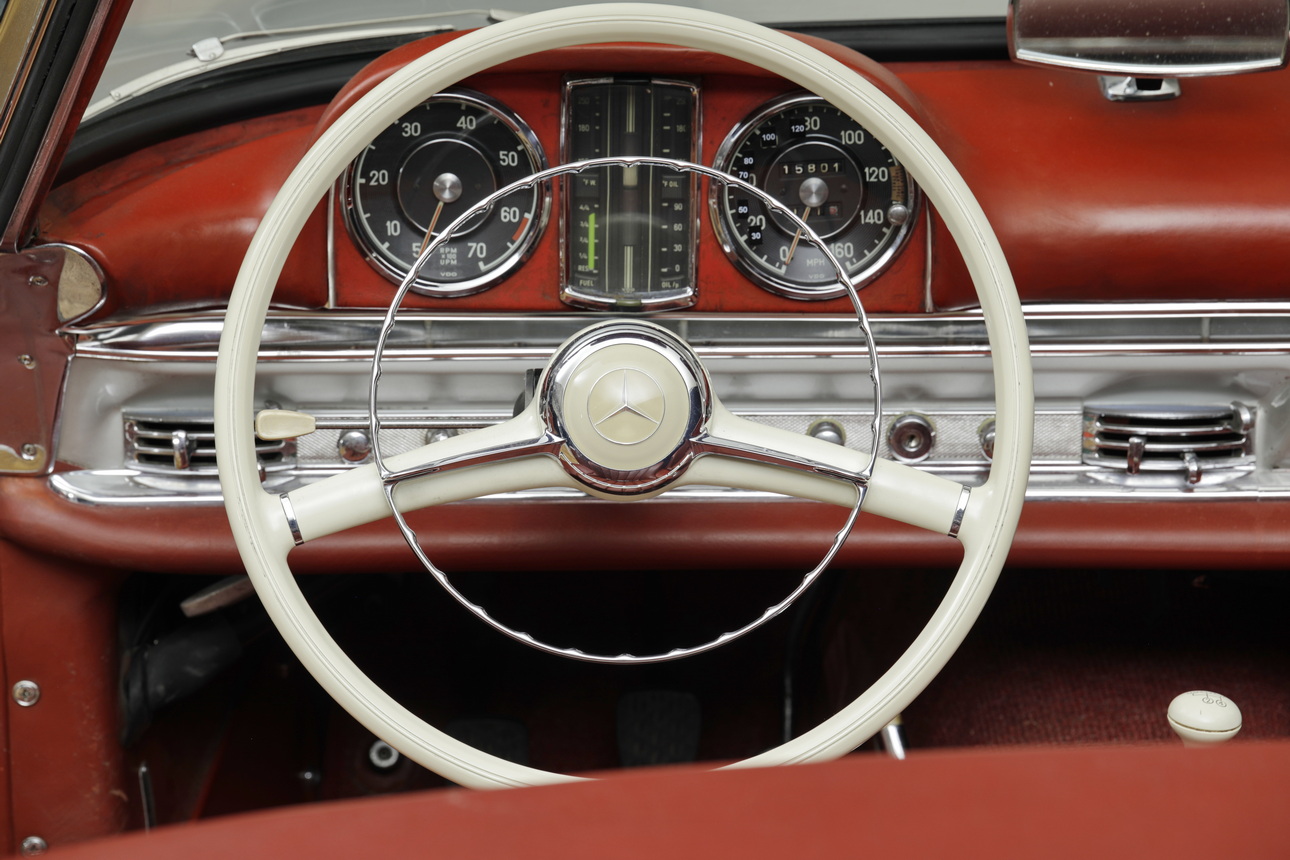
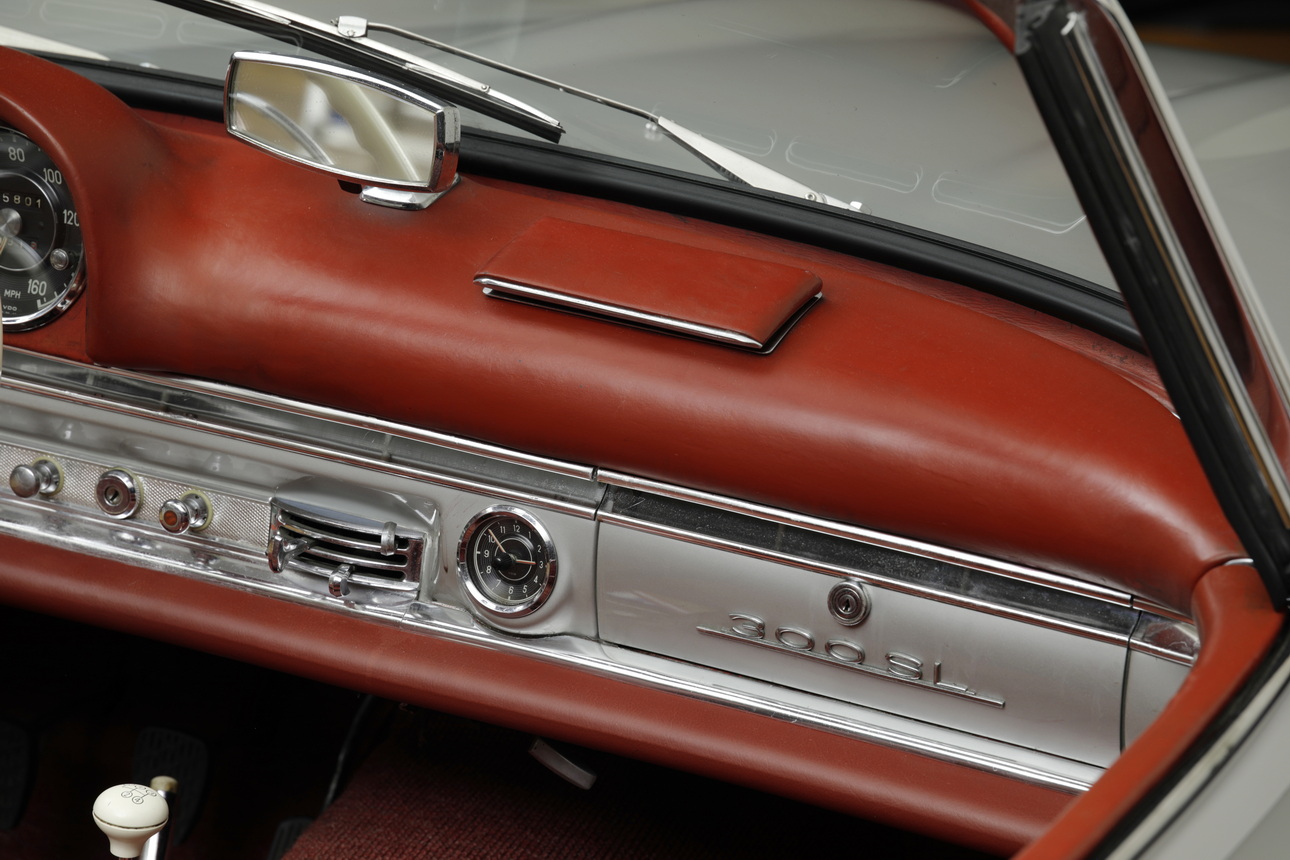
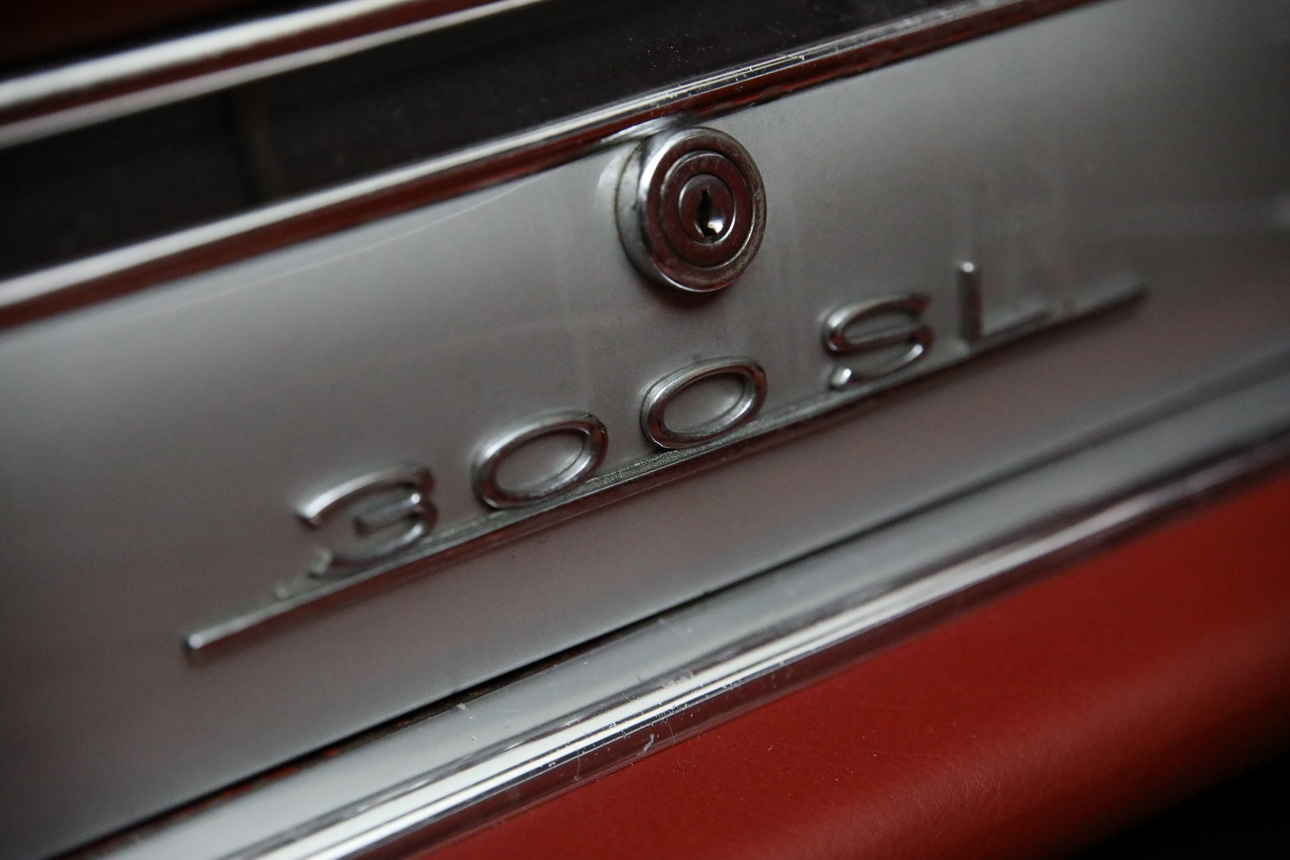
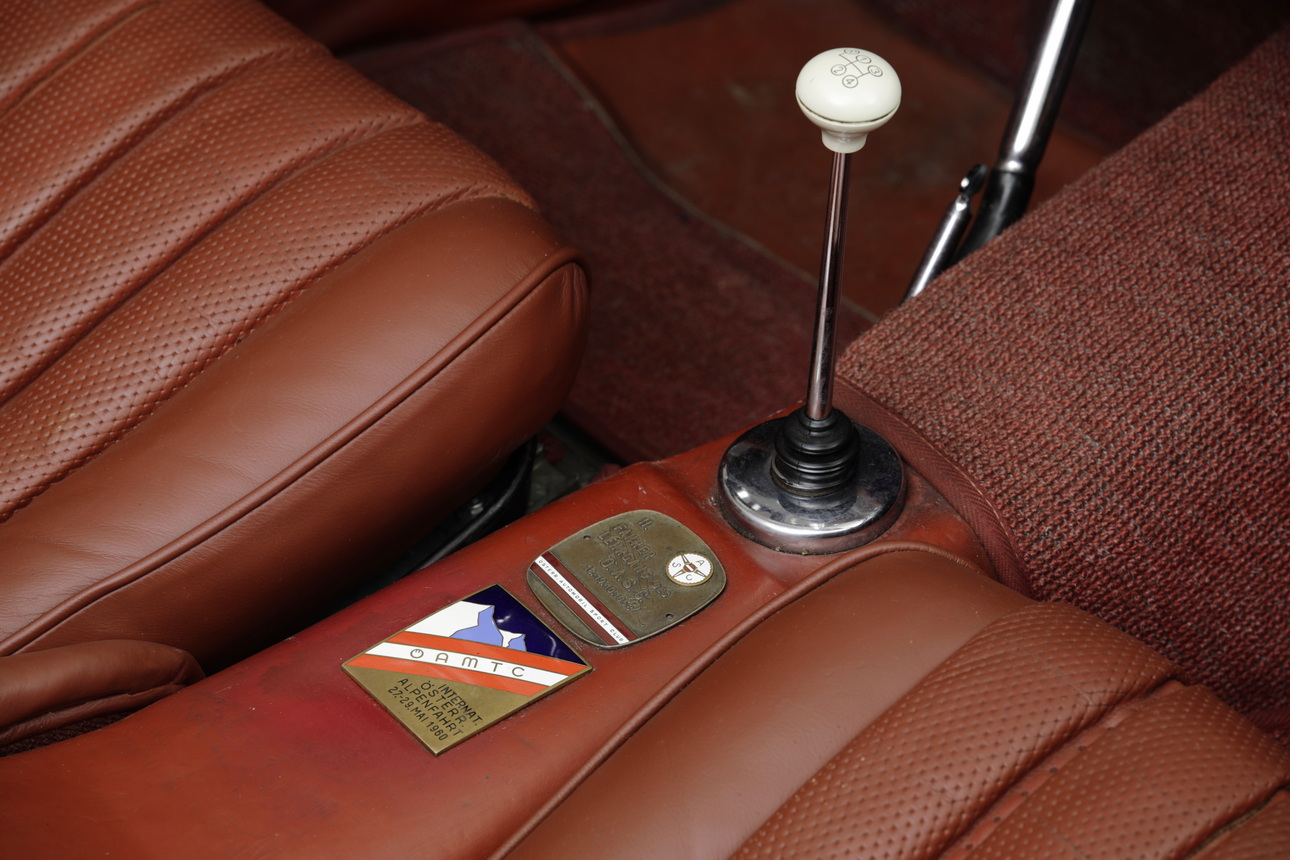
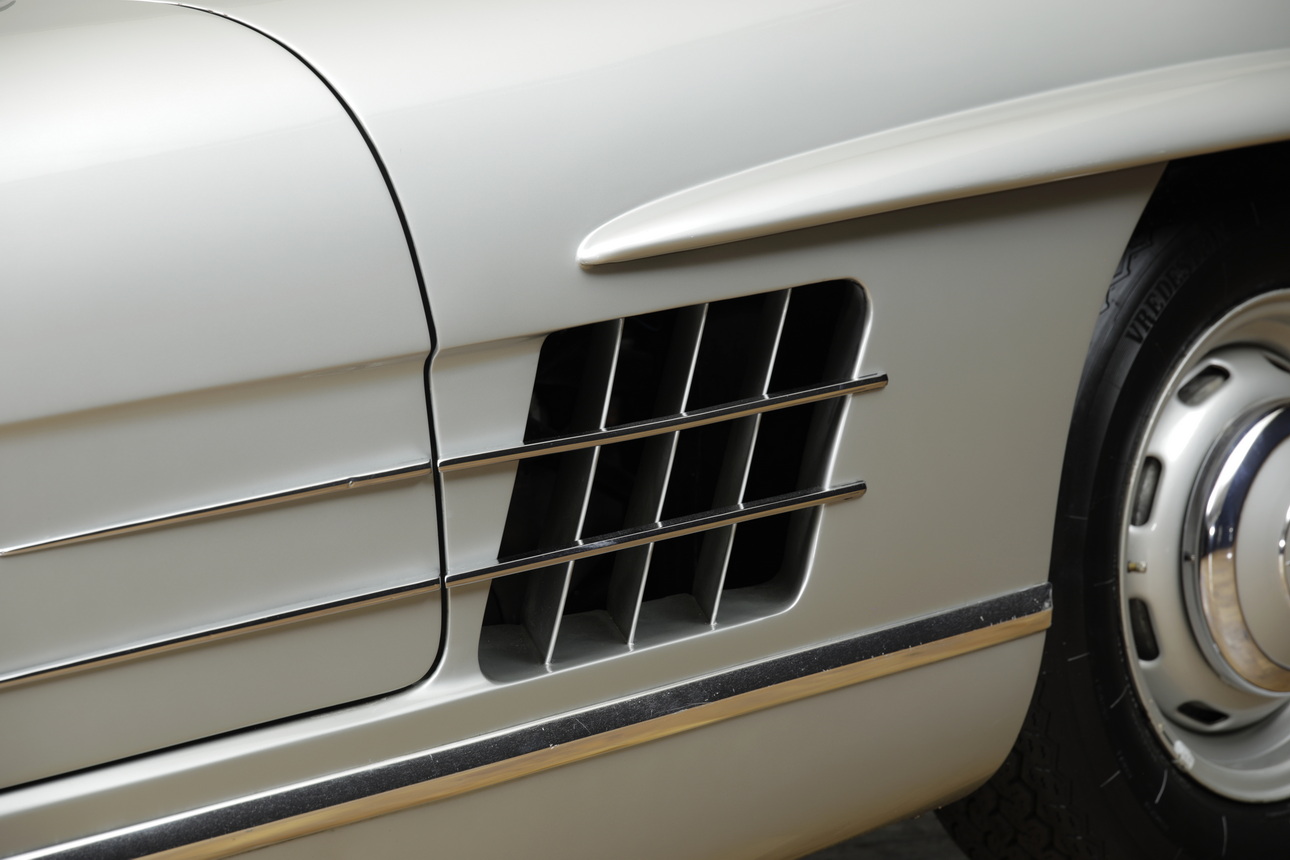
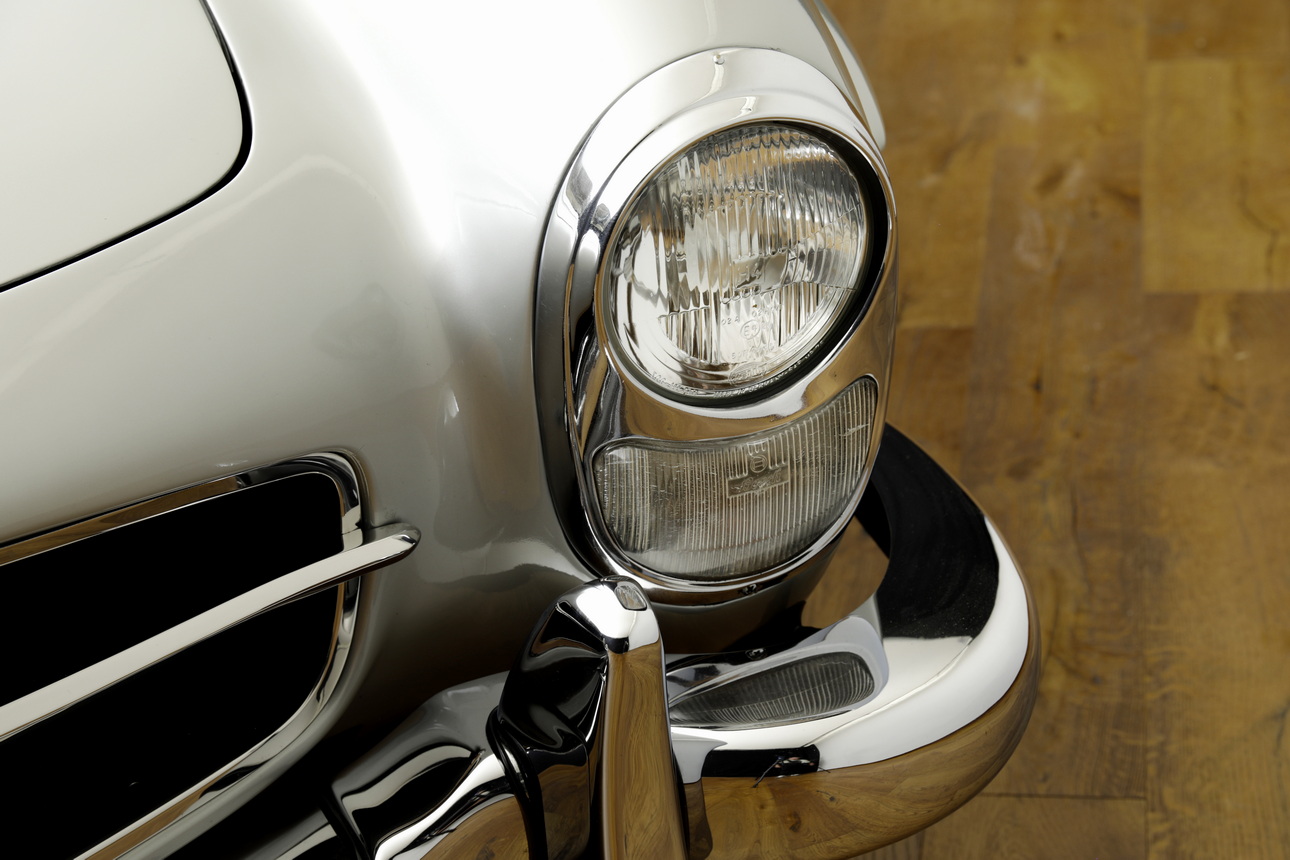
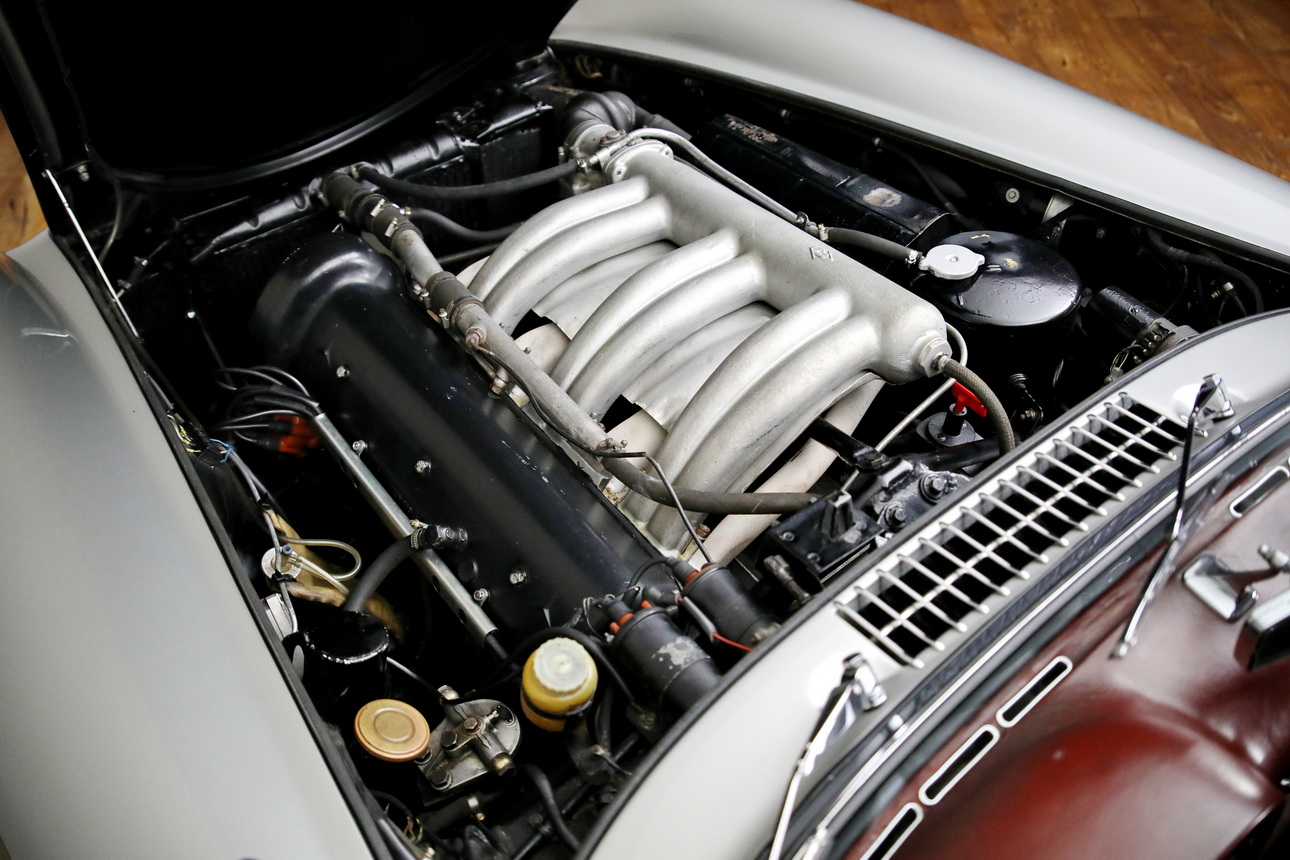
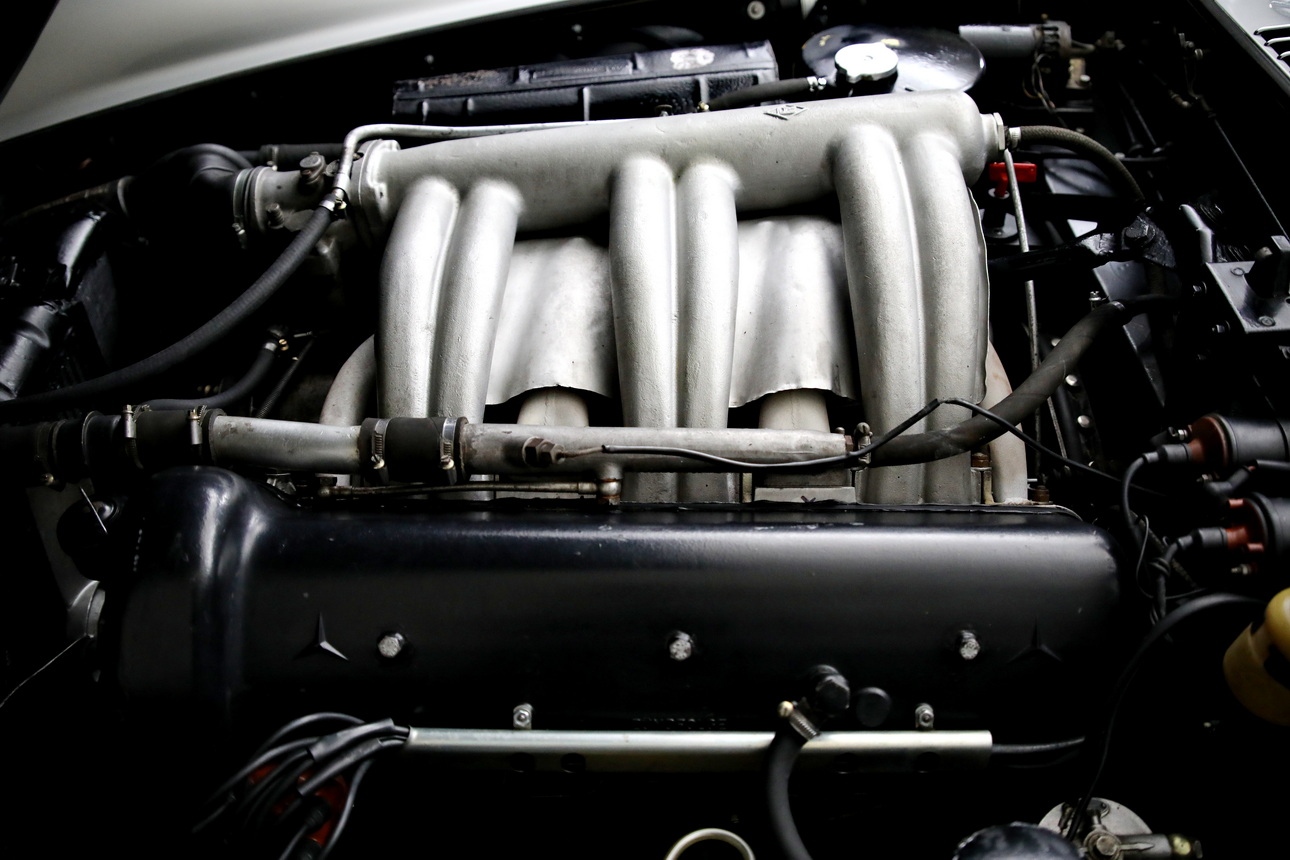
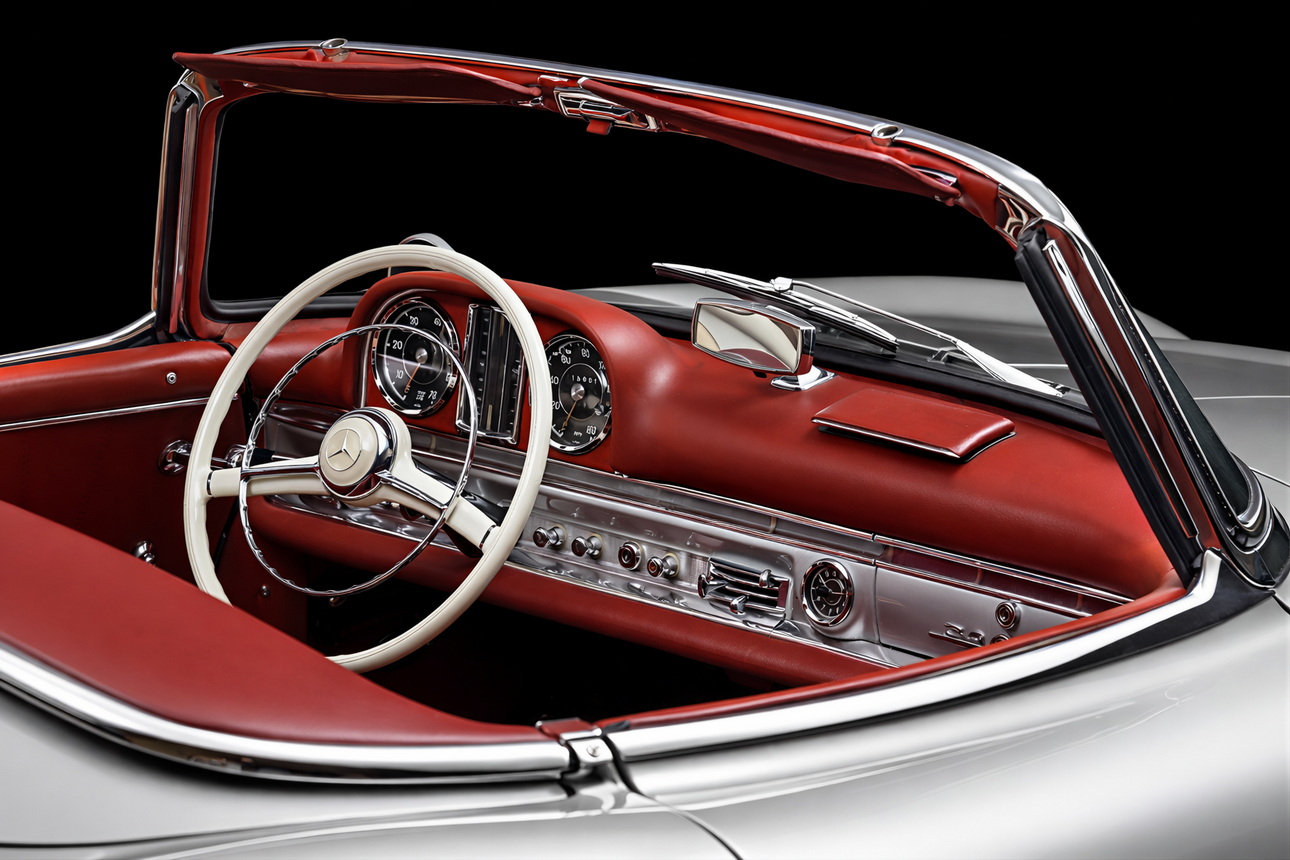
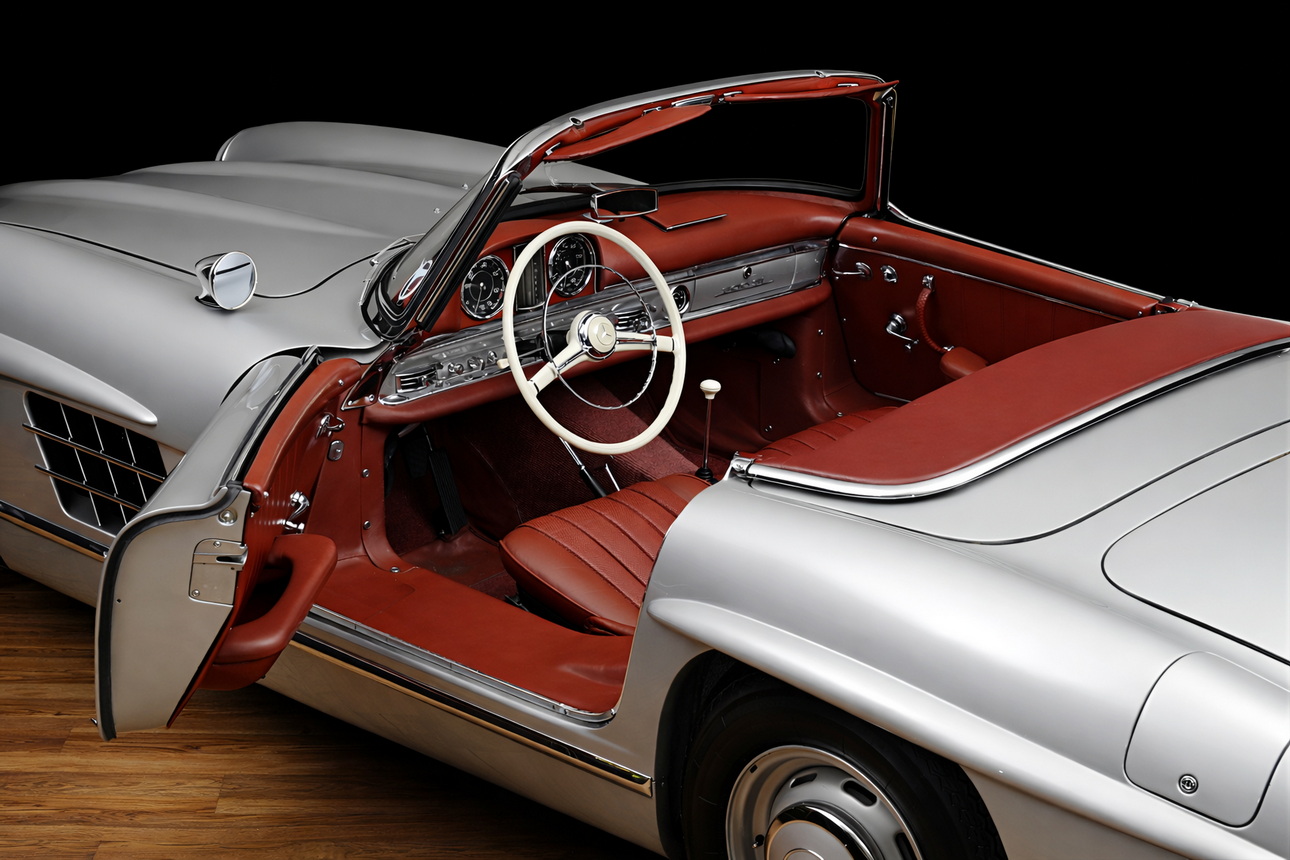
This example impresses with its very solid overall condition and good degree of originality, still featuring its original leather interior with patina. In terms of technical originality, the 300 SL offers matching numbers for the engine, gearbox, front axle and rear axle. Over time, however, the paintwork has been renewed and changed to silver metallic. A look into the light wells of the front headlights gives an indication of the good substance and quality of the bodywork, and the compression diagram testifies to a robust engine on all six cylinders. All type plates are original and in the correct place.
Overall, this 300 SL is an excellent driver's car or an outstanding basis for further optimisation according to your own needs and taste, for example, repainting it in the original colour and carrying out some technical overhauls. The attractive price leaves sufficient margin for such measures.
Model History
In 1952, the Daimler-Benz Board of Management decided to participate in international racing again and had the 300 SL racing sports car (W194) developed. Already in the same year, the car achieved remarkable successes: 2nd place at the Mille Miglia, a double victory at Le Mans with a new speed record. A quadruple record (!) at the Nürburgring followed and 1st place at the Carrera Pan Americana in Mexico.
These motorsport successes were also to be used commercially. In 1954, the road version of the 300 SL (W198) celebrated its debut in New York. The most striking features were the gullwing doors that swung upwards. The reason for this was the construction: As with the 1952 racing sports car, the road version is based on consistent lightweight structure, with a lattice tube frame carrying the engine, gearbox and axles and not allowing for conventional doors. It is also the world's first series-production passenger car with direct petrol injection.
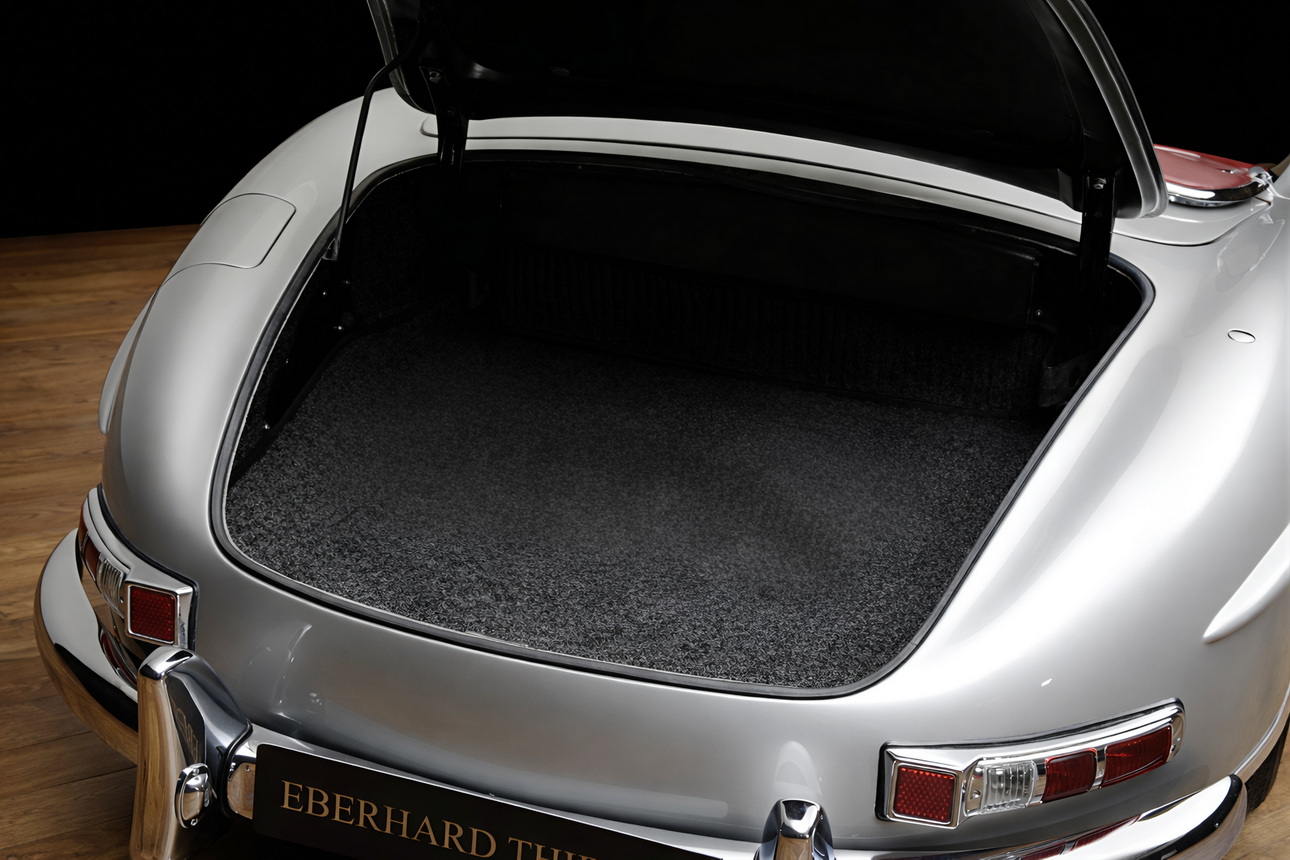
At the Geneva Motor Show in March 1957, a roadster was presented as the successor to the Gullwing, which was technically essentially the same as the coupé. However, by modifying the side panels of the lattice tube frame, the entry height could be reduced to such an extent that ordinary doors could be realised. Thanks to a flatter rear frame and a redesigned fuel tank, the spare wheel was located under the floor. Hence, there was now space for a boot.
The rear suspension was fundamentally improved: The single-joint swing axle with a lowered pivot point, already known from the Type 220a, was now also fitted in an adapted form to the 300 SL Roadster and was equipped with a compensating spring for the first time. Compared to the Gullwing version, significantly improved driving characteristics were achieved.
Of the technical changes that went into production over the course of six years, two are particularly relevant: In March 1961, the 300 SL received Dunlop disc brakes on all four wheels, and from March 1962, a modified engine with light-alloy block was fitted. 1,858 examples of the open-top roadster were built, compared with 1,400 Gullwing versions before.
Both as a coupé and as a roadster, the 300 SL was THE car of German and international celebrities in its day – including Sophia Loreen, Romy Schneider, Juan Manuel Fangio, Clark Gable, Tony Curtis, Herbert von Karajan, Hussein von Jordan, Curt Jürgens, Gunter Sachs and many more. Production of the 300 SL came to an end in February 1963, marking the end of an era at Daimler-Benz. Both versions of the 300 SL, Roadster and Gullwing, were special enthusiasts' cars from the very beginning and have lost none of their fascination to this day.
This Automobile
This Mercedes Benz 300 SL Roadster was completed at the factory in December 1959 and delivered to the Mercedes Benz dealership Carlo Saporiti in Milan, Italy. According to the available data card and delivery note, the original colour scheme was white (colour code 50) with a red leather interior (colour code 1088) and a black rubber fabric soft top (colour code 872). The equipment included a coupé roof (hardtop) in white (colour code 50). It was a special version for the USA with a rear axle ratio of 1:3.89 miles.
This specification is consistent with the further history of the car. According to the Mercedes Benz 300 SL Register, it probably went directly to its first owner in the USA, who kept the car until 1963. The second owner then kept the 300 SL for a full 16 years until 1989. The Gemini Motor Works company is listed as the third owner from 1991 to 1995. In 1995, the 300 SL was purchased by an Austrian and imported from the USA. He then added the car to his small private classic car museum and also used it occasionally for trips. In 2018, the 300 SL was purchased by his son. Such a small number of owners, with only four (or five respectively), is relatively rare.
This example impresses with its very solid overall condition and good degree of originality, still featuring its original leather interior with patina. In terms of technical originality, the 300 SL offers matching numbers for the engine, gearbox, front axle and rear axle. Over time, however, the paintwork has been renewed and changed to silver metallic. A look into the light wells of the front headlights gives an indication of the good substance and quality of the bodywork, and the compression diagram testifies to a robust engine on all six cylinders. All type plates are original and in the correct place.
Overall, this 300 SL is an excellent driver's car or an outstanding basis for further optimisation according to your own needs and taste, for example, repainting it in the original colour and carrying out some technical overhauls. The attractive price leaves sufficient margin for such measures.
Model History
In 1952, the Daimler-Benz Board of Management decided to participate in international racing again and had the 300 SL racing sports car (W194) developed. Already in the same year, the car achieved remarkable successes: 2nd place at the Mille Miglia, a double victory at Le Mans with a new speed record. A quadruple record (!) at the Nürburgring followed and 1st place at the Carrera Pan Americana in Mexico.
These motorsport successes were also to be used commercially. In 1954, the road version of the 300 SL (W198) celebrated its debut in New York. The most striking features were the Gullwing doors that swung upwards. The reason for this was the construction: As with the 1952 racing sports car, the road version is based on consistent lightweight structure, with a lattice tube frame carrying the engine, gearbox and axles and not allowing for conventional doors. It is also the world's first series-production passenger car with direct petrol injection.
At the Geneva Motor Show in March 1957, a roadster was presented as the successor to the Gullwing, which was technically essentially the same as the coupé. However, by modifying the side panels of the lattice tube frame, the entry height could be reduced to such an extent that ordinary doors could be realised. Thanks to a flatter rear frame and a redesigned fuel tank, the spare wheel was located under the floor. Hence, there was now space for a boot.
The rear suspension was fundamentally improved: The single-joint swing axle with a lowered pivot point, already known from the Type 220a, was now also fitted in an adapted form to the 300 SL Roadster and was equipped with a compensating spring for the first time. Compared to the Gullwing version, significantly improved driving characteristics were achieved.
Of the technical changes that went into production over the course of six years, two are particularly relevant: In March 1961, the 300 SL received Dunlop disc brakes on all four wheels, and from March 1962, a modified engine with light-alloy block was fitted. 1,858 examples of the open-top roadster were built, compared with 1,400 Gullwing versions before.
Both as a coupé and as a roadster, the 300 SL was THE car of German and international celebrities in its day – including Sophia Loreen, Romy Schneider, Juan Manuel Fangio, Clark Gable, Tony Curtis, Herbert von Karajan, Hussein von Jordan, Curt Jürgens, Gunter Sachs and many more. Production of the 300 SL came to an end in February 1963, marking the end of an era at Daimler-Benz. Both versions of the 300 SL, Roadster and Gullwing, were special enthusiasts' cars from the very beginning and have lost none of their fascination to this day.