Mercedes-Benz 190 E 2.5-16 Evolution

Highlights
Data & Facts
This Automobile
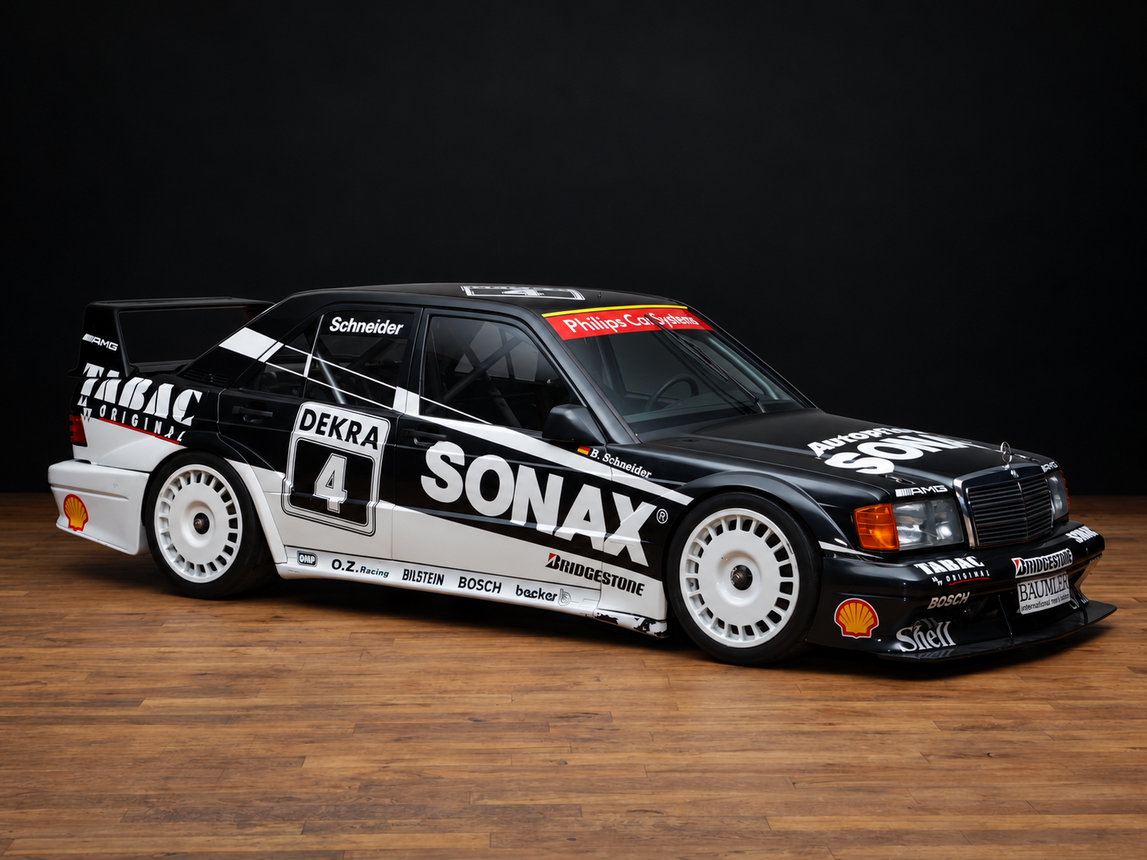
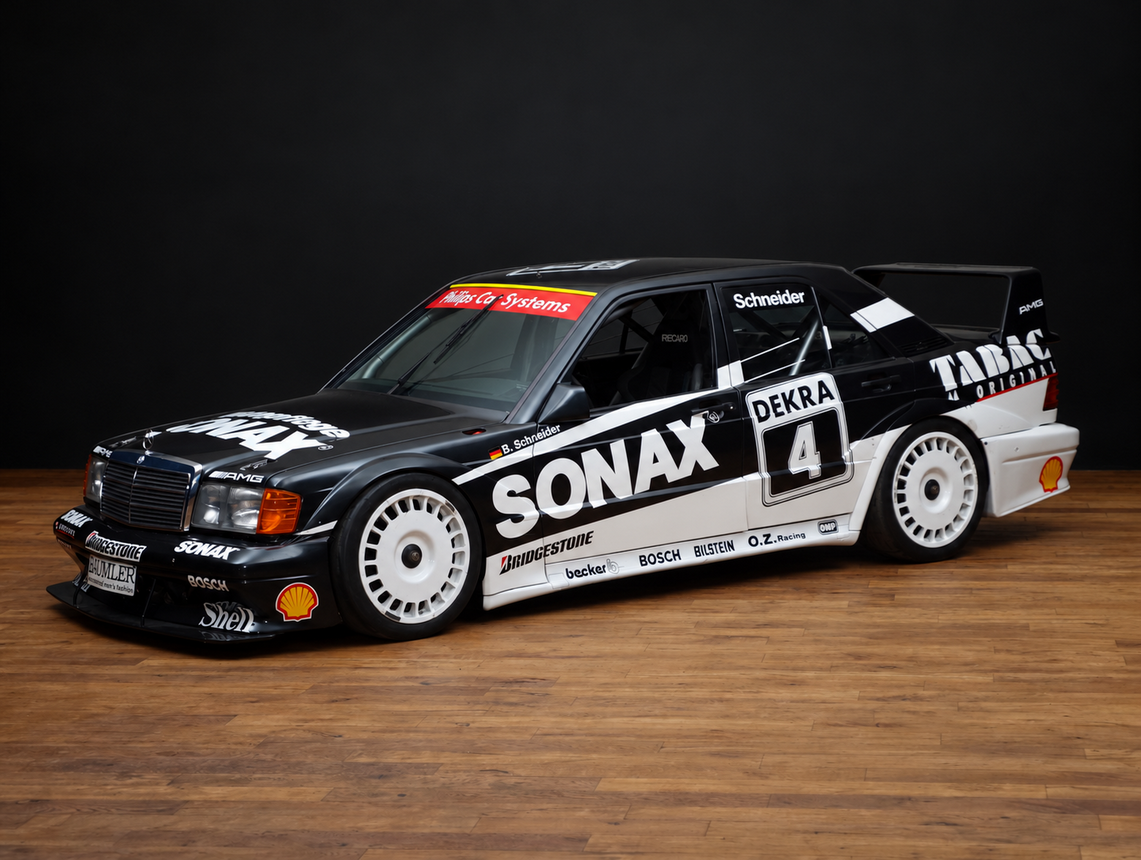
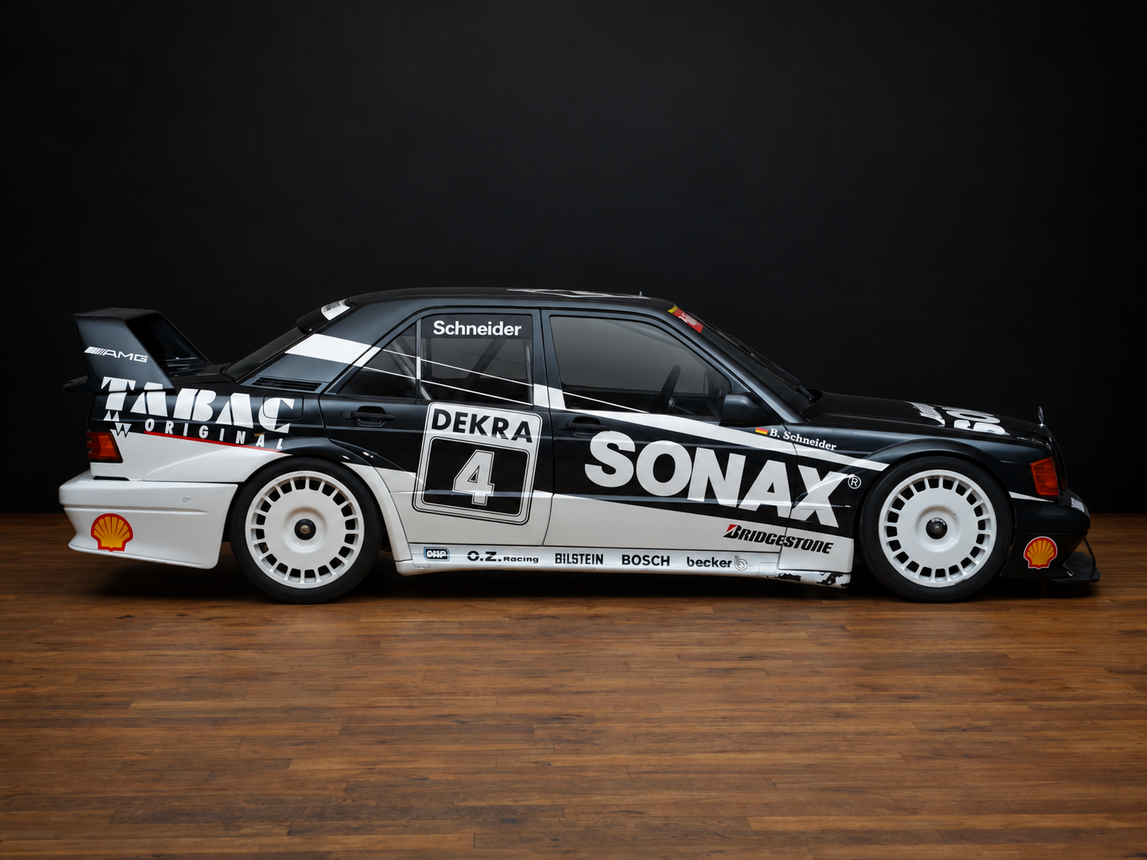
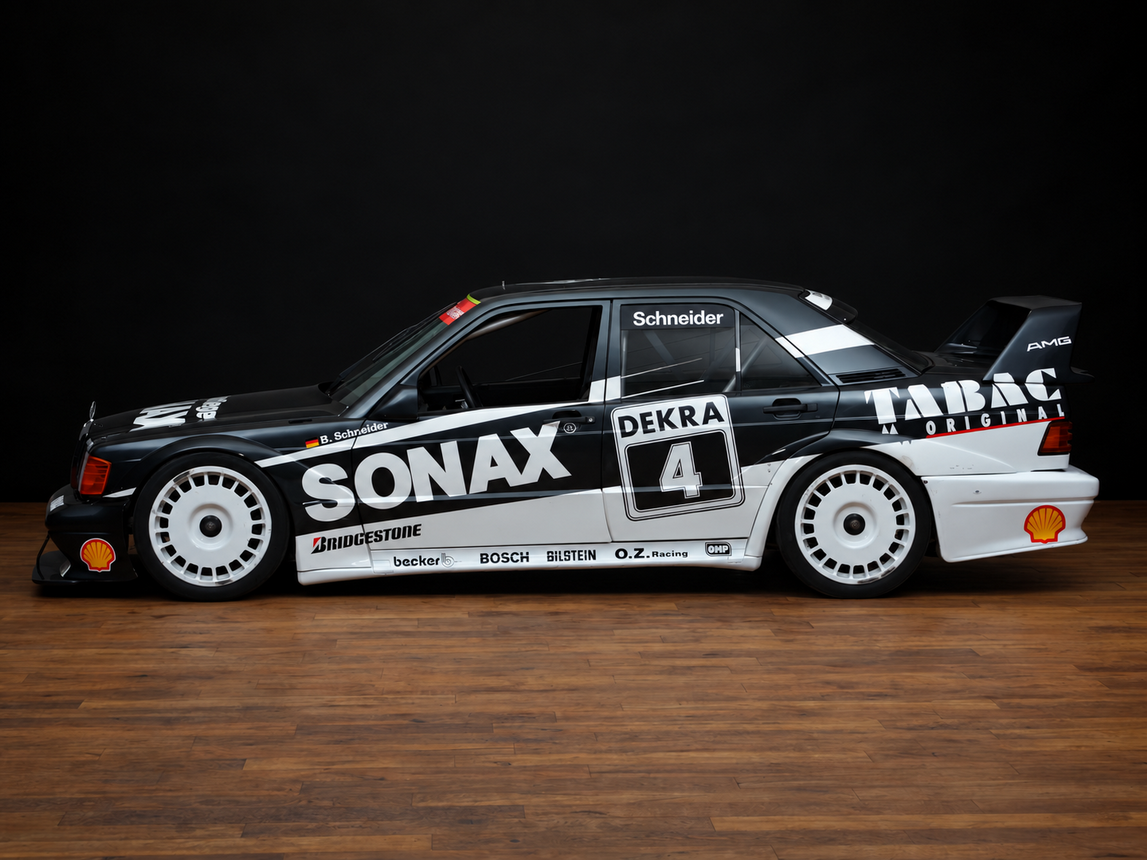
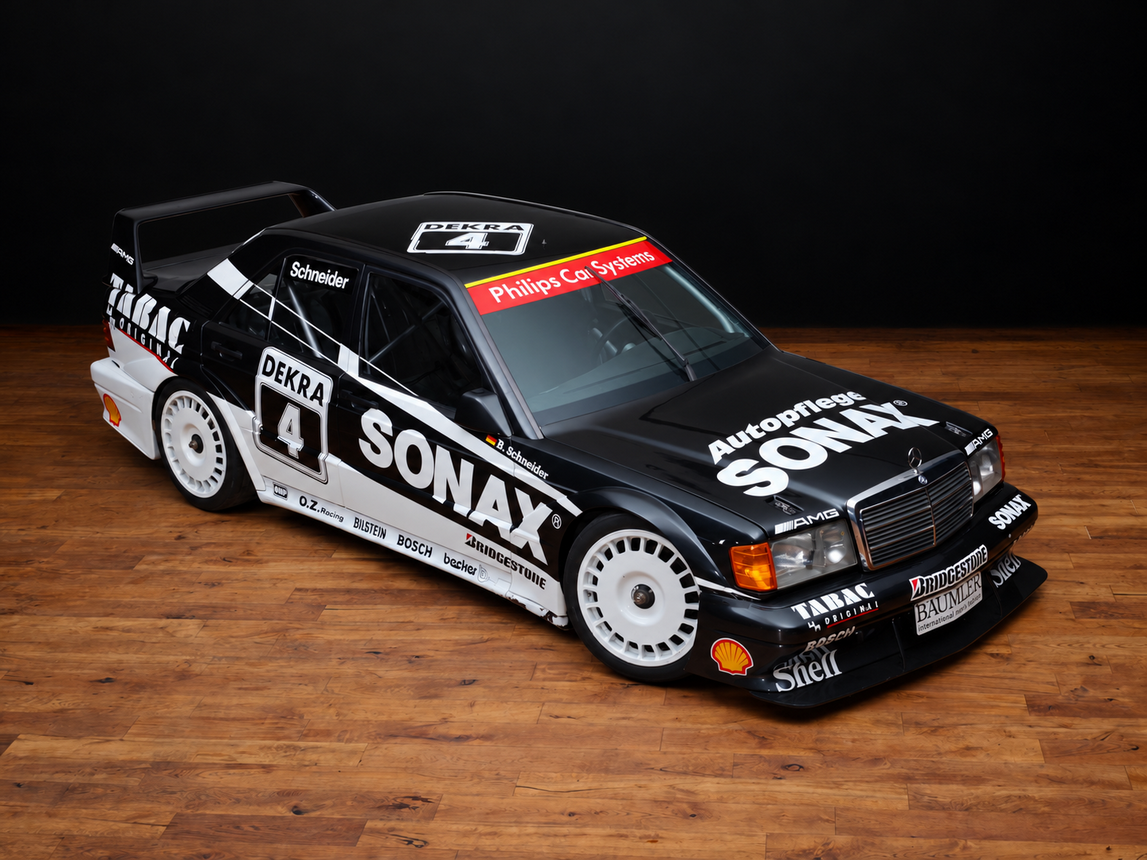
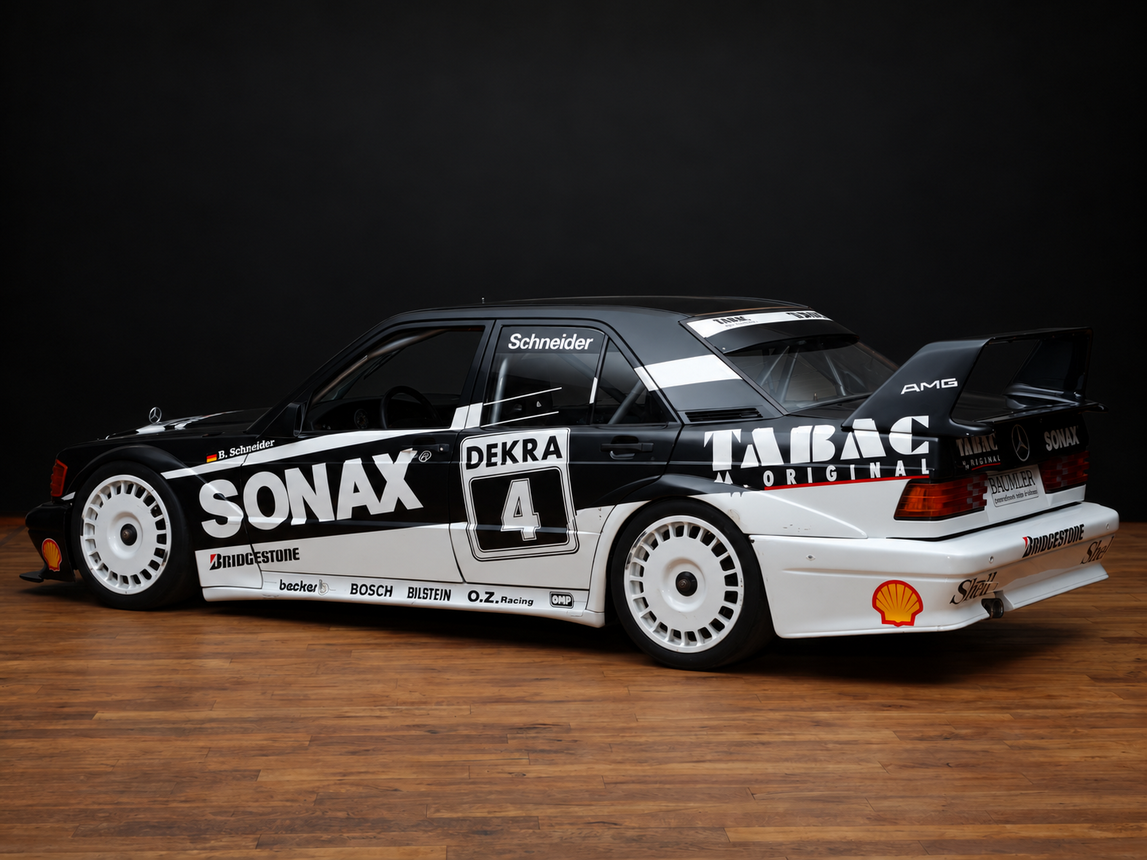
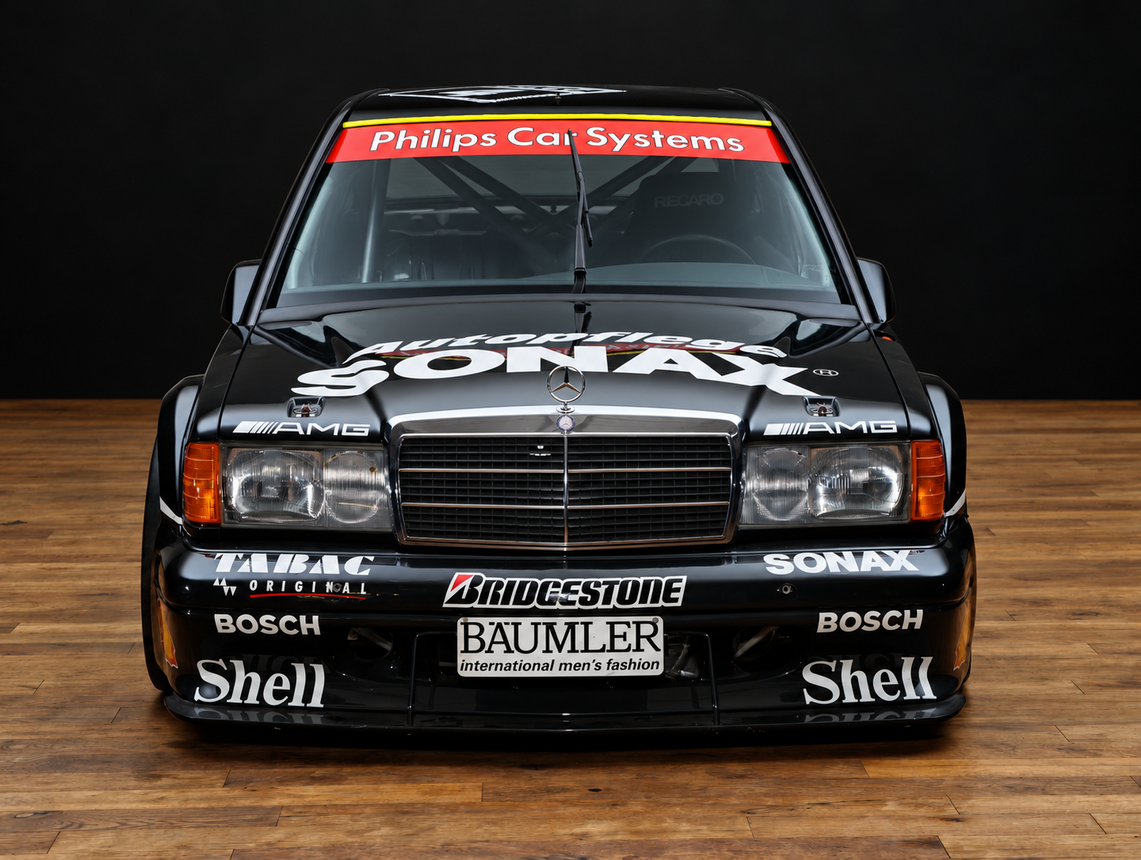
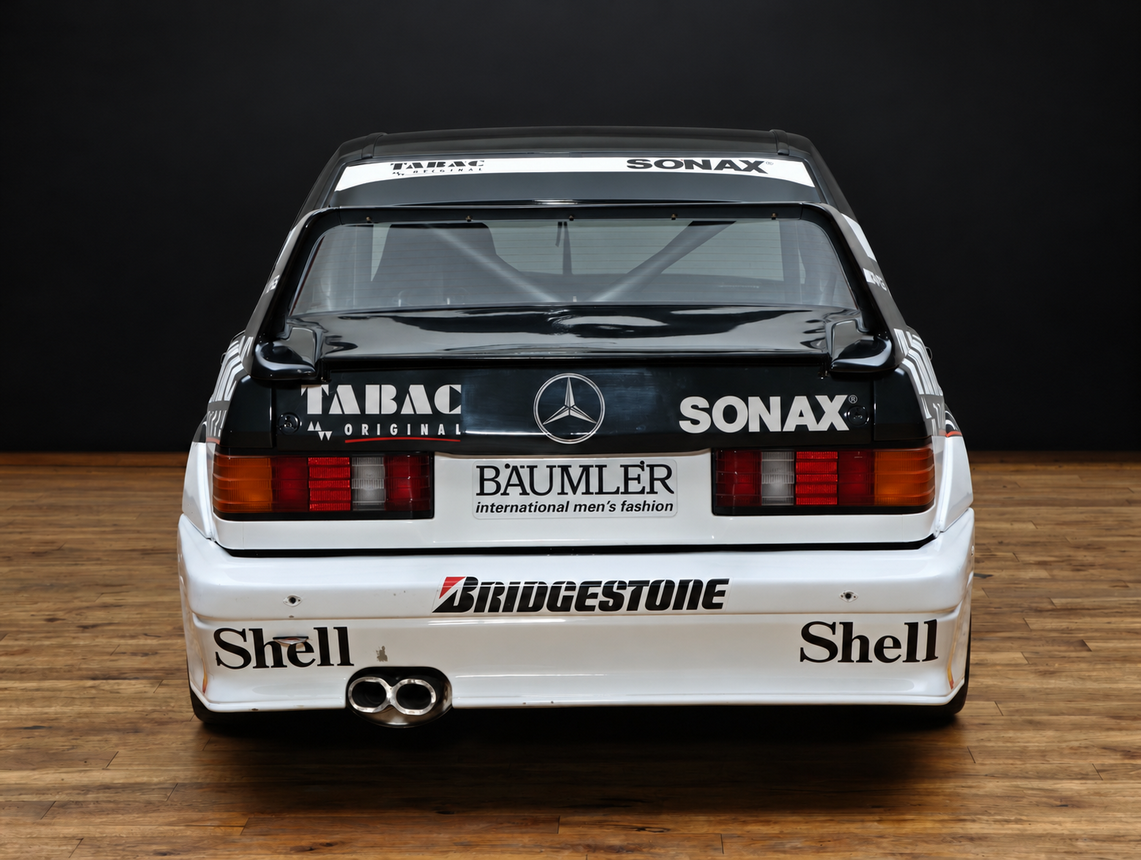
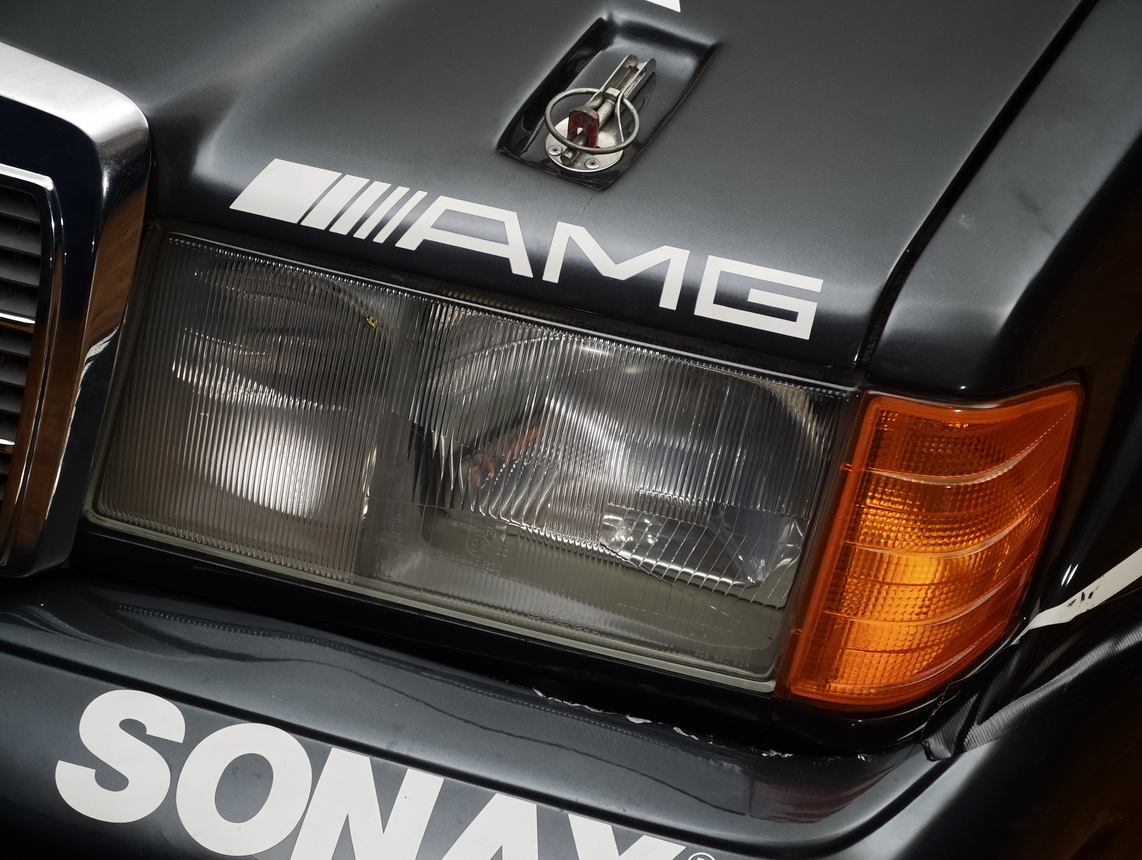
This Mercedes-Benz 190 E 2.5-16 Evolution is a racing car built to DTM specification and was acquired by its current owner from the Mercedes-Benz Museum. It is based on a first-stage 190 E 2.5-16 Evolution and was built up with the Evolution II DTM body kit together with numerous components from the Evolution II and DTM programmes. A photo-documented inspection carried out in October 2026 by an experienced master technician working in the field dates the car’s technical specification to the development stage of 1990 and 1991 – the period in which Mercedes-Benz introduced the Evolution II to the German Touring Car Championship (DTM). In his assessment, the car was presumably built by Sport Technik as a test and development vehicle.
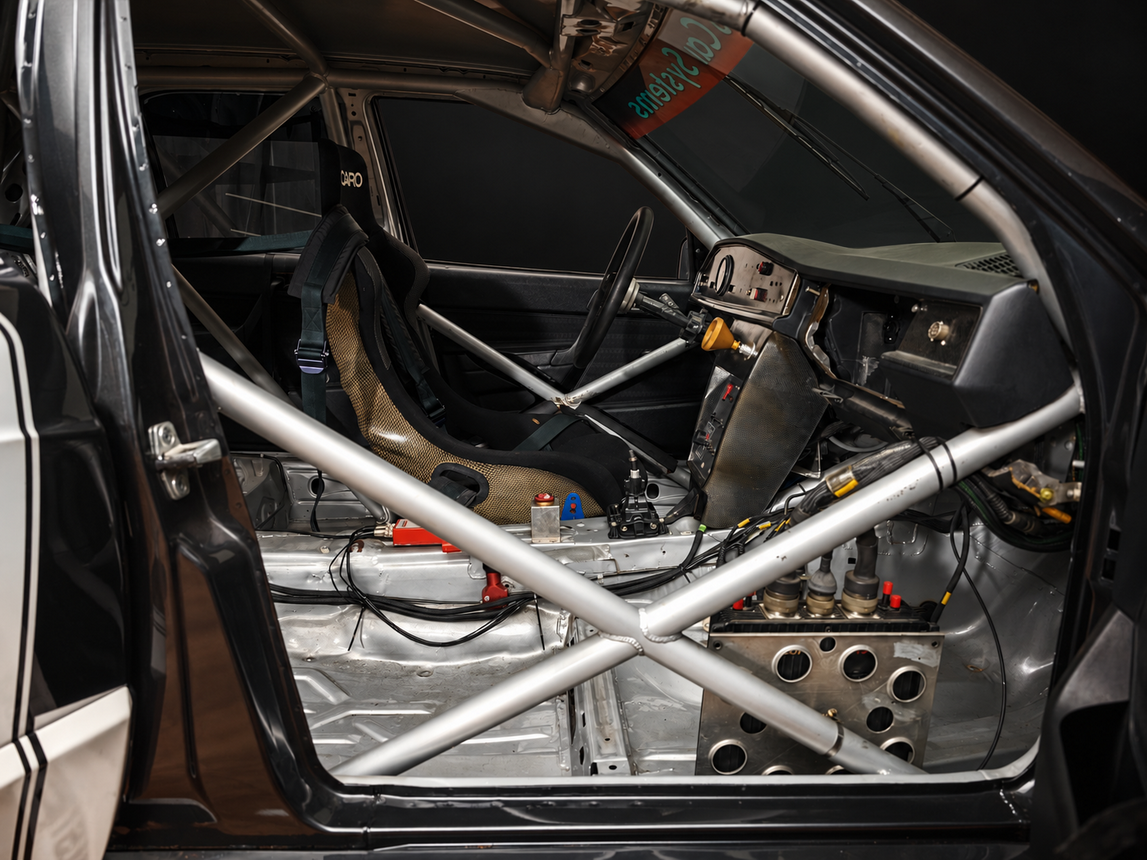
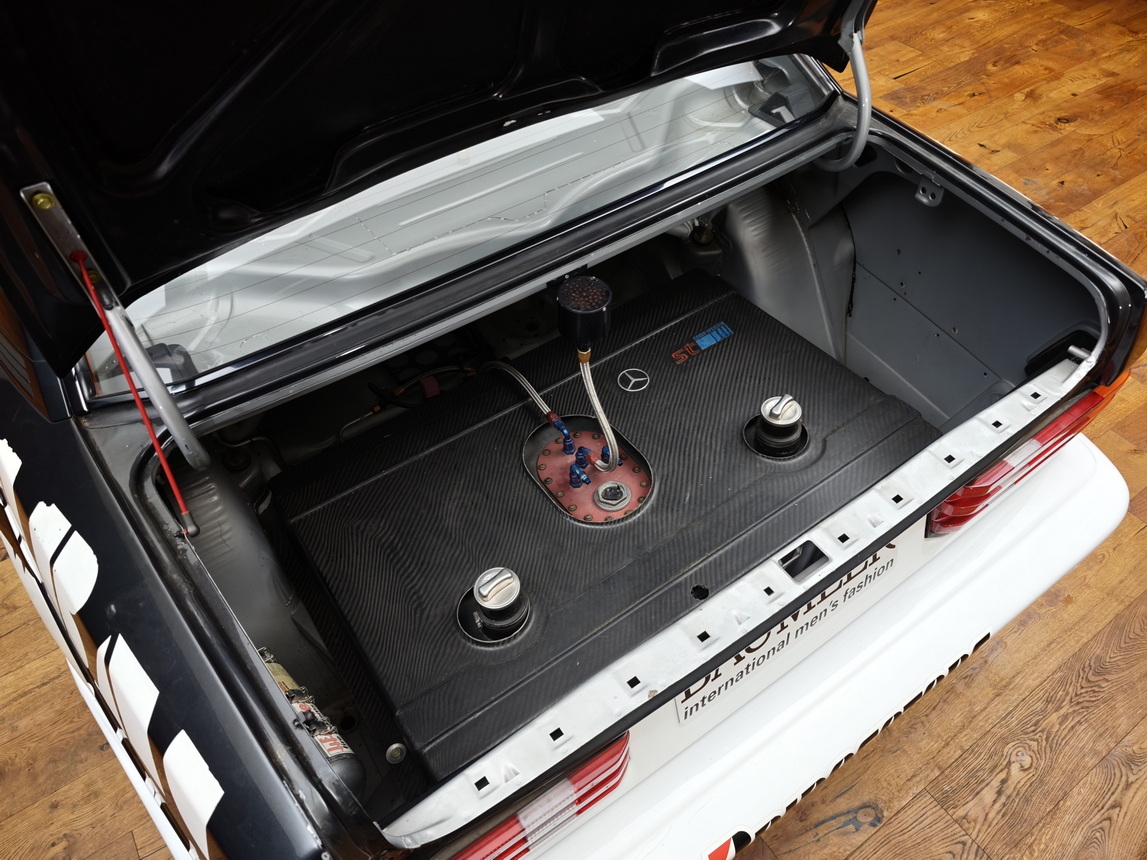
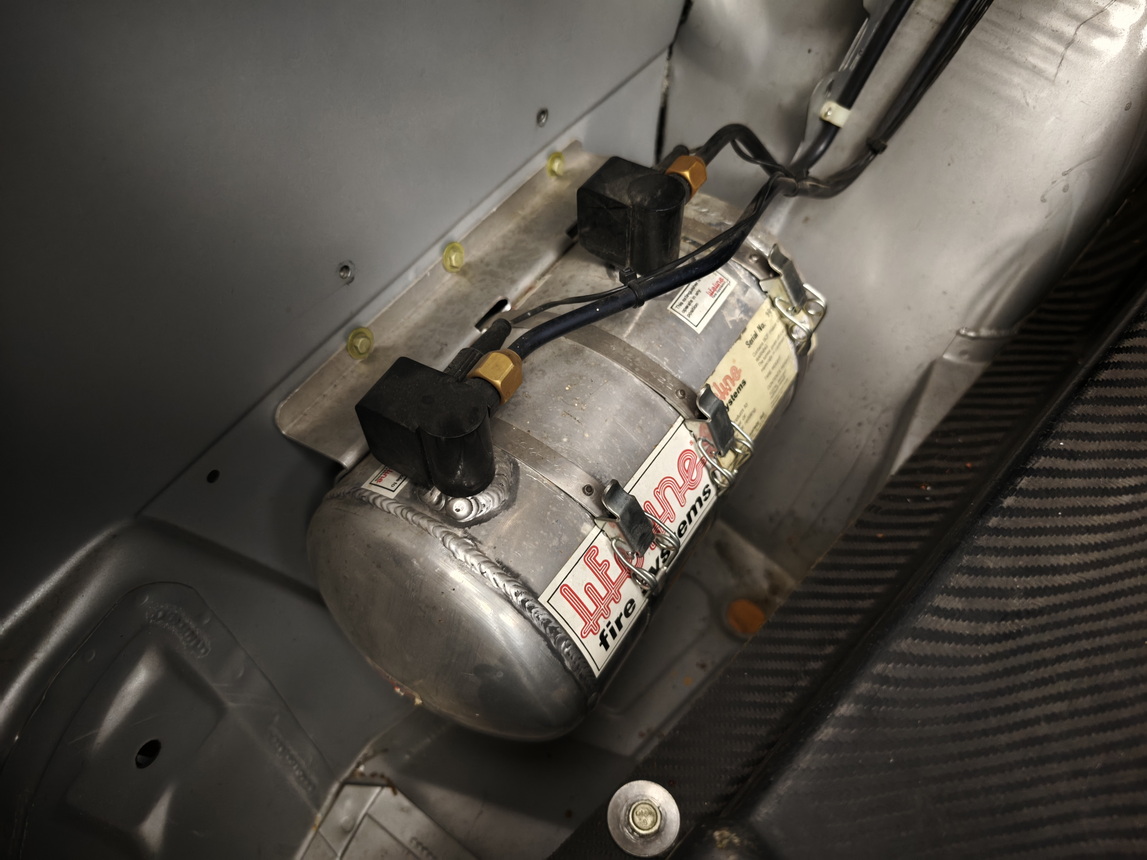
According to the inspection findings, numerous assemblies correspond to original DTM components of the period. The body kit is an original Evolution II DTM kit, the roll cage was made by Matter, and the fuel cell and its mounting correspond to the parts used in the DTM.
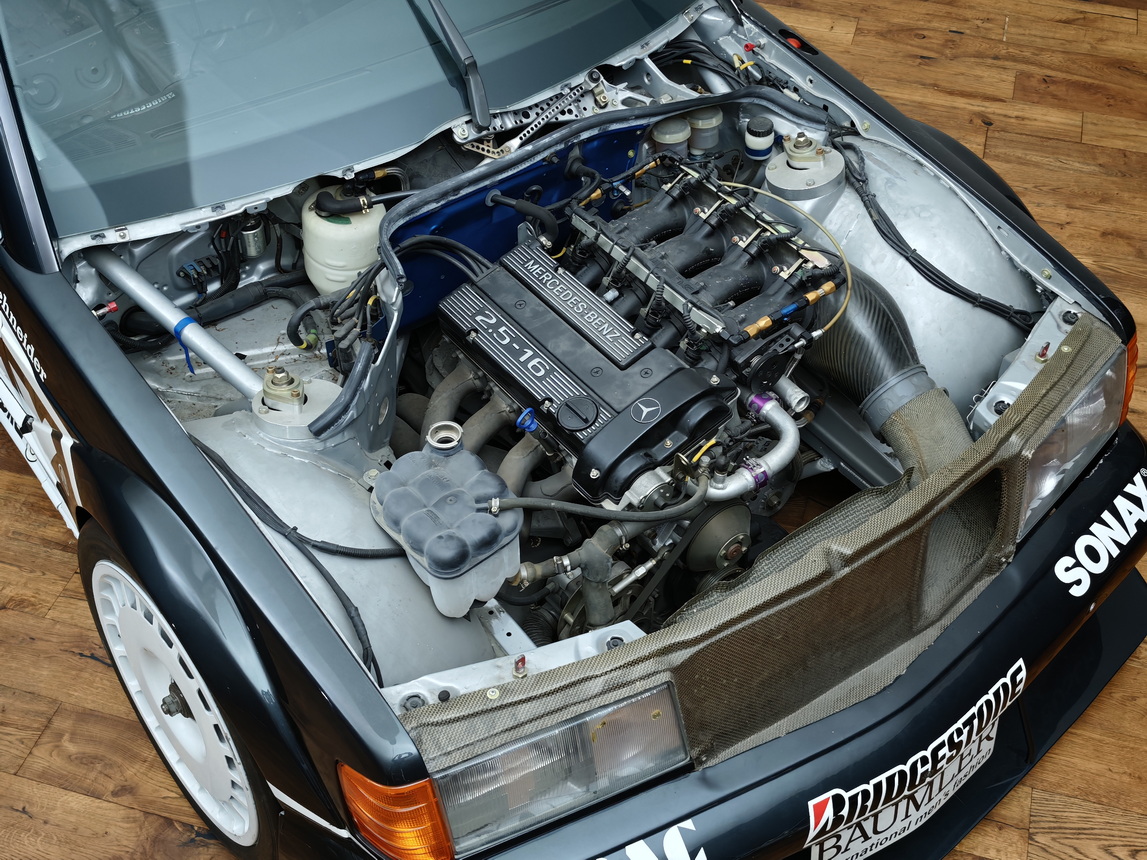
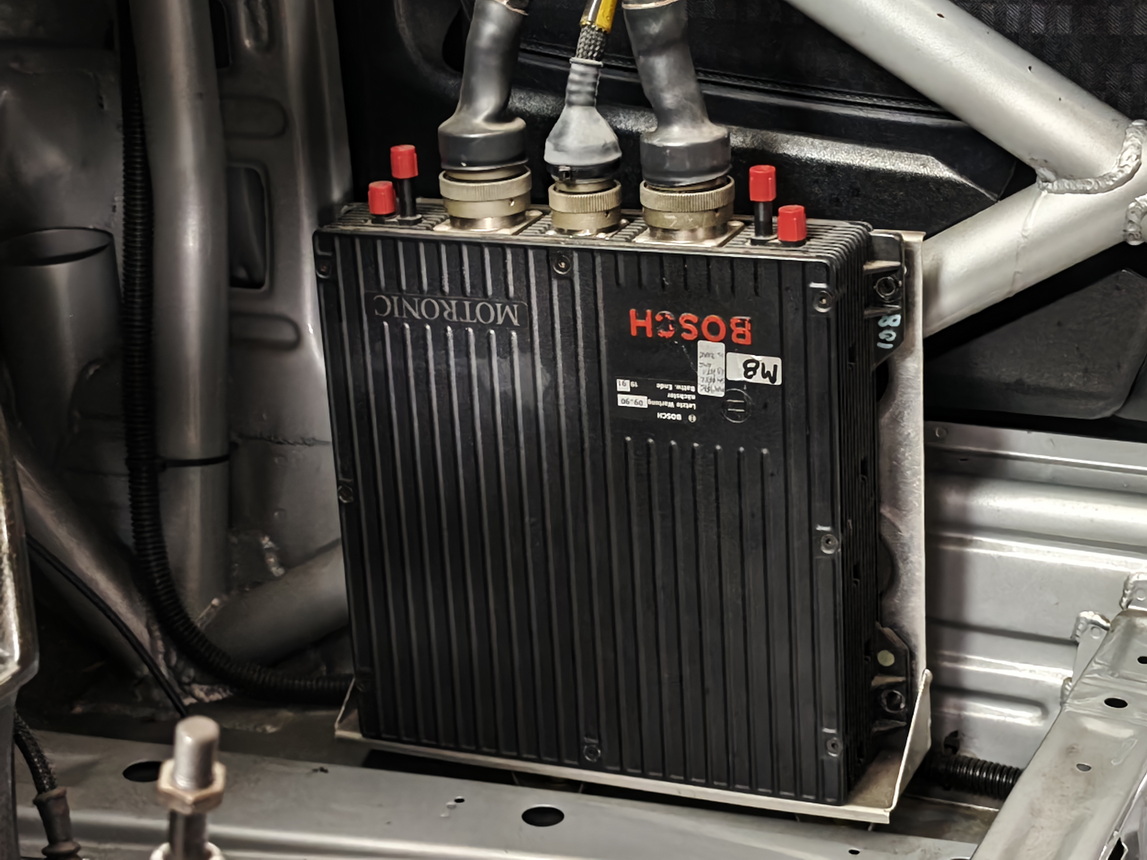
The front axle has been stiffened, its wishbones run in Uniball joints and the anti-roll bar is eight-way adjustable; the rear axle carries drive shafts, wheel carriers, spring links and Uniball struts to 1990/1991 specification. The gearbox and differential oil coolers are fed by carbon air ducts, and the braking system is by Lucas Girling. The four-cylinder engine is fitted with a Sport Technik intake manifold with the barrel throttle used in the 1991 season and an Inconel exhaust manifold from the DTM era; the Sport Technik oil sump bears the production date 11.09.1990.
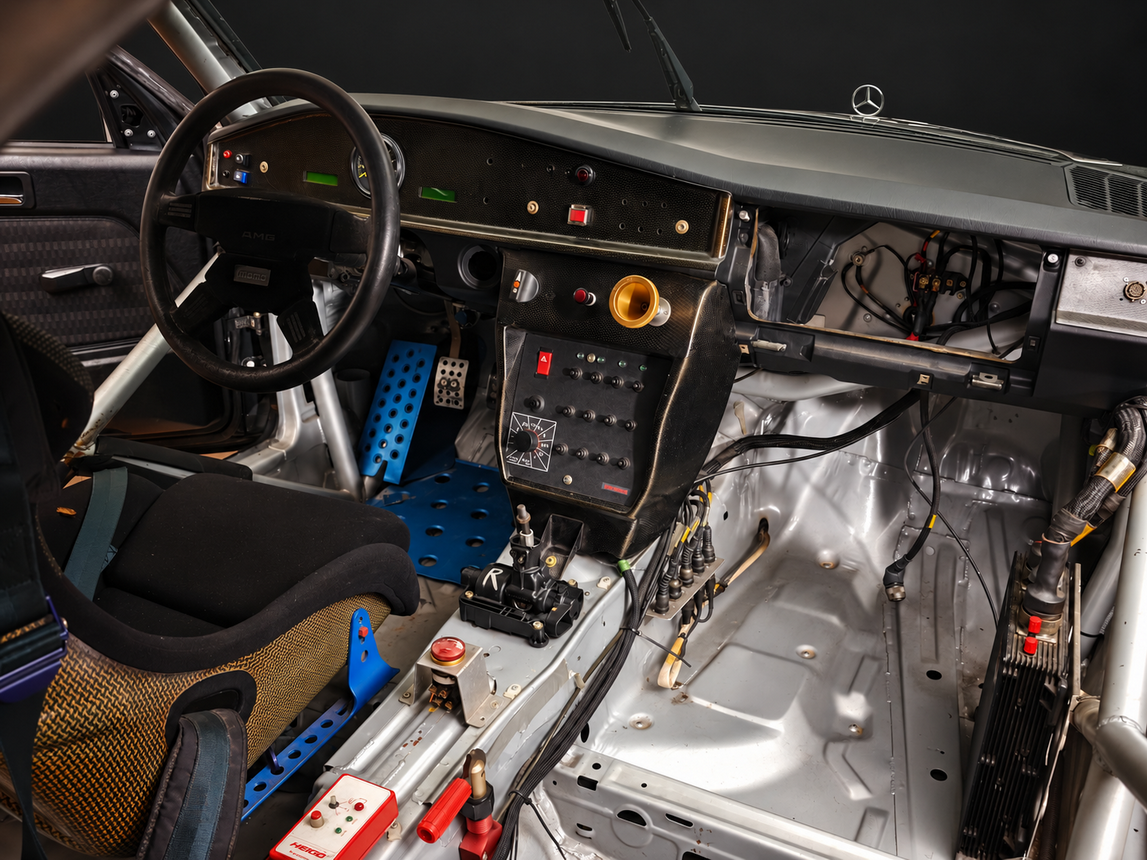
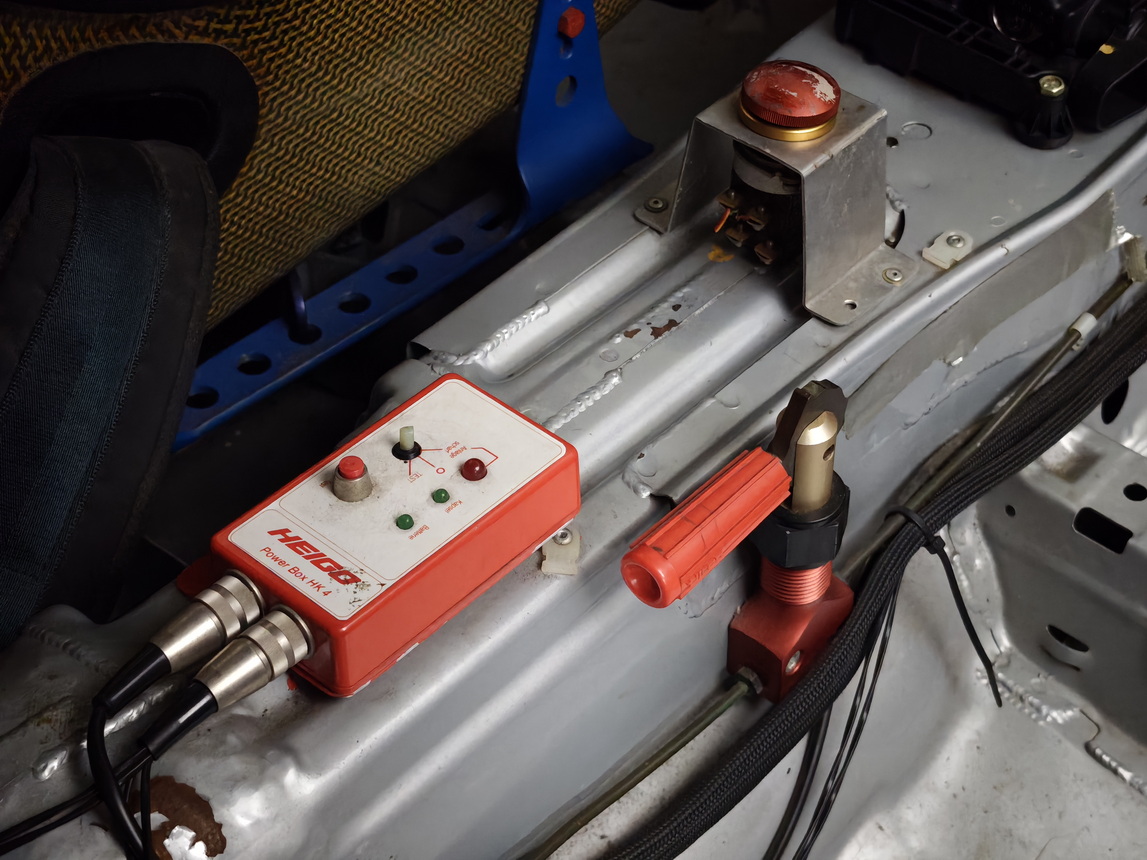
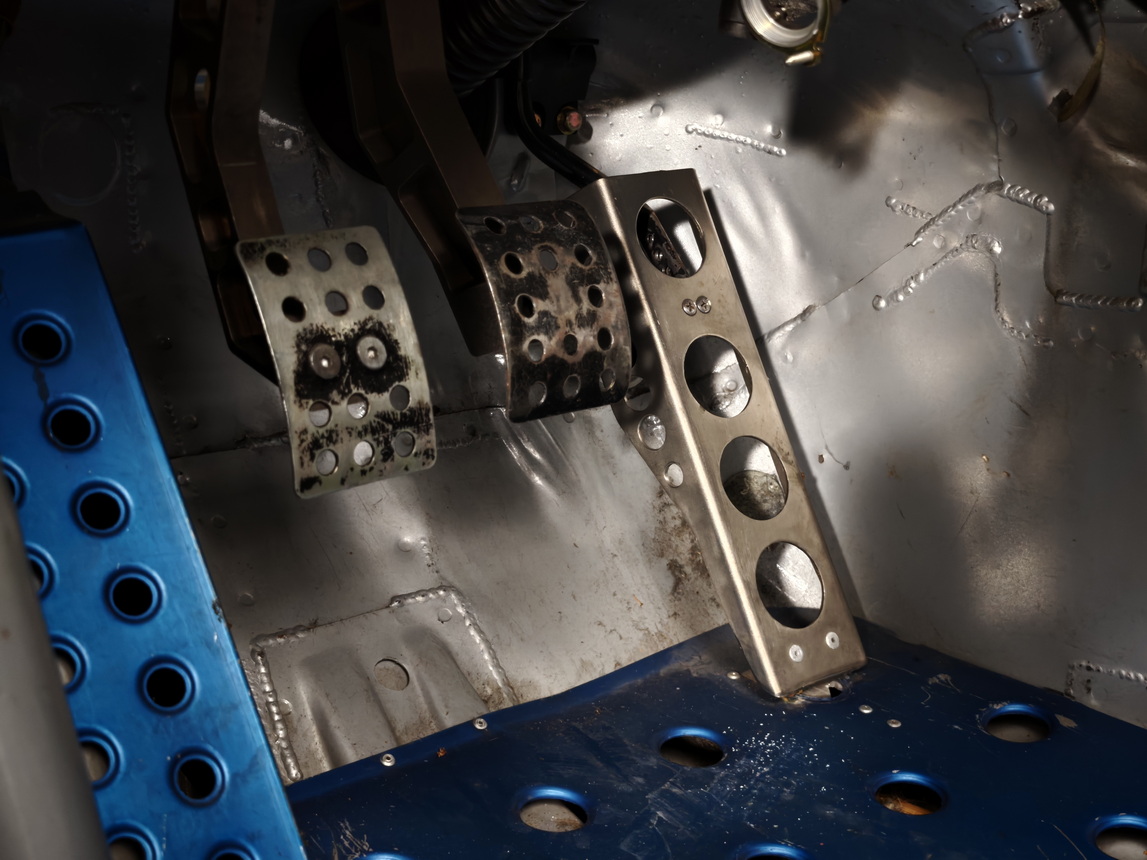
In the cockpit, the centre console with fuses, brake-balance and traction adjustment, the carbon/Kevlar bucket seat, as well as the pedal box and footrest, correspond to the original specification. A steering wheel of this type was used only on AMG cars, and the rev counter is by Sport Technik.
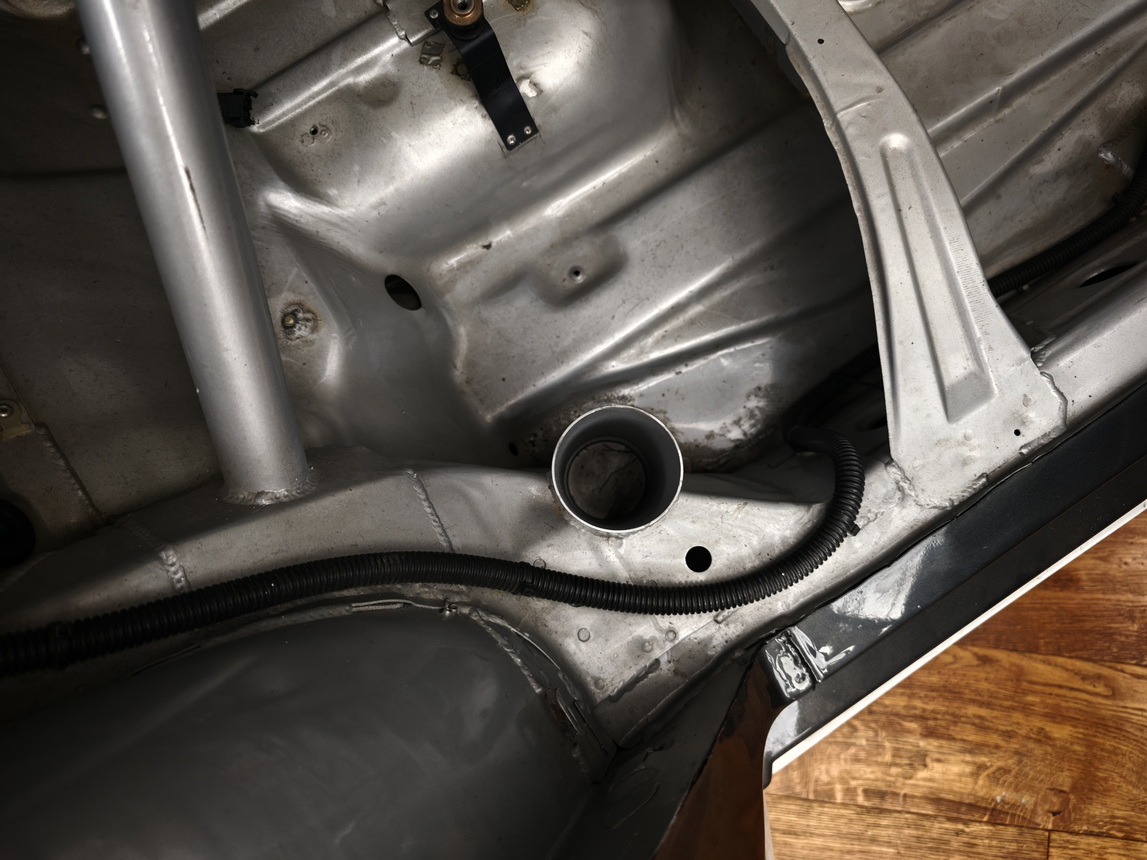
The additional welding on the bodyshell and the sheet-metal sections removed in the rear-seat area to save weight correspond to the modifications made to the race cars.
Model History
With the W 201 model series – the Mercedes-Benz 190 and 190 E – presented in December 1982, Mercedes-Benz entered the compact class. As early as 1983, it was followed by the 190 E 2.3-16, a sporting variant with a four-valve cylinder head, which proved its endurance during record runs at Nardò in Italy and caused a sensation in 1984 at the opening race of the new Nürburgring. From 1986, privateer teams raced the 2.3-16 in the German Touring Car Championship (DTM), and in 1988 Mercedes-Benz entered the series with works support.
The Group A regulations required each evolution stage to be homologated on the basis of at least 500 road cars built. The first was the 190 E 2.5-16 Evolution, unveiled at the 1989 Geneva Motor Show: 502 examples with a short-stroke 2.5-litre four-valve engine (143 kW/195 hp), front spoiler, larger rear wing, wider wheel arches, a body lowered by 19 mm and self-levelling suspension on both axles. A year later, in March 1990, the 190 E 2.5-16 Evolution II followed in Geneva, likewise in 502 examples – all finished in blue-black metallic – and with 173 kW (235 hp). Its most striking feature was the aerodynamic package developed with the involvement of the University of Stuttgart, comprising a large rear wing, an adjustable front spoiler and flared wheel arches that made room for wider wheels in racing.
The racing version made its debut on the Nürburgring Nordschleife on 16 June 1990; by the season finale at Hockenheim in October 1990, all works-supported teams were running the Evolution II. Kurt Thiim scored its first victory at Diepholz on 5 August 1990. The 2.5-litre four-cylinder was the last DTM engine designed in-house by Mercedes-Benz and, in its final stage of development, produced up to 373 hp.
The Evolution II reached its peak in the 1992 season: Mercedes-Benz drivers won 16 of the 24 races, Klaus Ludwig became German Touring Car Champion and AMG-Mercedes secured the manufacturers’ title. The Evolution II remained in competition until 1993, when it was replaced by the new C-Class with the introduction of the Class 1 regulations. The close relationship between road car and racing car, the distinctive aerodynamics and the battles with BMW and Audi make the 190 E Evolution II a defining car in DTM history to this day.