Horch 853 A Sport Cabriolet

Highlights
Data & Facts
This Automobile
Eberhard Thiesen has a long-standing and close connection with the Horch 853: between 1985 and 1995 he discovered a total of 15 Horch 853s in what was then the Soviet Union and brought them back to Germany – some of them in a dreadful state. In a workshop set up specifically for the purpose, he had a number of these cars completely restored, thereby acquiring extensive expertise in this model.
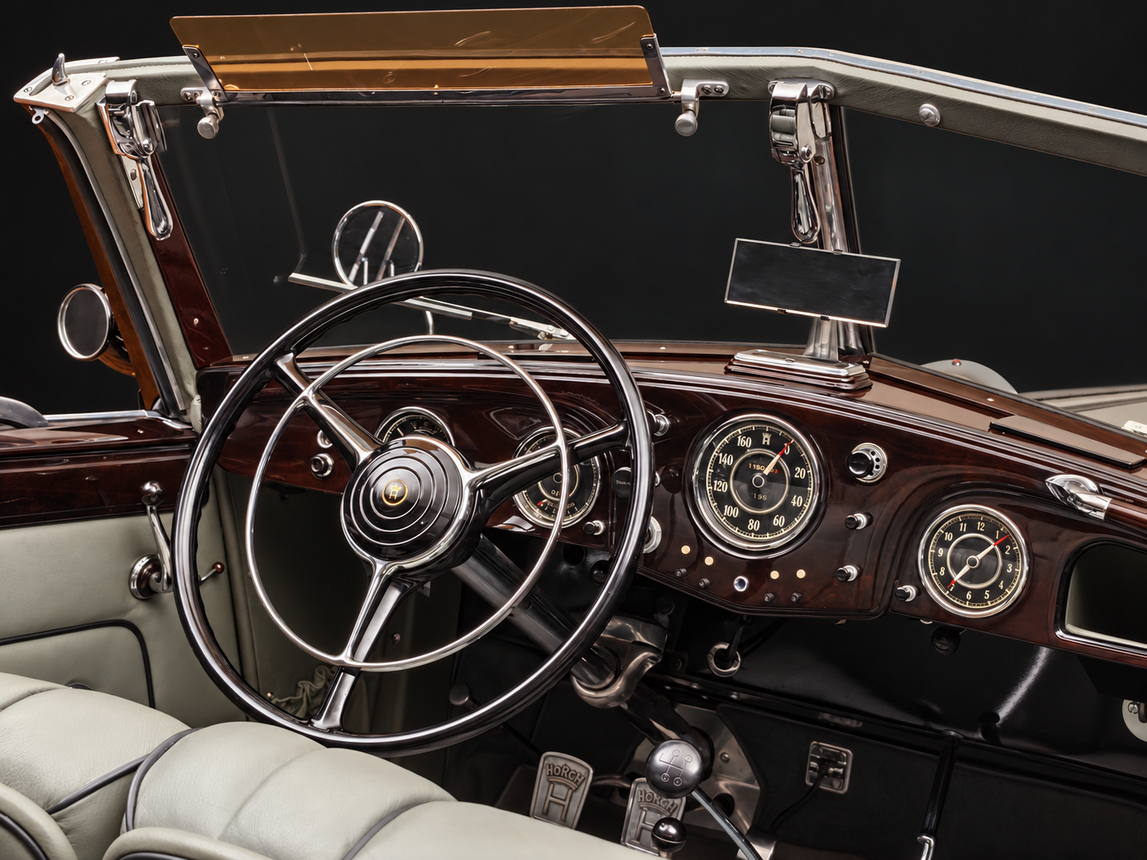
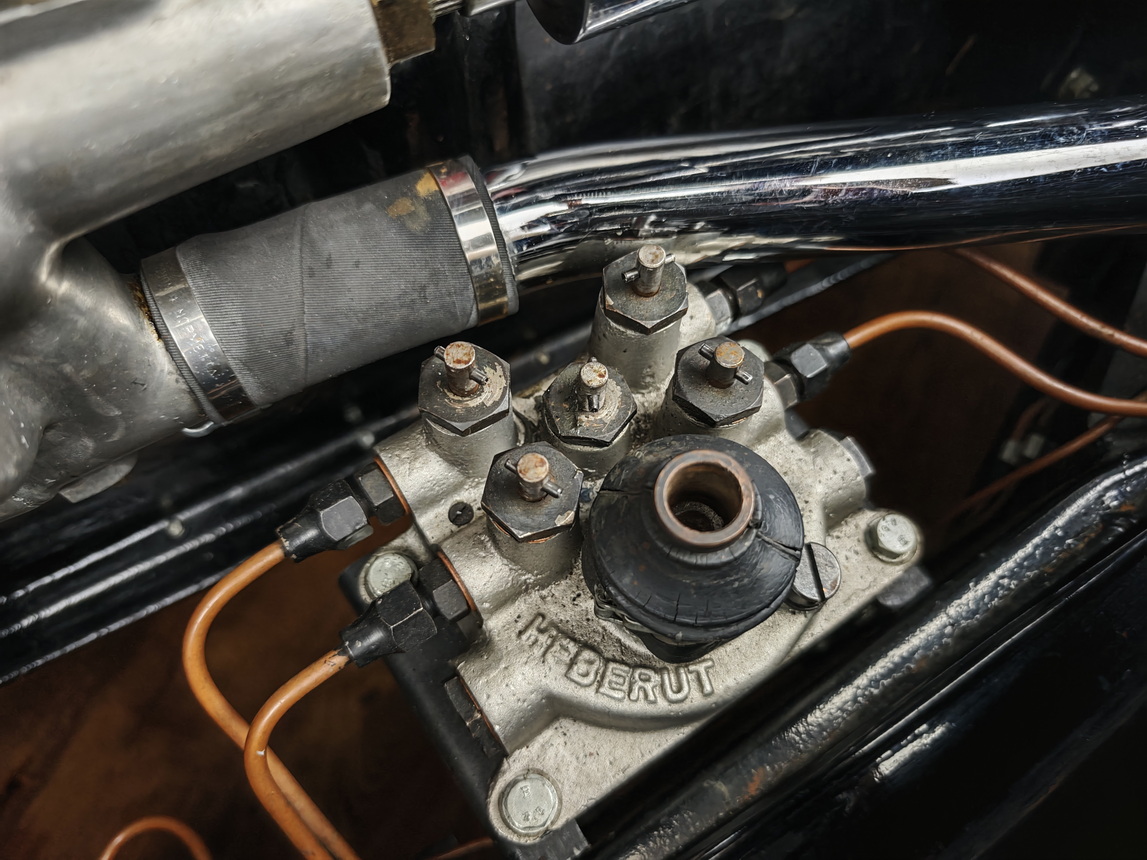
According to the German vehicle documents, this Horch 853 A Sport Cabriolet was first registered on 1 July 1937. Before returning to Germany, the car was located in the USA, in the Seattle area (Washington). Presumably in the mid-1990s it came to Germany – via Sweden, according to the documents – and was subsequently comprehensively restored by a renowned specialist in pre-war automobiles in north-west Germany. Several photographs document this work. In the course of the restoration, the previously fitted ZF Aphon gearbox was replaced by a ZF AK 4 S 30 with Autobahn overdrive, the correct type for the 853 A. A further highlight is the Heberut jacking system, which allows each wheel to be raised individually.
Following an inspection by an officially recognised expert, the car was issued with a German vehicle title in April 2001. A specialist workshop subsequently fitted hydraulic power steering, which makes the Sport Cabriolet – weighing a good 2.5 tonnes – noticeably easier to handle. Together with the gearbox and the Heberut system, extras worth almost EUR 100,000 have thus been fitted. At the end of 2008, the Horch passed into a private collection in Lower Saxony, where it has been registered since February 2009.
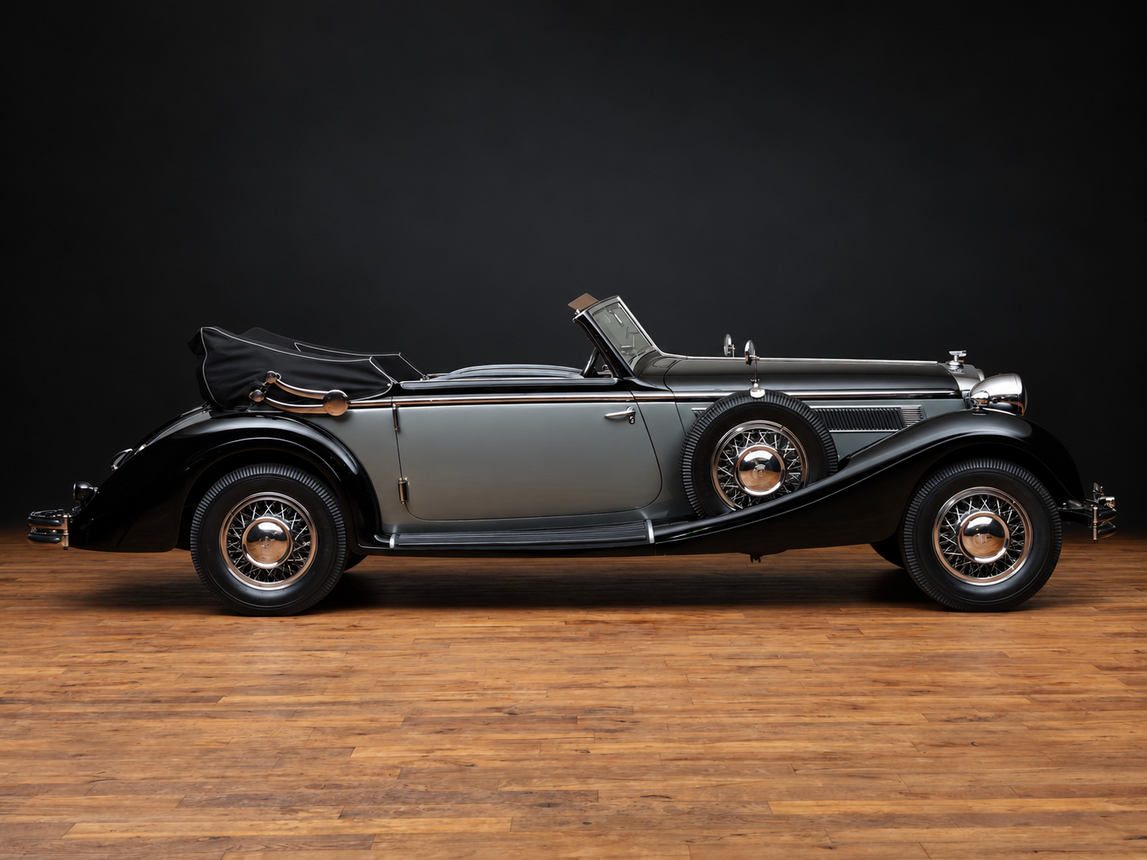
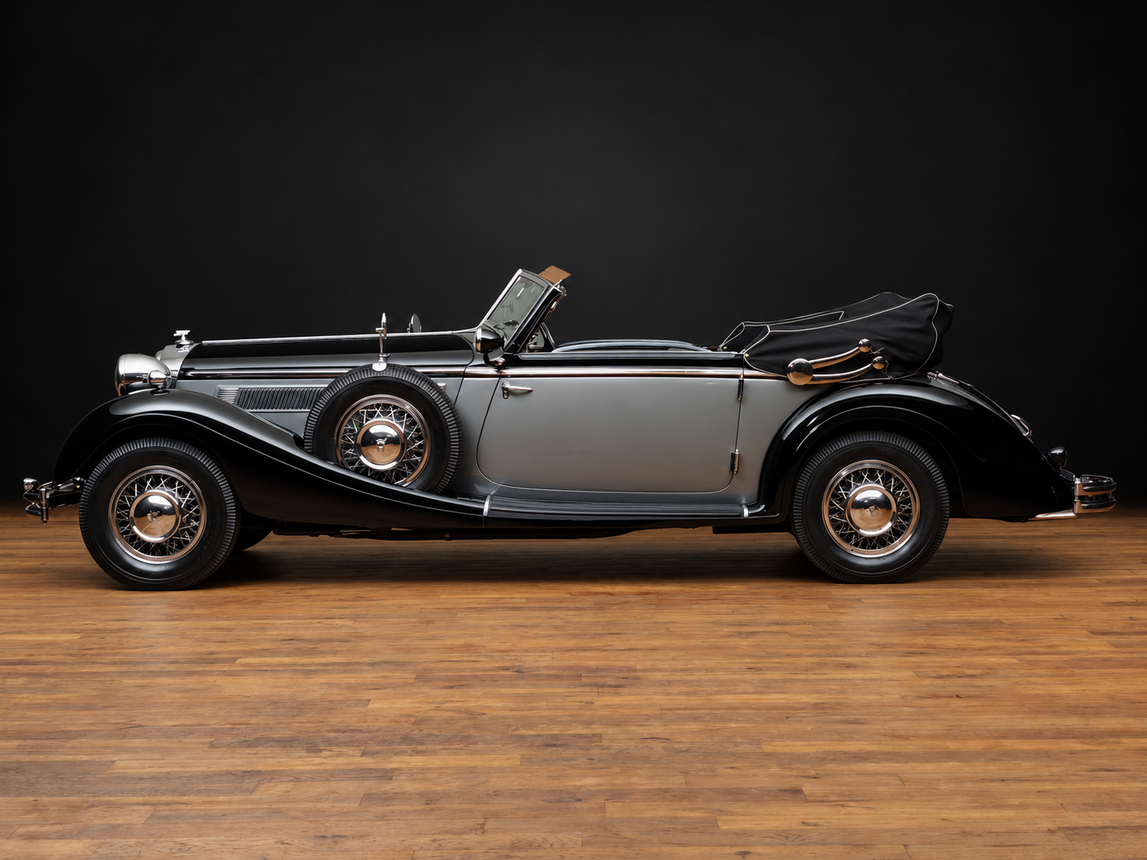
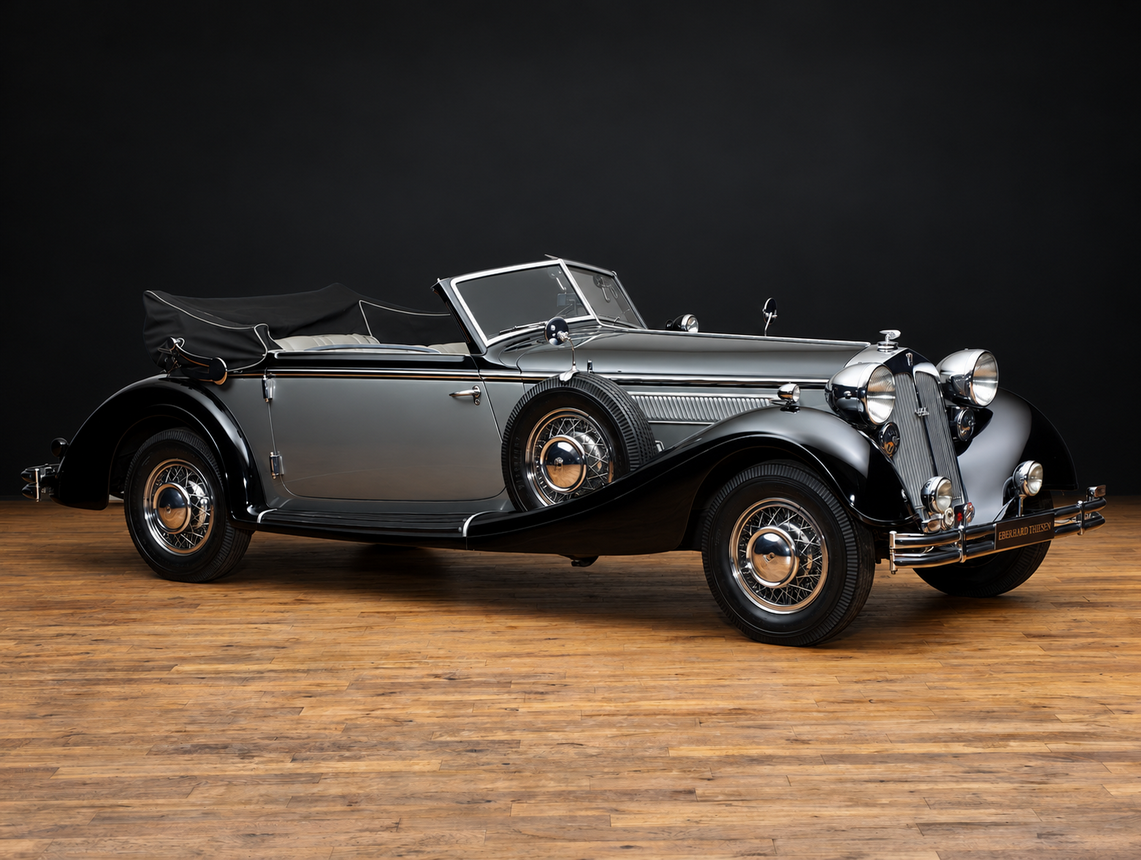
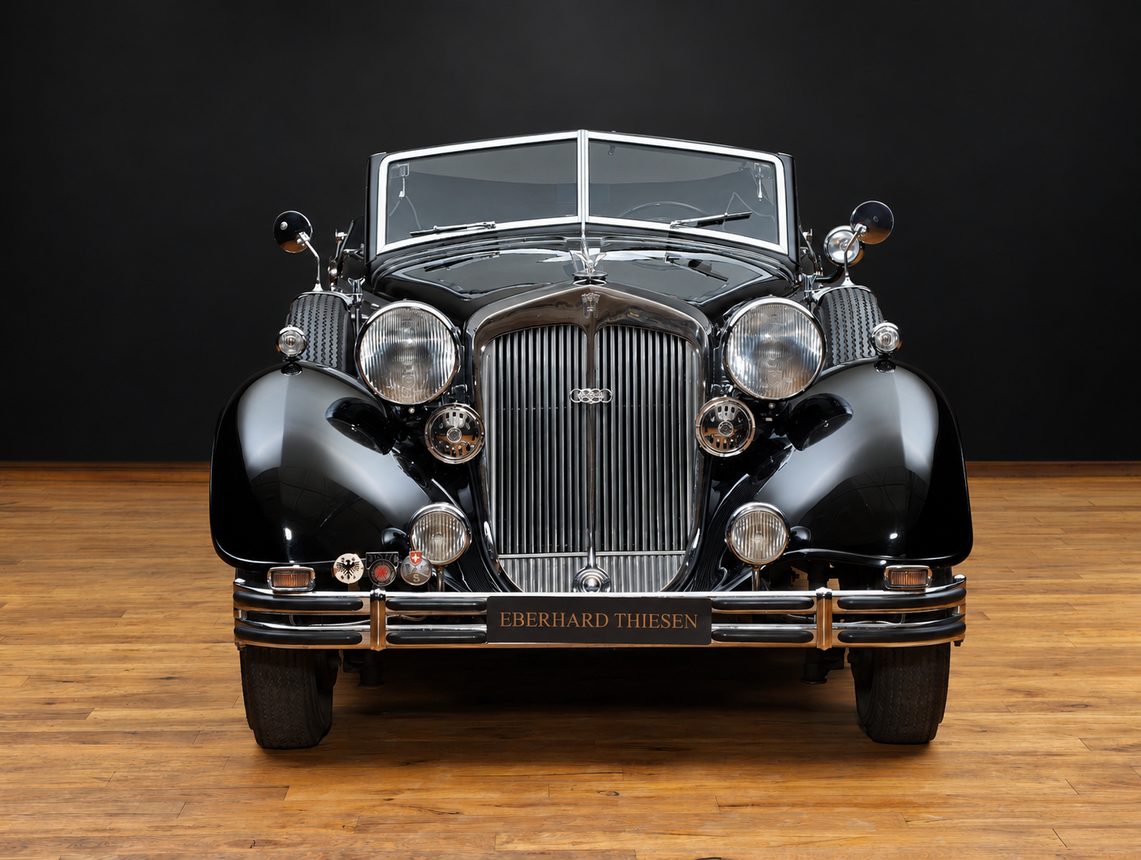
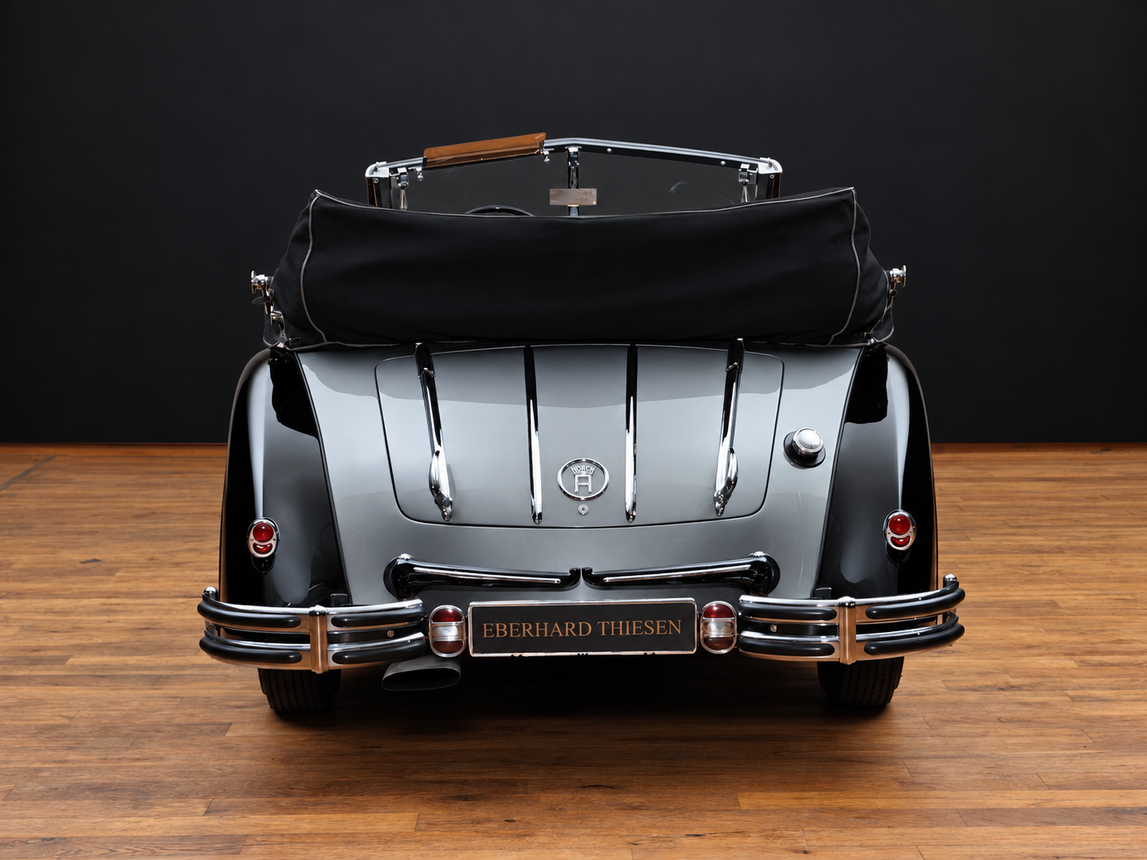
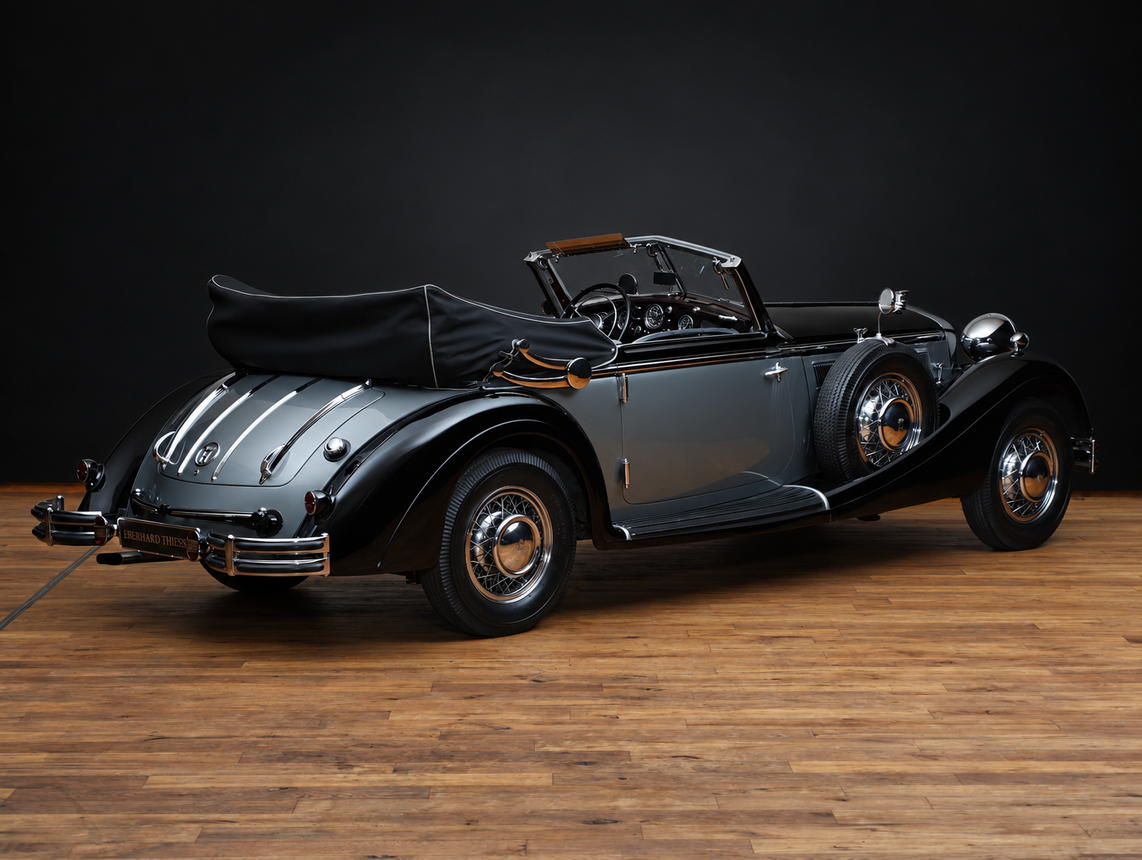
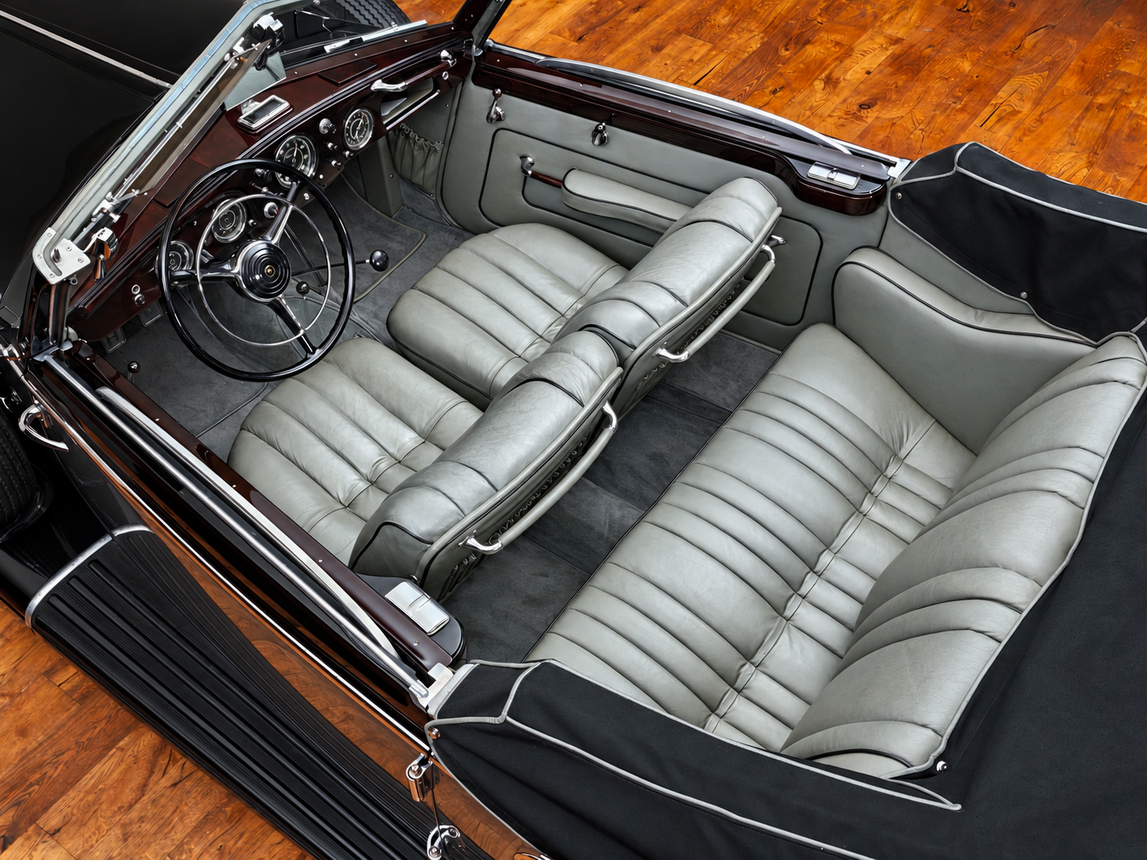
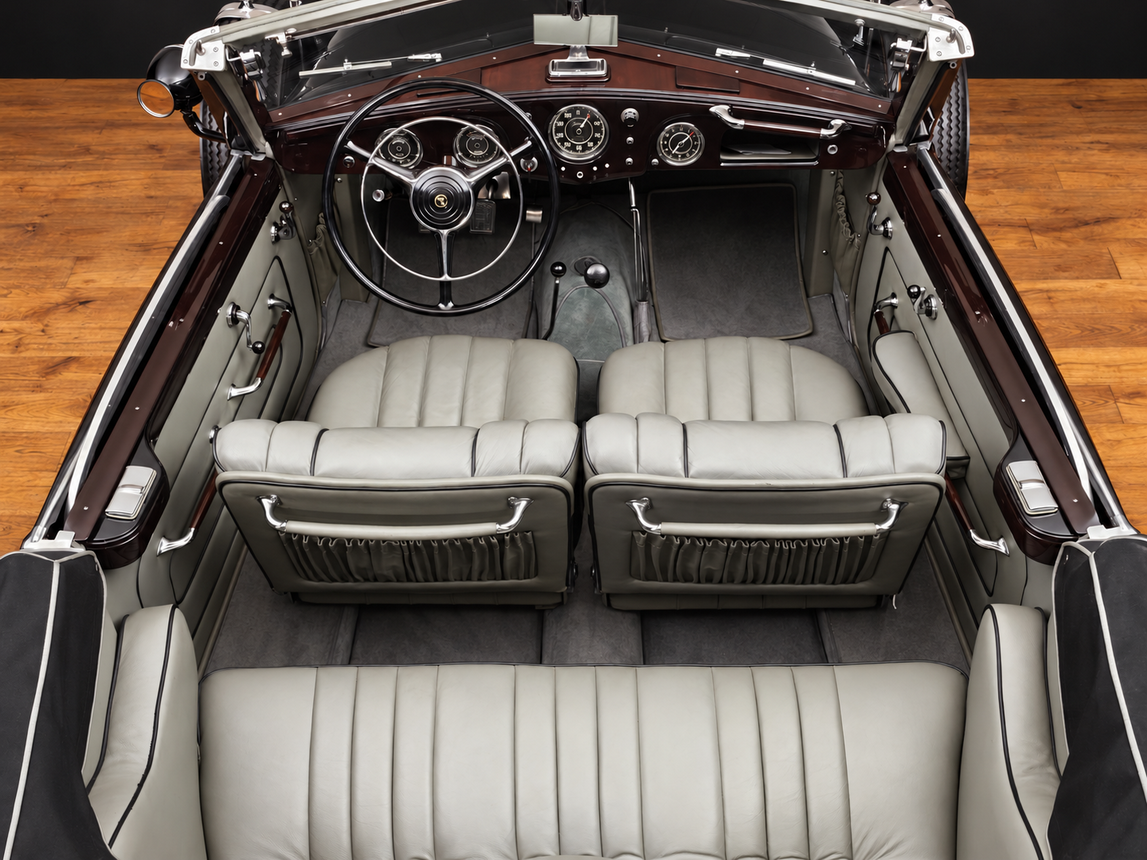
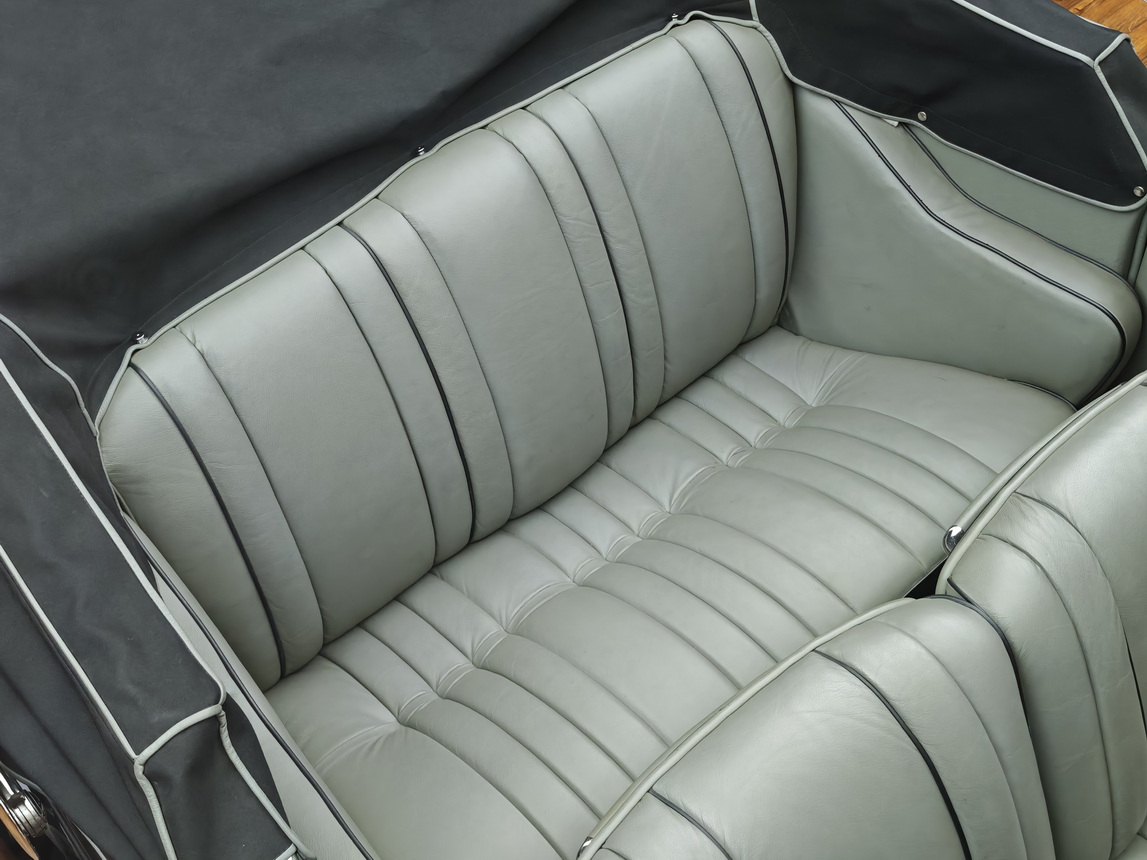
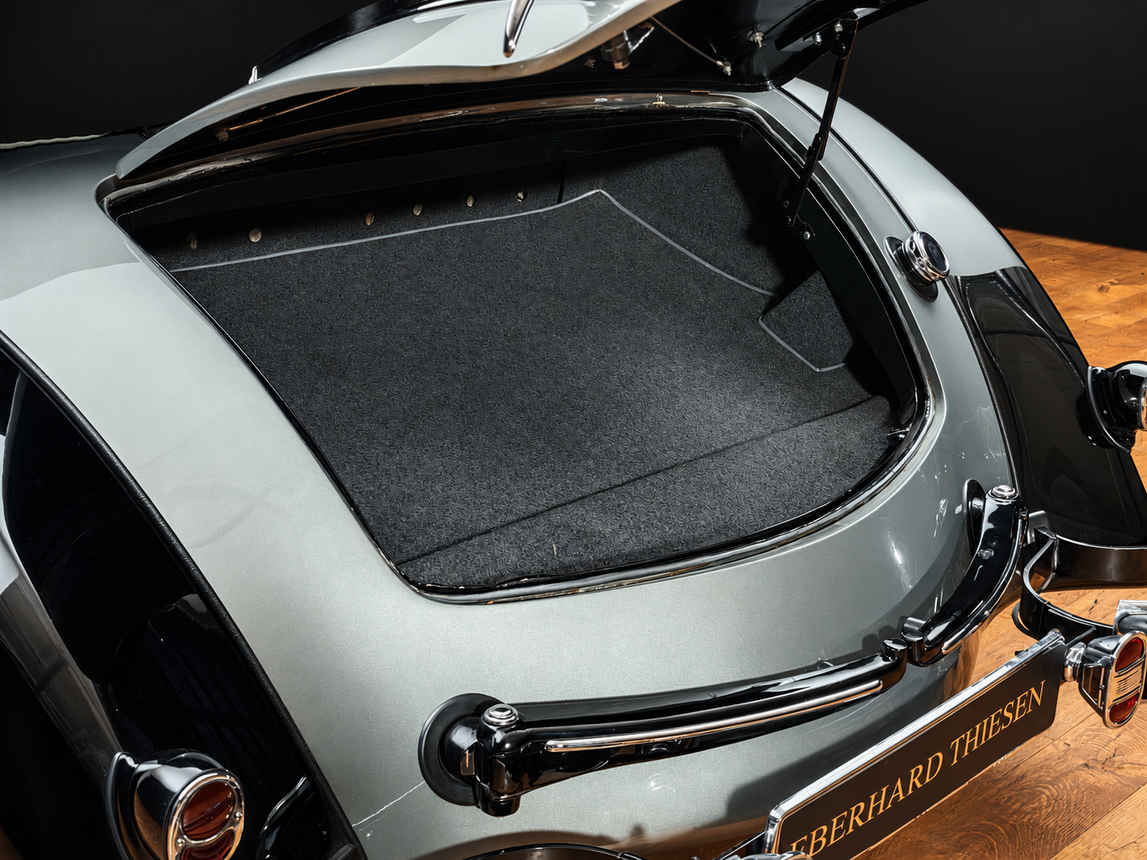
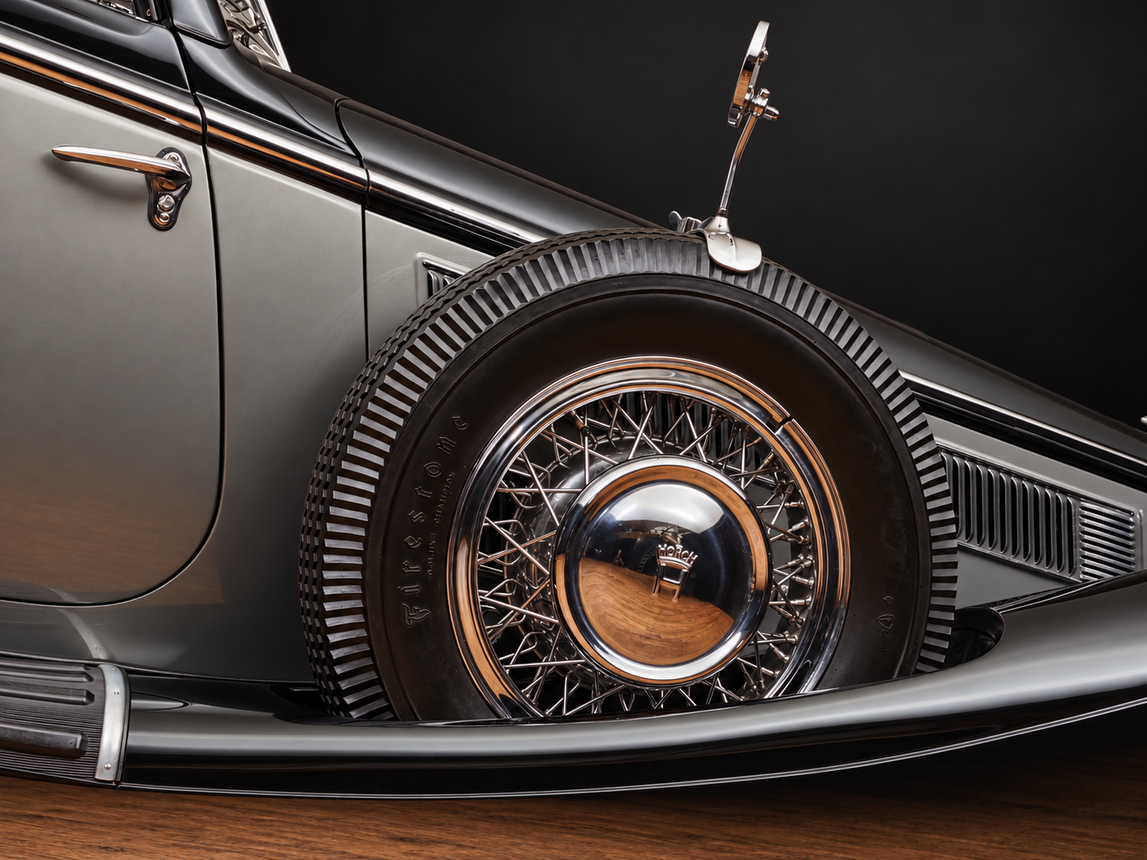
Today, the Sport Cabriolet presents itself in an elegant two-tone finish in black and silver, which effectively accentuates its sweeping lines. The interior is upholstered in light grey leather with dark piping. Spoked wheels with Horch hub caps, two spare wheels recessed into the front wings, Bosch fanfare horns and auxiliary headlamps complete its stately appearance – an impressive Horch 853 A Sport Cabriolet from long-standing collection ownership.
Model History
The Horch 850, with its 853 / 853 A Sport Cabriolet variants, was presented in 1935 as the successor to the Horch 8. As early as 1926, the latter’s engine had been Germany’s first series-production straight-eight and was regarded as a sensation when it was unveiled.
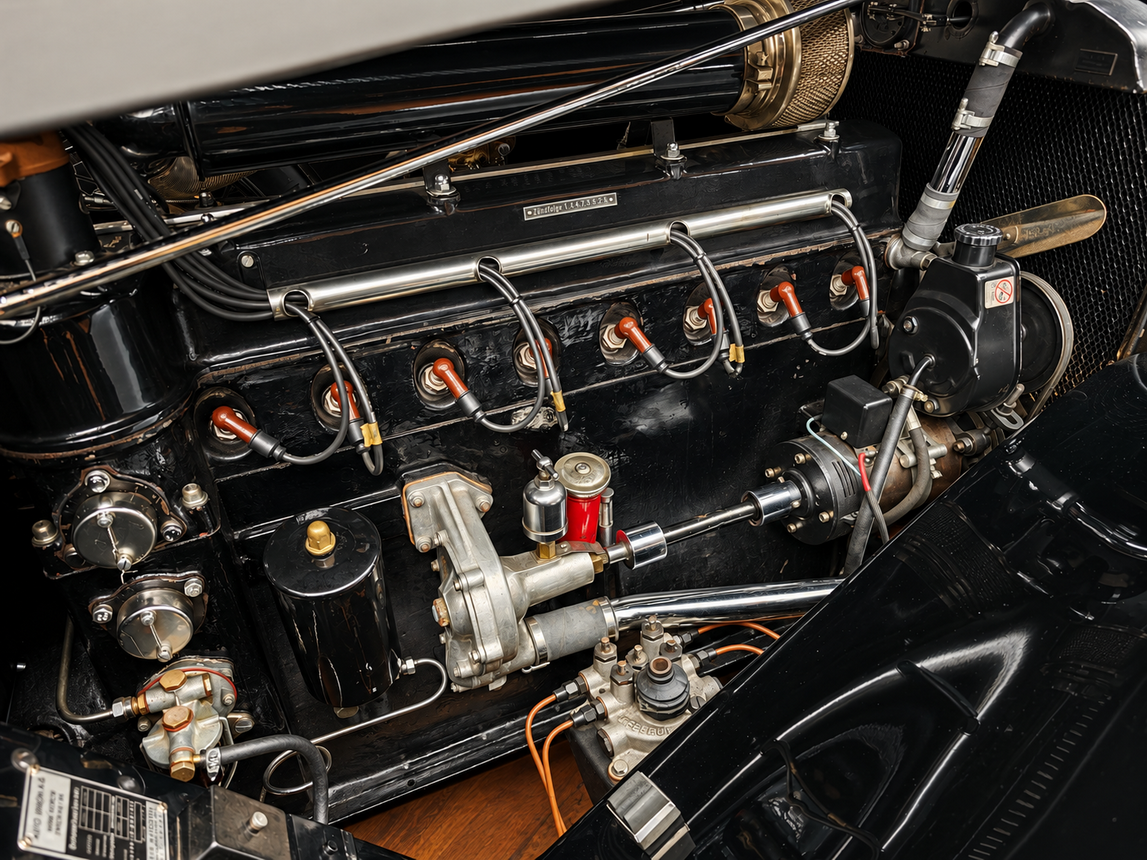
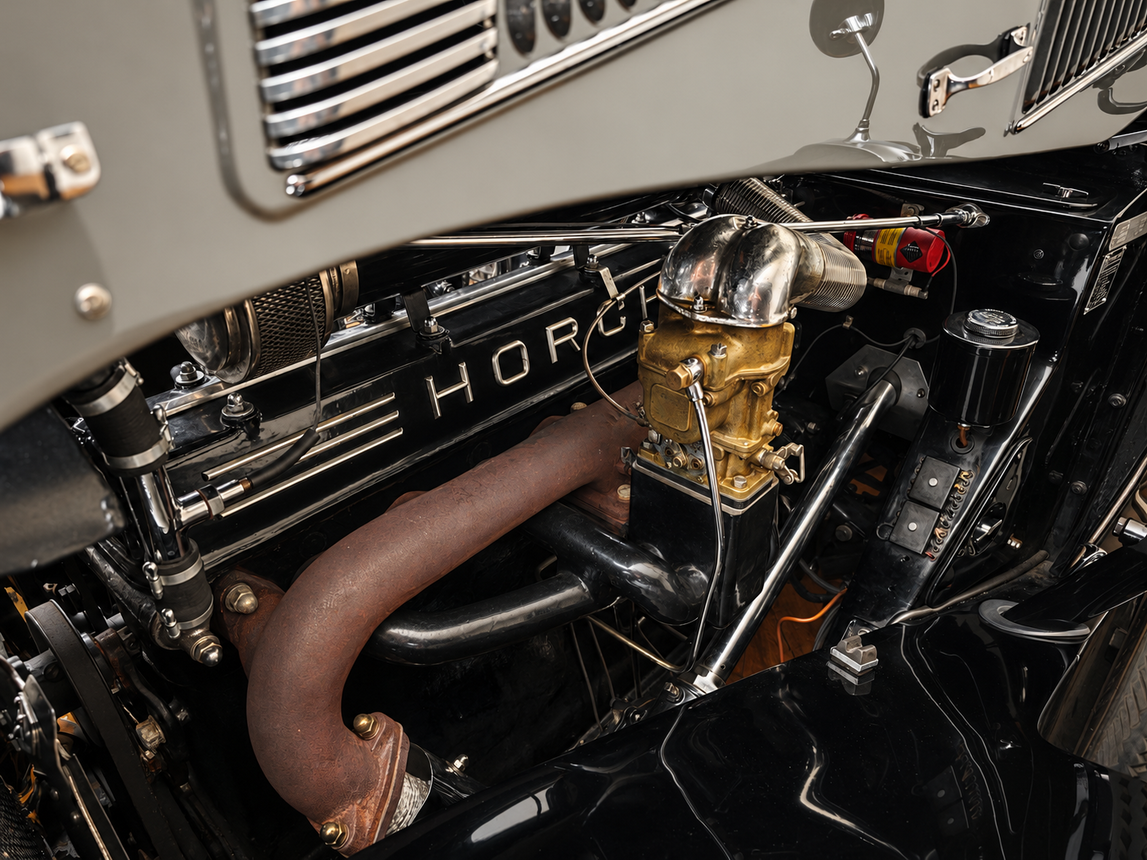
The 850 models were invariably powered by a five-litre straight-eight engine, which initially produced 100 hp. The overhead camshaft was driven by a vertical shaft. Thanks to a modified camshaft and a compression ratio raised from 5.8 to 6.1:1, the output of the 853 rose to 120 hp in 1937. Power was transmitted via a four-speed gearbox with central gearshift, which was optionally available with an ‘Autobahn-Ferngang’ (overdrive). Braking was provided by hydraulically operated drum brakes (‘Öldruckbremse’) with Bosch-Dewandre vacuum assistance (servo brake).
The two-door 853 Sport Cabriolet (officially designated ‘850 Sport’ until 1936) had a wheelbase 25 cm shorter than the four-door saloons and cabriolets and, unlike them, featured a rear ‘Doppelgelenkachse’ (De Dion axle) instead of a rigid axle. The Sport Cabriolet, officially called the Horch 853 from 1937, also received the 120 hp engine and a wheelbase a further 5 cm shorter (3.45 m) than its predecessor. Shortly afterwards came the further developed 853 A, which was now fitted as standard with the ZF gearbox with Autobahn overdrive (type AK 4 S). Like the Pullman saloons, the Sport Cabriolet bodies were built by Horch itself.
Today, the 853/853 A Sport Cabriolet is the best-known and most sought-after Horch model and one of the most exclusive German pre-war cars, making a stately impression on the grand boulevards of the cities and a comfortable one on cross-country journeys. Together with Mercedes-Benz and Maybach, Horch was regarded as the benchmark of German automotive engineering and, alongside them, was the preferred car of the upper classes. Many wealthy and prominent figures bought a Horch not so much to attract attention or assert their standing, but because their attitude corresponded more closely to what we would today call understatement. Around 1,000 examples of the Horch 850/853 Sport Cabriolet were built between 1935 and 1939, of which just under 400 were the 853 A model.