
Iso Grifo GL 350

Highlights
Data & Facts
This Automobile
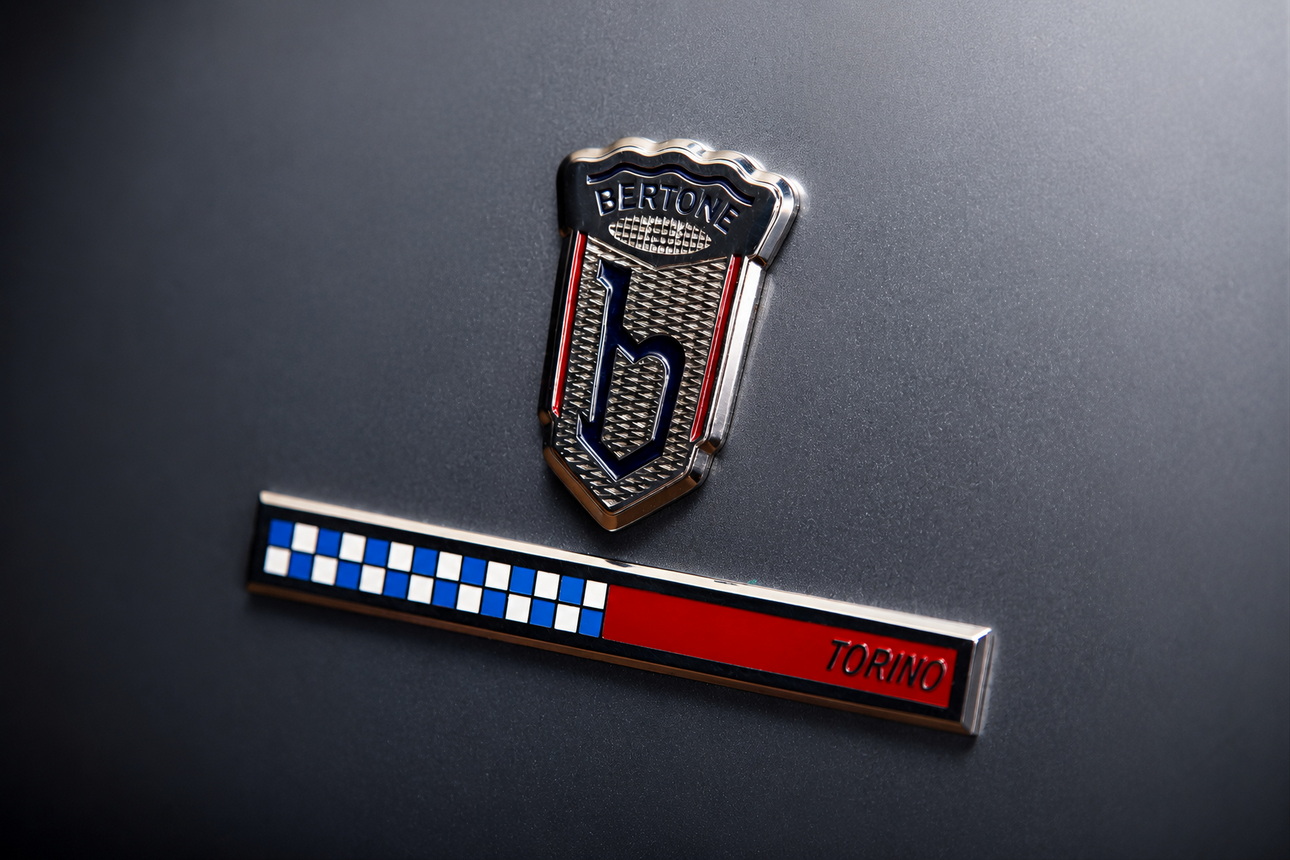
According to the available build sheet, this Iso Grifo GL 350 was completed at the factory in May 1966. It is an early model from the pre-production series, which were still manufactured by Bertone. These were strictly two-seaters, with the spare wheel concealed within the passenger compartment directly above the rear axle and accessible from the boot. This particular car was the first to be delivered to the German market – supplied to the German general importer, Auto Becker, in Düsseldorf. The colour scheme was ‘Oro Longchamps’ (gold metallic) with a red leather interior. The specification included a high-output engine (‘Elaborato’), a long-ratio rear axle (2.88:1) and spoke wheels.
In 1985, the Iso Grifo was imported to Sweden, where it had only a few owners. Then a well-known Iso enthusiast – and savvy expert – from the Hamburg area discovered the Grifo in Stockholm and purchased the sporty Gran Turismo in 2011.
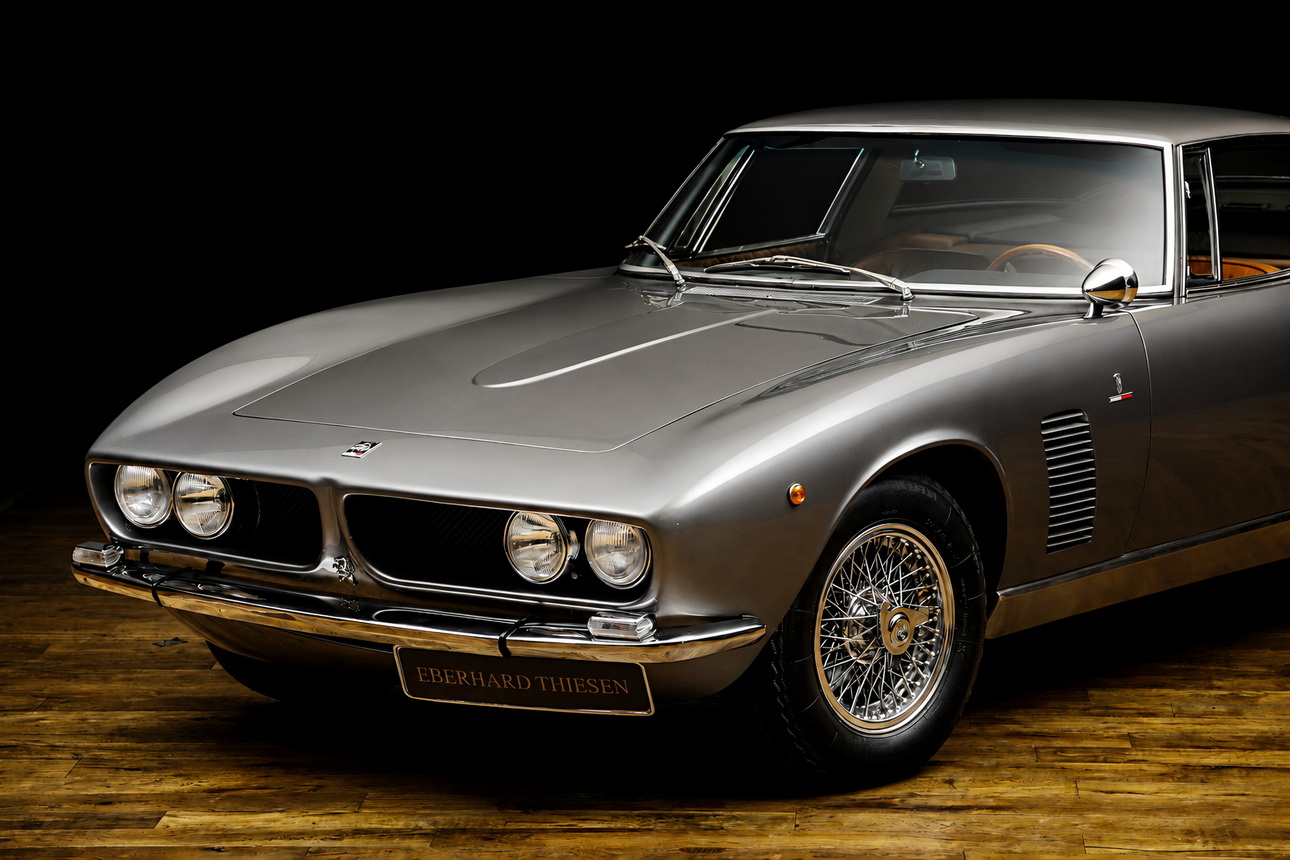
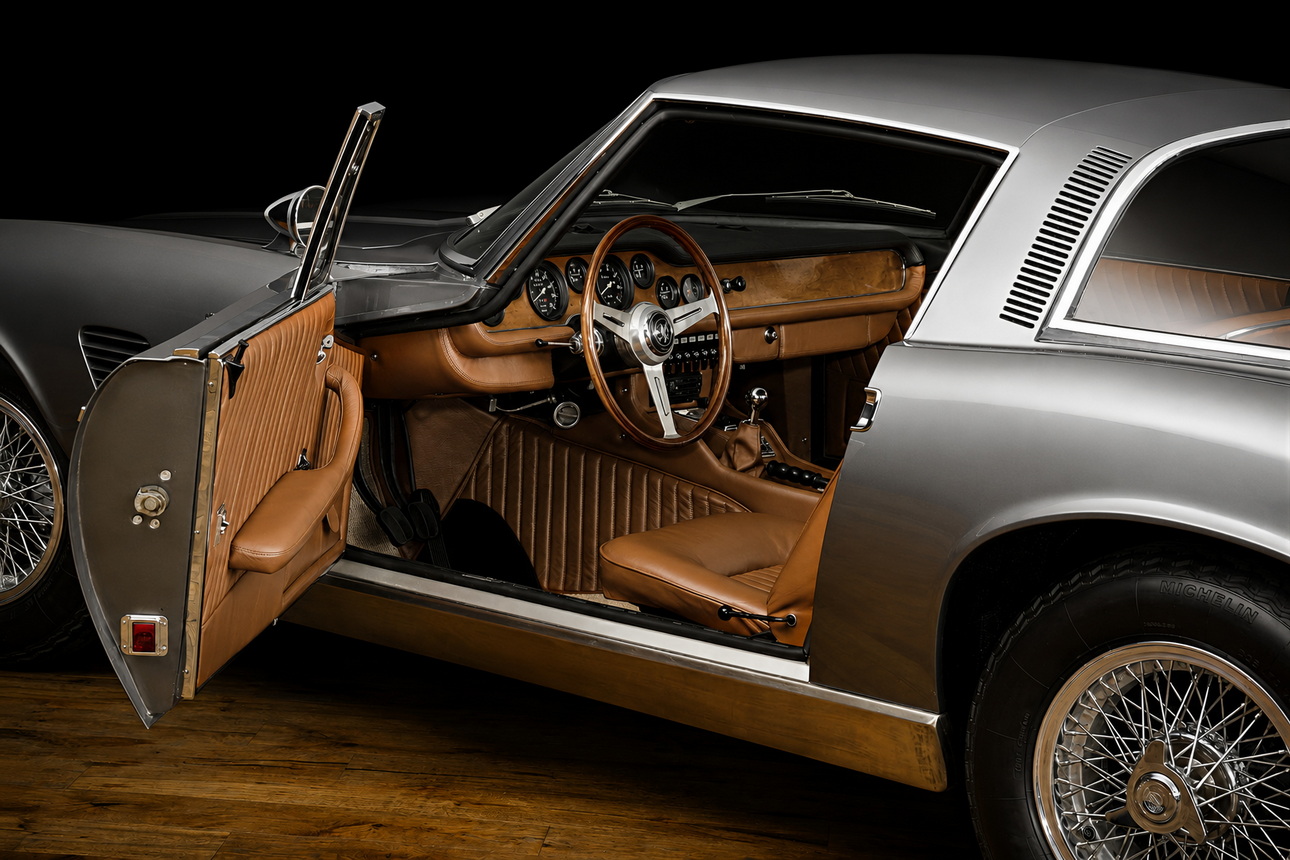
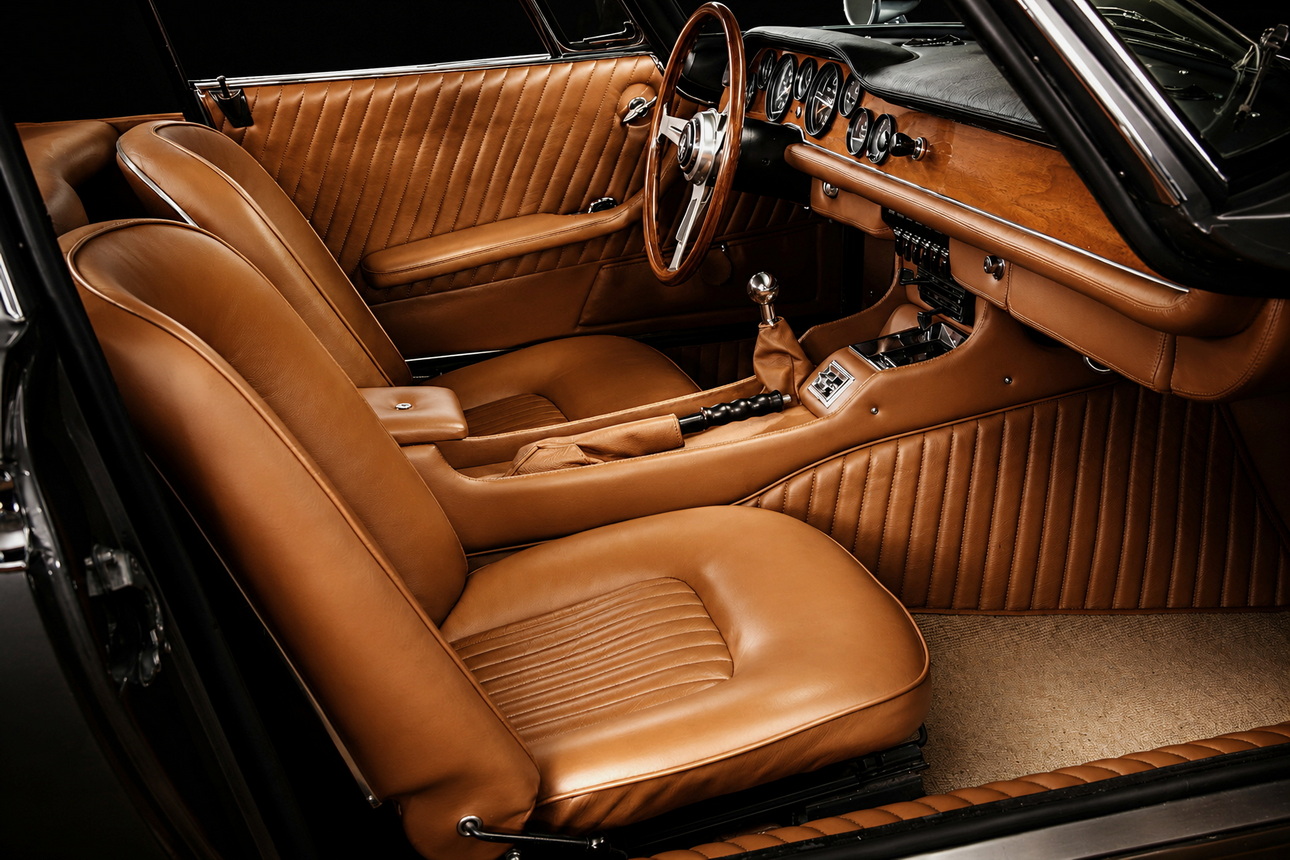
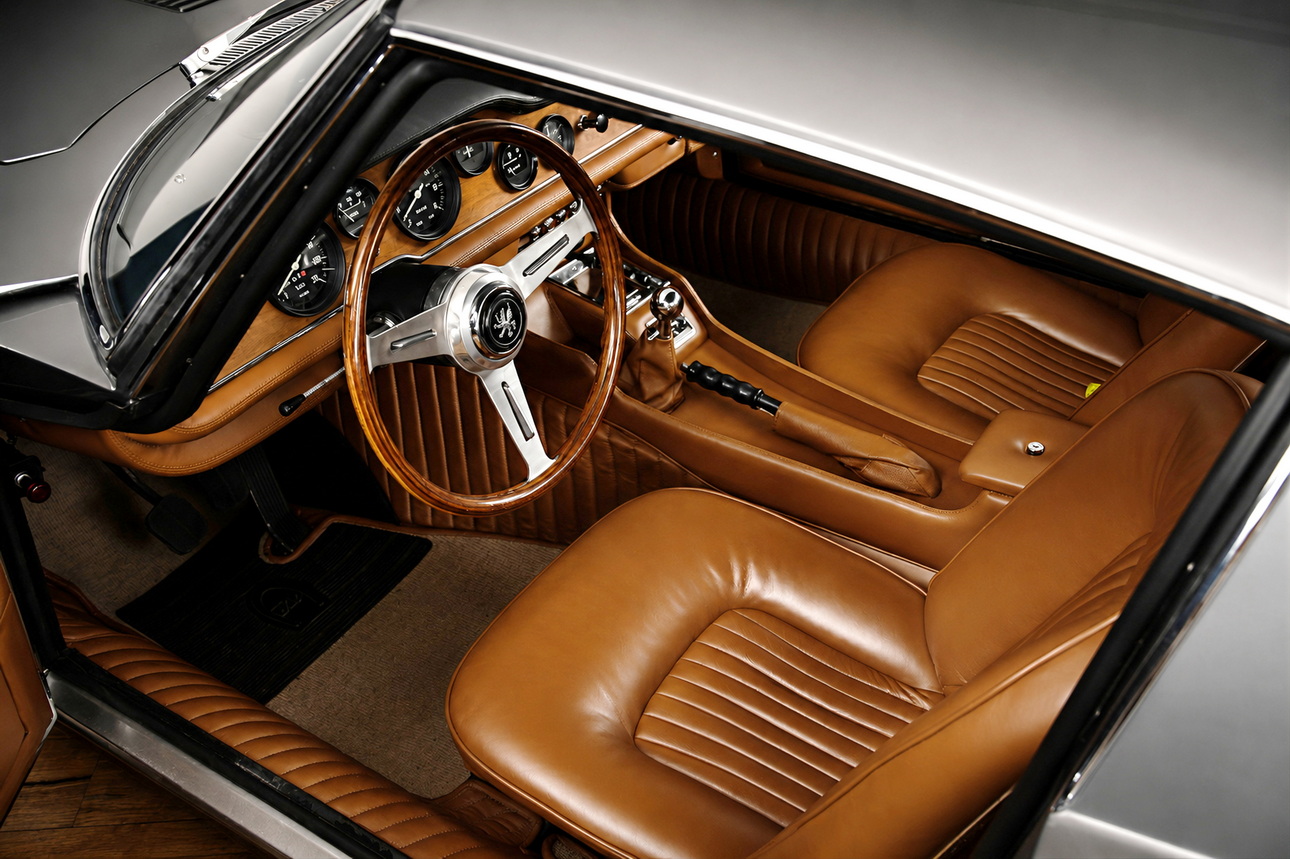
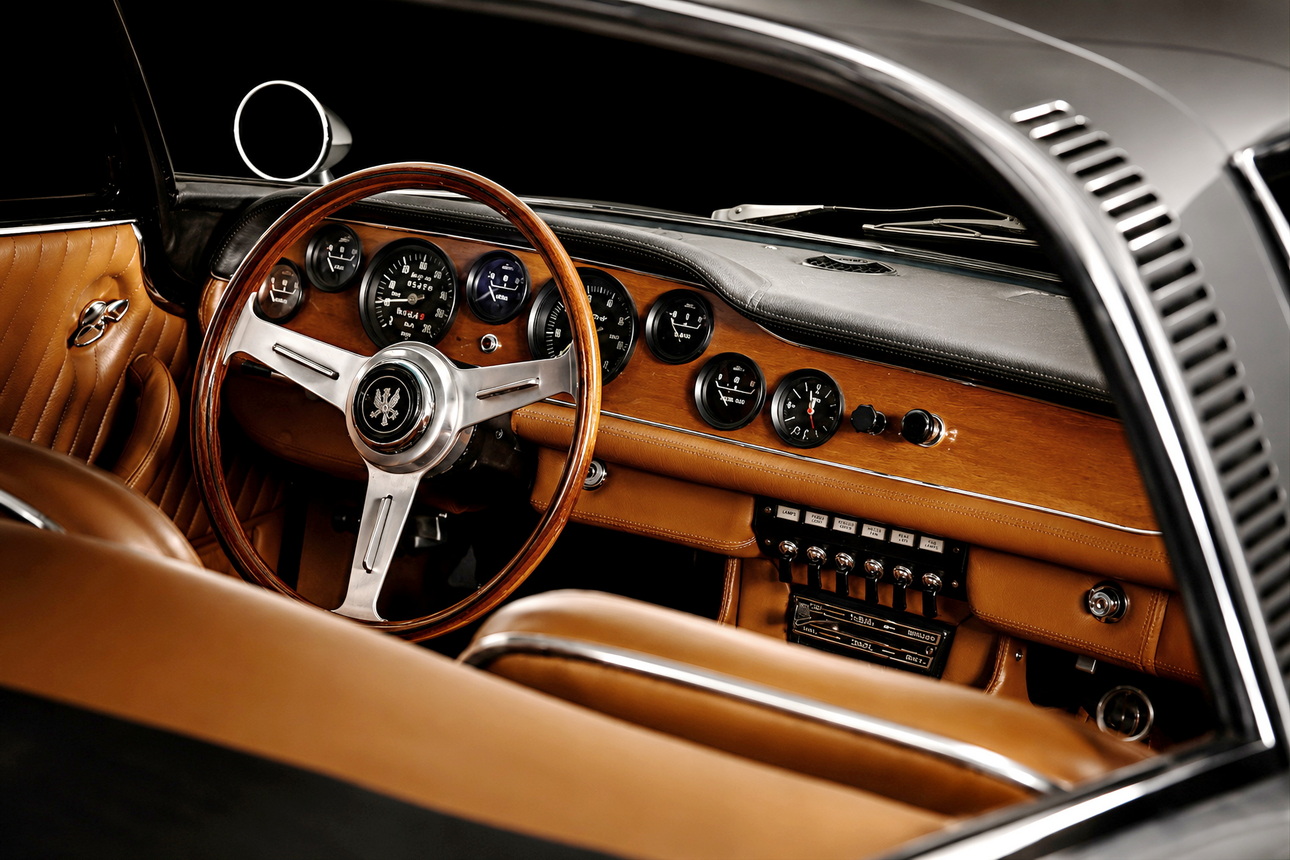
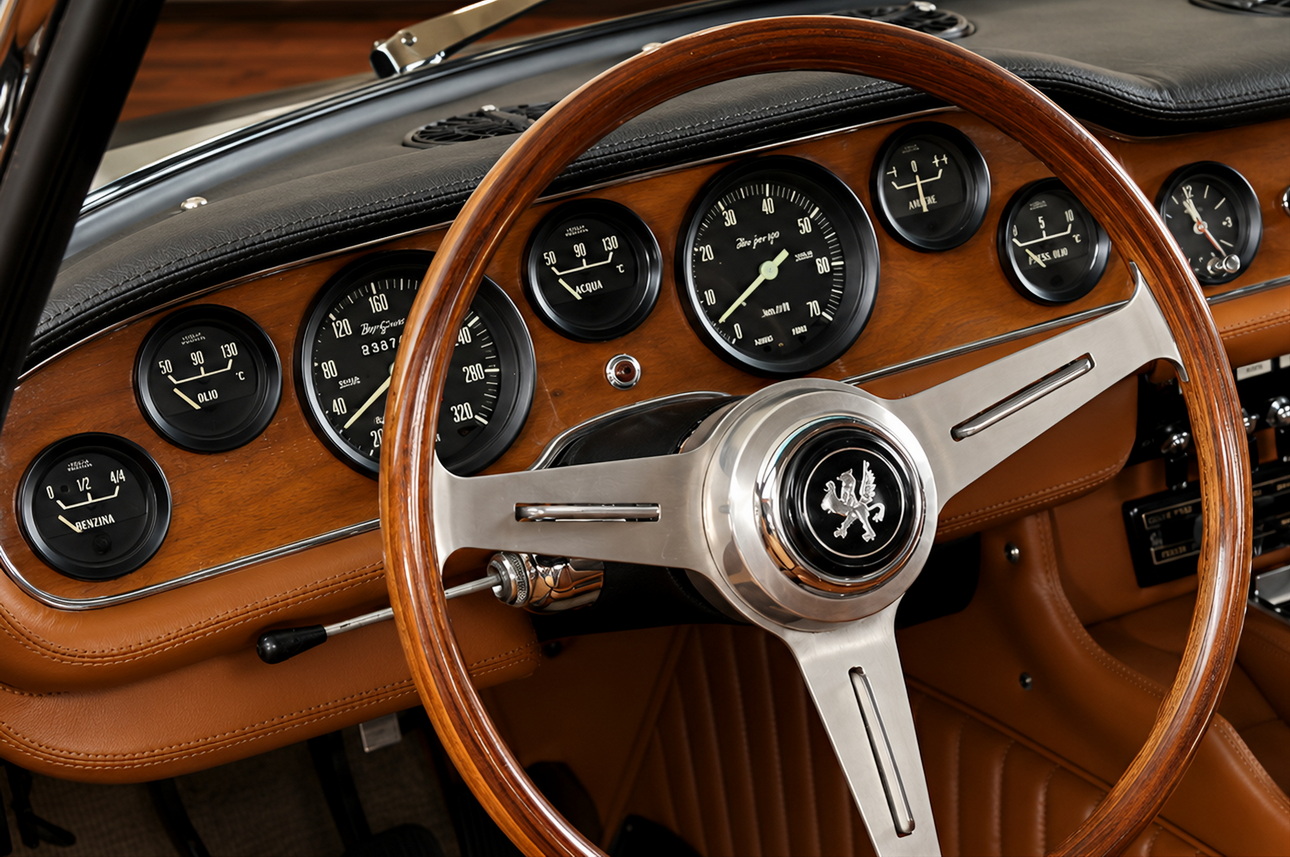
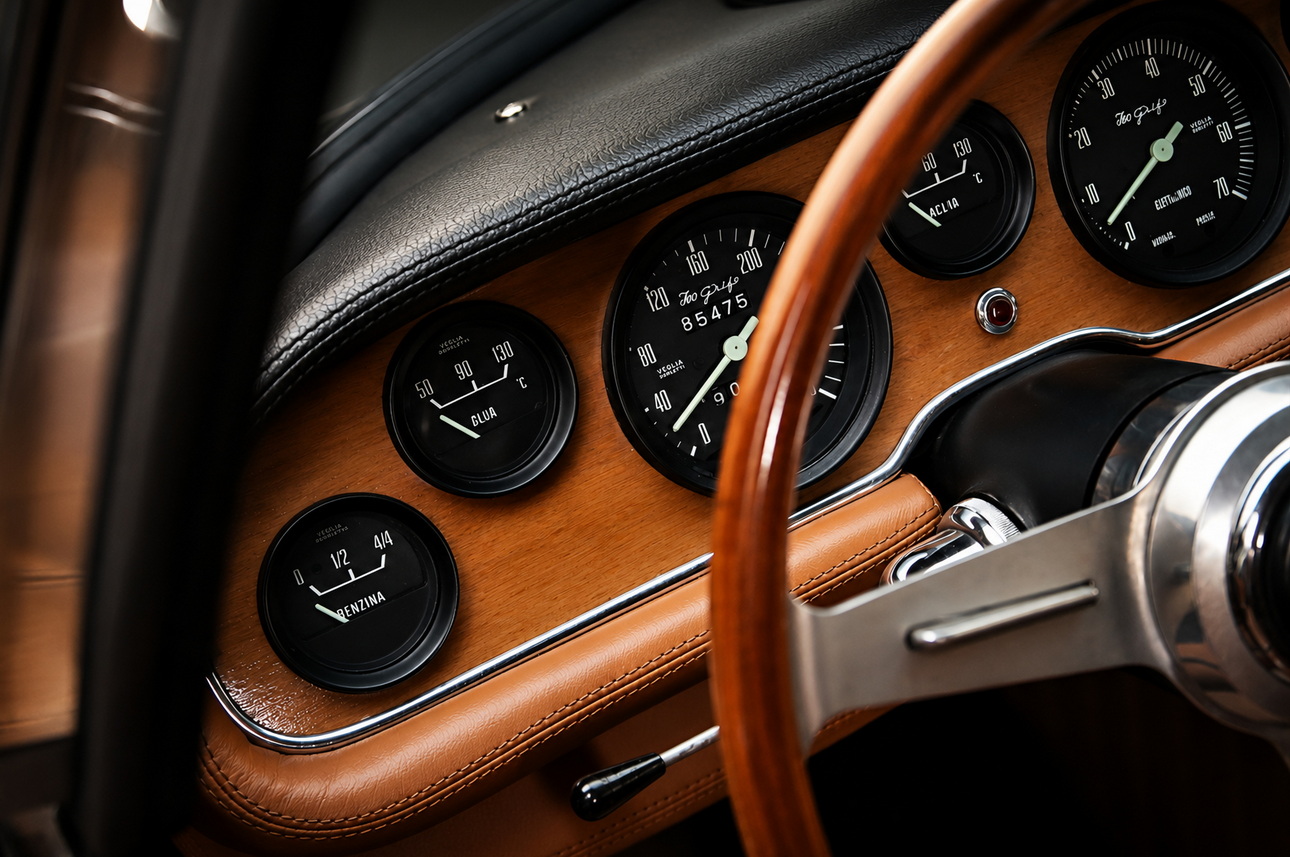
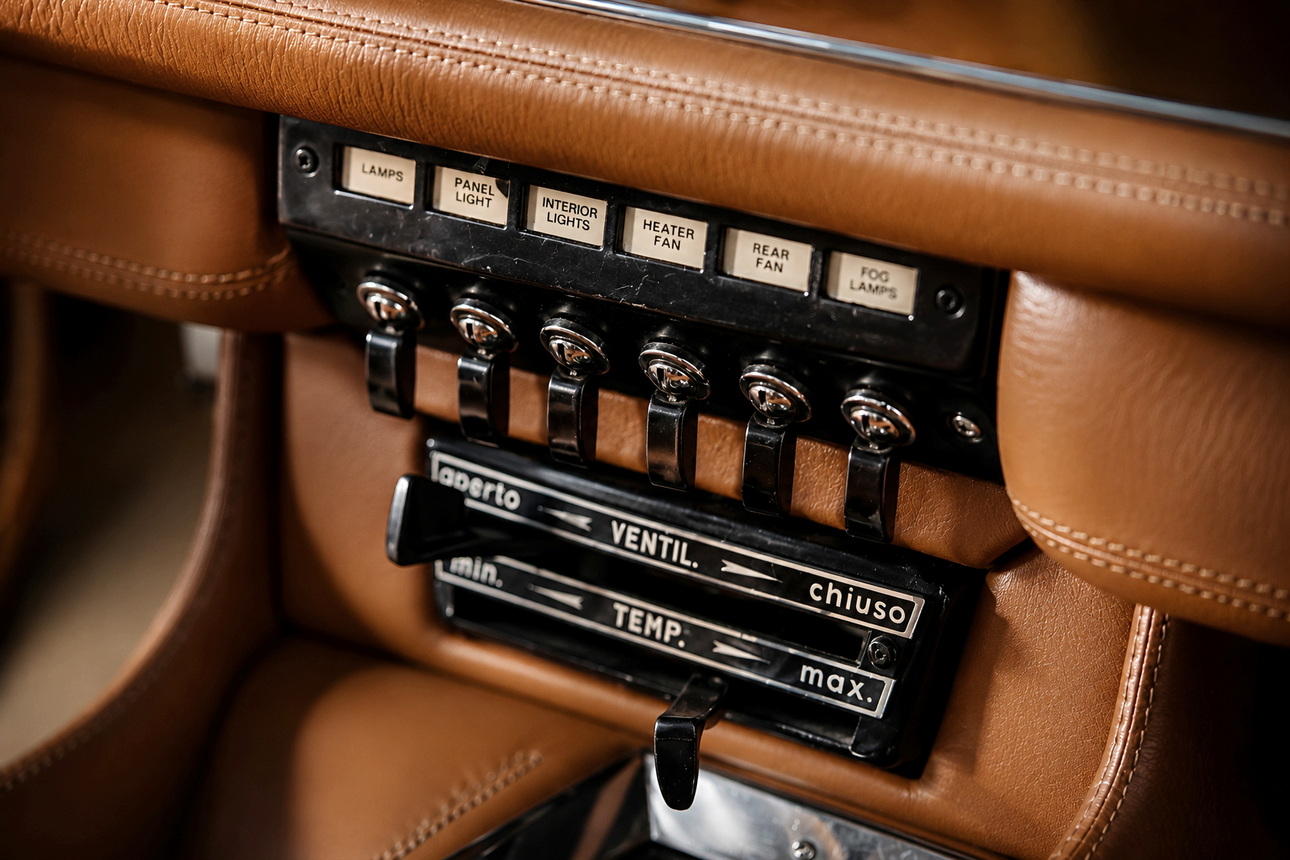
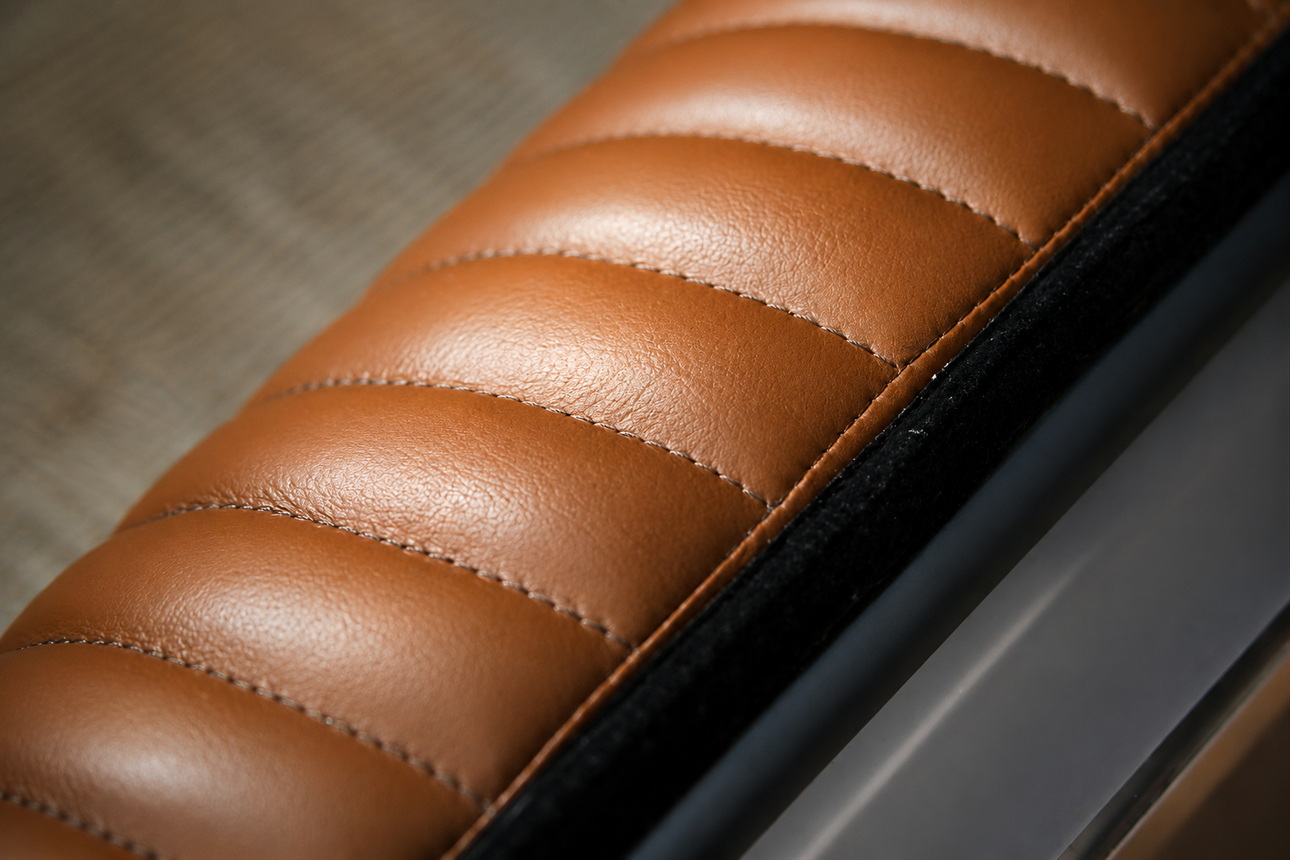
In 2014, a complete restoration was started by the new owner, carried out to a very high standard and completed in early summer 2021. His accident-free example from the former Monteverdi collection, in first-class original condition, served as the reference model for the bodywork restoration. Consequently, the intricate front end has been restored exactly to the original specifications – something that is not the case with many restored vehicles. The extensive body restoration was carried out by a highly experienced body restoration workshop in Hamburg. Attention has also been paid to the smallest details in the interior: the leather is in the original Iso colour ‘Havanna’, with a glossy patina, and the seat backs feature embossing based on the original Bertone design. The entire mechanical system has also been overhauled accordingly. This extensive work is documented with numerous photos and invoices.
Once the restoration was complete, the sports car was sold to an automobile enthusiast in Hamburg, who still owns the Iso to this day. Due to a lack of time, he would like to pass the car on to someone who wants to use, drive and enjoy this racy sports coupé.
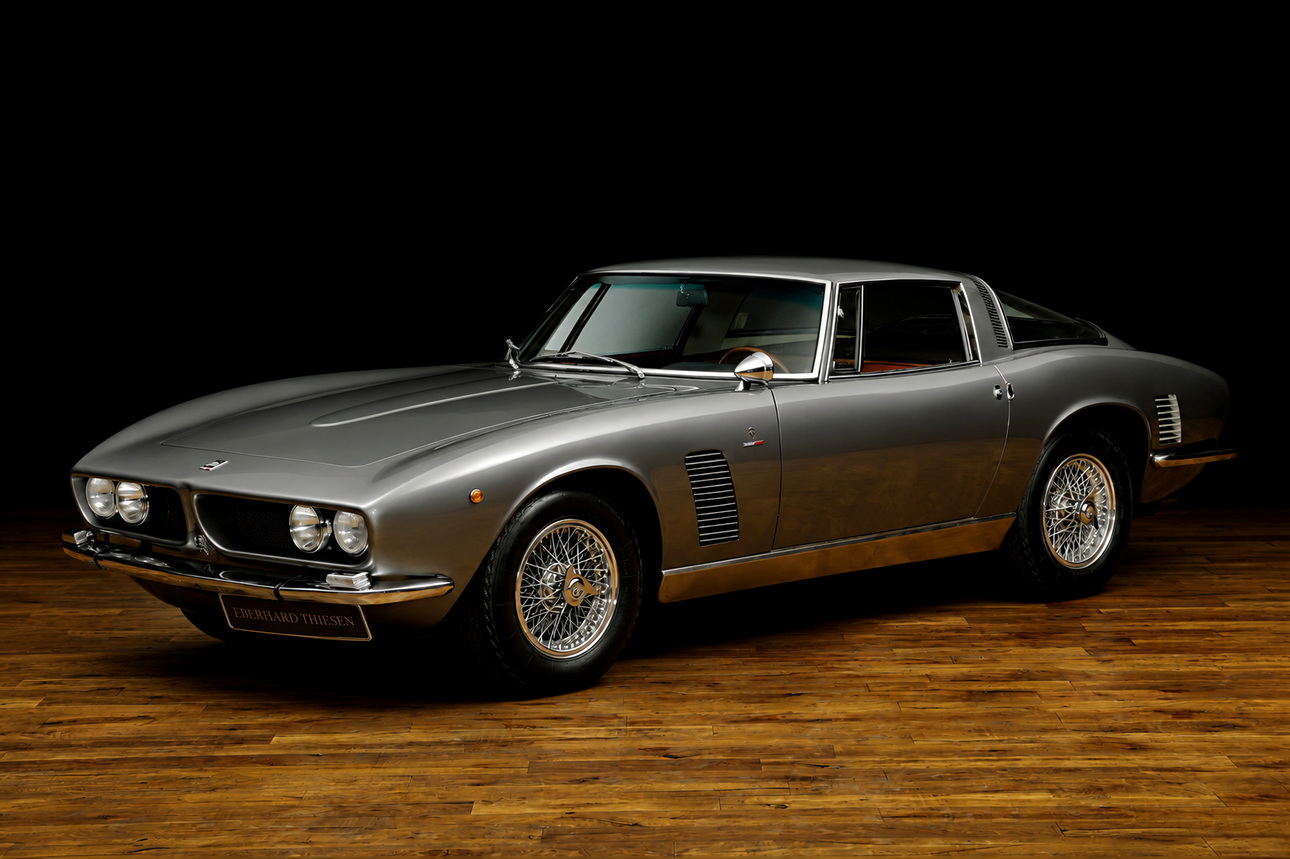
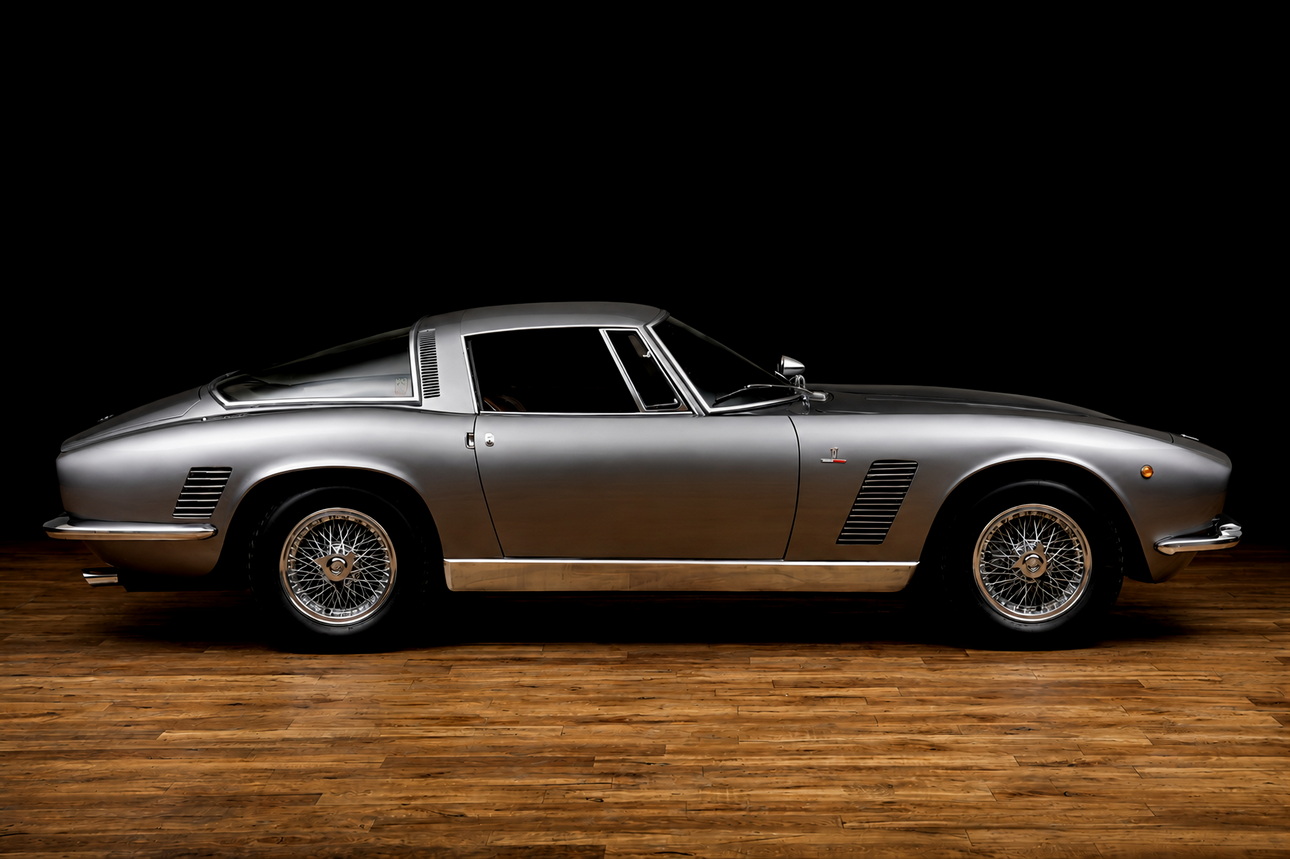
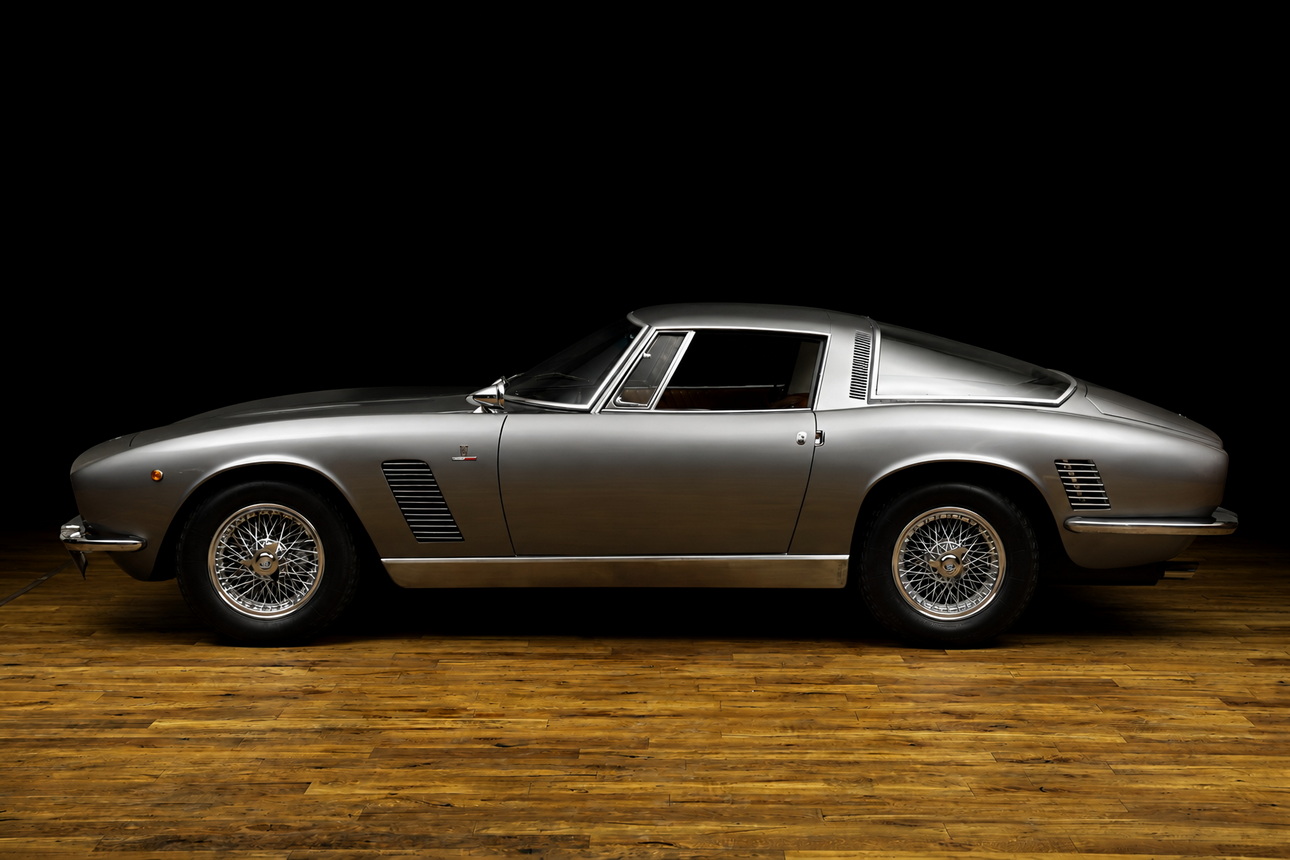
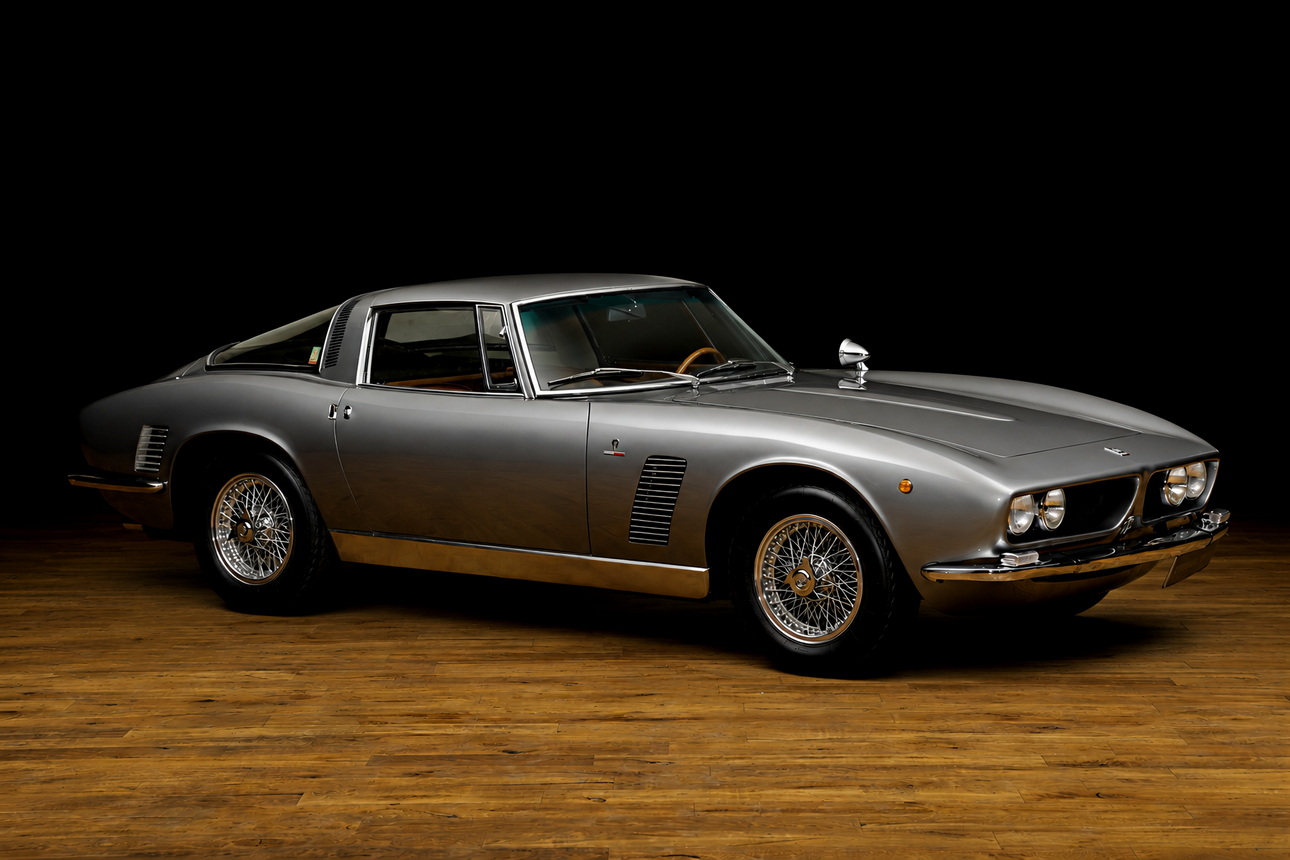
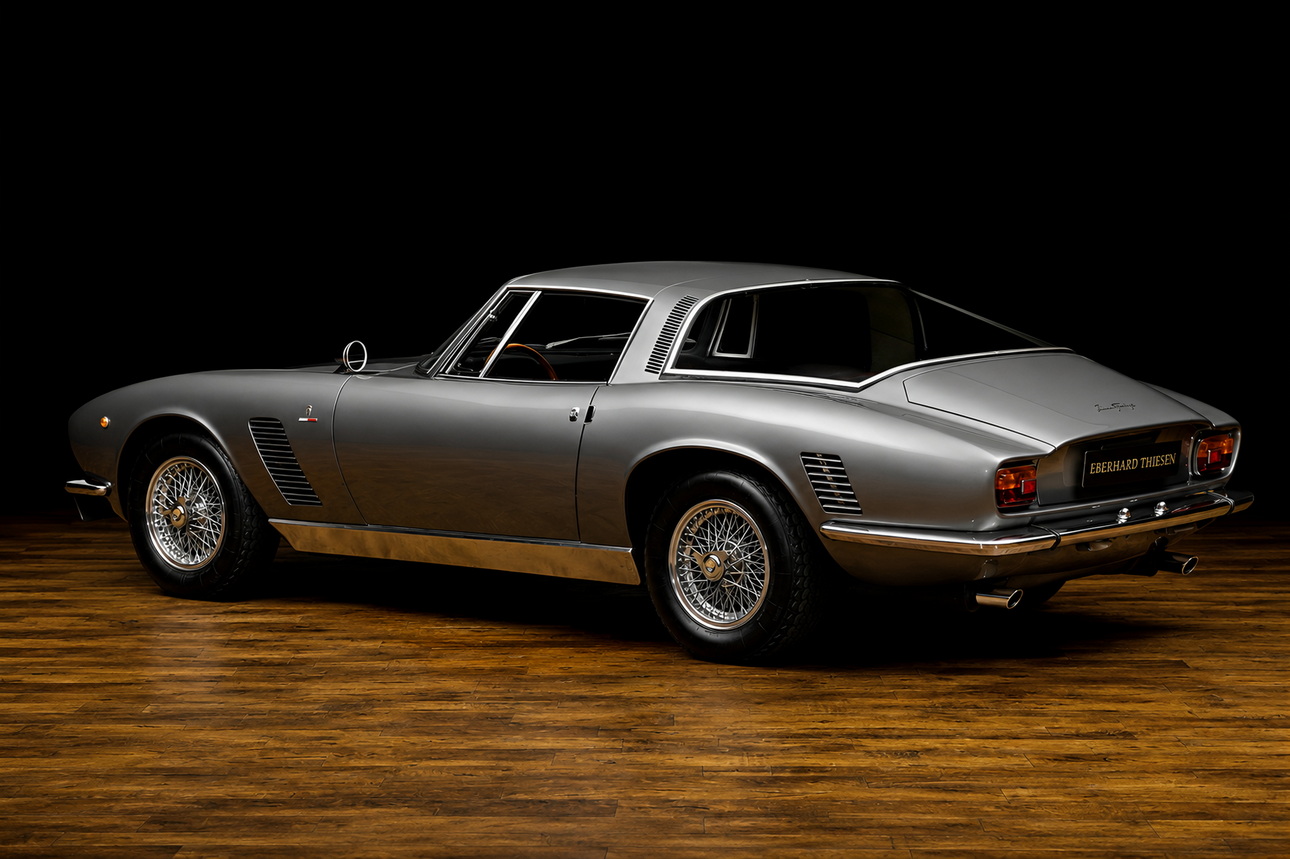
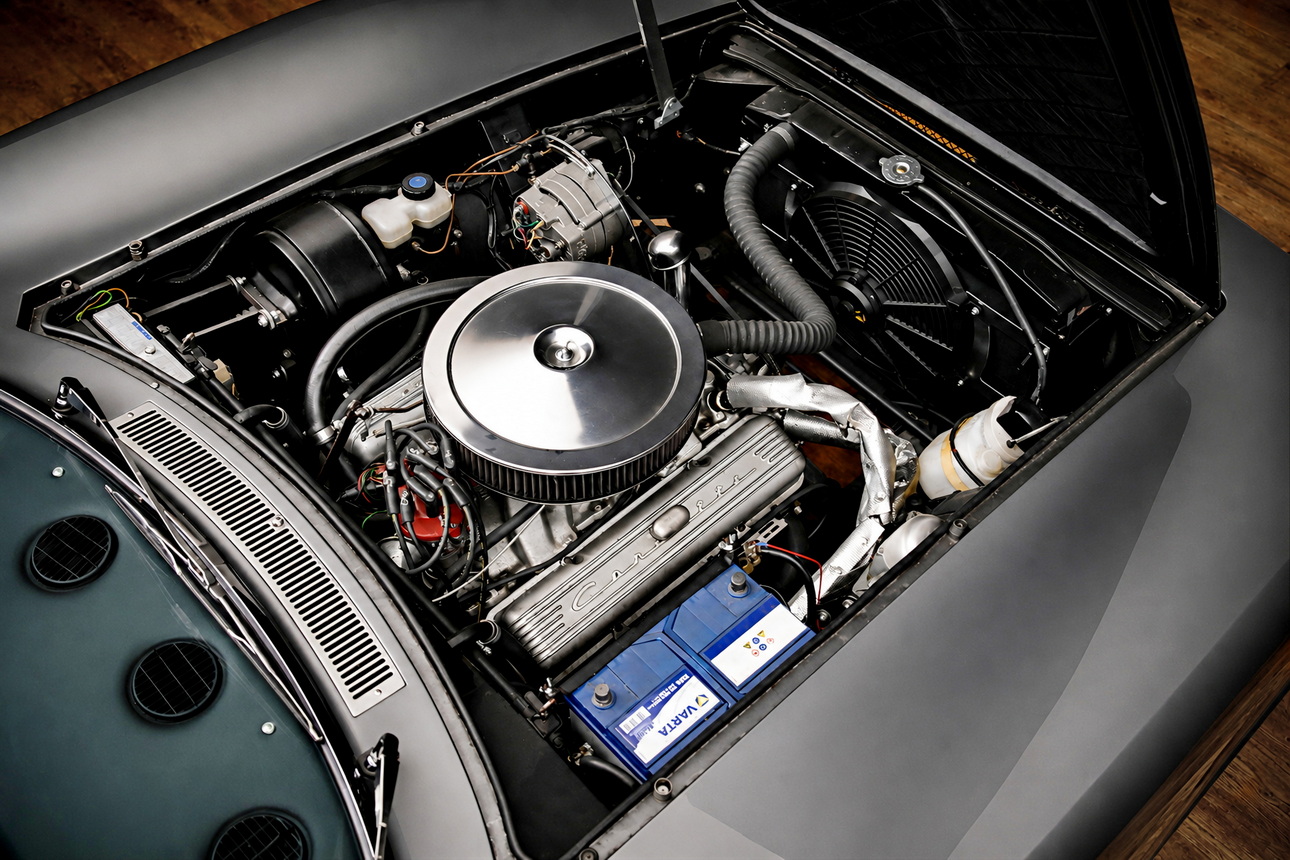
This outstanding Iso Grifo GL 350 impresses with its high-quality restoration, carried out with great attention to detail, as well as its excellent, overhauled mechanical components. According to the data card, this example still features its original engine (‘matching numbers’) and a 5-speed manual gearbox. The attractive, stylish colour combination of Grigio Medio Metallic with a brown leather interior lends the sports car a timeless yet sophisticated touch. The chrome-plated Borrani cross-spoke wheels with centre locks complement this perfectly.
An Iso Grifo that has been so painstakingly rebuilt is a unique opportunity – particularly as it is a rare example from the ‘limited’ pre-production run, a pure two-seater, and the first car launched on the German market.
An Iso Grifo is one of the most fascinating sports cars in Italian motoring history. It combines Italian Grandezza and la Dolce Vita with reliable, powerful US drive technology – a highly successful combination that particularly enhances drivability and driving pleasure. Nevertheless, an Iso Grifo is more about understatement than a showy presence. So, whilst driving an Iso Grifo, you’re always stylish and understated, yet thanks to its ‘exotic’ status, you’re always the centre of attention.
Model History
The prototype of the Grifo was presented by founder Renzo Rivolta's new brand Iso Rivolta at the Turin Motor Show at the end of 1963: a new two-seater Gran Turismo created by Giogetto Giugiaro, the head of design at Bertone. Its technical and conceptual development had been significantly influenced by Giotto Bizzarrini – a former Ferrari engineer who had developed a number of top cars in Modena. The name ‘Grifo’ is the Italian word for the bird of prey, the griffin.
After the four-seater coupé Iso Rivolta IR 300 from 1962, the conceptually very similar Iso Grifo was the brand's second model, but with a sportier design. The elegant fastback lines with the panoramic rear window and the long bonnet were a great attraction, so that Renzo Rivolta, as the owner of ‘ISO Automotoveicoli’, rightly considered himself to have arrived in the top league of Italian sports car manufacturers. Series production began in 1964/1965 with small numbers.
On the engine side, the basic model from 1965 to 1972 was the Iso Grifo GL 300 or GL 350, which did not have a capricious Italian in-house development, but a 5.4-litre V8 from the Chevrolet Corvette from General Motors. Depending on the specification, the engine output was between 300 and 395 hp. The GL 300 had around 300 hp and the GL 350 a corresponding 350 hp. The latter variant reached a speed of just under 250 km/h.
The “7 Litri” was the non plus ultra of the first series and was launched in 1968. Its 7-litre V8 version produced almost 400 hp and caused a sensation with a top speed of almost 300 km/h. The successor model to the ‘7 Litri’ from 1970 to 1972 was the Grifo ‘Can Am’ with a 7.4-litre version of the same engine, which produced 406 hp. At the same time, there was a 5.7-litre version of the Chevrolet Turbofire with outputs between 300 and 365 hp.
The hybrid combination was quite popular at the time and allowed the driver a comparatively relaxed enjoyment, as the potent US engine had already been tried and tested thousands of times and was therefore recognised as uncomplicated. This sophisticated drive technology was combined with the good attributes that Italy had to offer: design, style and craftsmanship.
From 1965 to 1974, a total of 412 Iso Grifo examples were manufactured, 70 of which were the ‘7 Litri’ and 25 the ‘Can Am’.
This Automobile
According to the available build sheet, this Iso Grifo GL 350 was completed at the factory in May 1966. It is an early model from the pre-production series, which were still manufactured by Bertone. These were strictly two-seaters, with the spare wheel concealed within the passenger compartment directly above the rear axle and accessible from the boot. This particular car was the first to be delivered to the German market – supplied to the German general importer, Auto Becker, in Düsseldorf. The colour scheme was ‘Oro Longchamps’ (gold metallic) with a red leather interior. The specification included a high-output engine (‘Elaborato’), a long-ratio rear axle (2.88:1) and spoke wheels.
In 1985, the Iso Grifo was imported to Sweden, where it had only a few owners. Then a well-known Iso enthusiast – and savvy expert – from the Hamburg area discovered the Grifo in Stockholm and purchased the sporty Gran Turismo in 2011.
In 2014, a complete restoration was started by the new owner, carried out to a very high standard and completed in early summer 2021. His accident-free example from the former Monteverdi collection, in first-class original condition, served as the reference model for the bodywork restoration. Consequently, the intricate front end has been restored exactly to the original specifications – something that is not the case with many restored vehicles. The extensive body restoration was carried out by a highly experienced body restoration workshop in Hamburg. Attention has also been paid to the smallest details in the interior: the leather is in the original Iso colour ‘Havanna’, with a glossy patina, and the seat backs feature embossing based on the original Bertone design. The entire mechanical system has also been overhauled accordingly. This extensive work is documented with numerous photos and invoices.
Once the restoration was complete, the sports car was sold to an automobile enthusiast in Hamburg, who still owns the Iso to this day. Due to a lack of time, he would like to pass the car on to someone who wants to use, drive and enjoy this racy sports coupé.
This outstanding Iso Grifo GL 350 impresses with its high-quality restoration, carried out with great attention to detail, as well as its excellent, overhauled mechanical components. According to the data card, this example still features its original engine (‘matching numbers’) and a 5-speed manual gearbox. The attractive, stylish colour combination of Grigio Medio Metallic with a brown leather interior lends the sports car a timeless yet sophisticated touch. The chrome-plated Borrani cross-spoke wheels with centre locks complement this perfectly.
An Iso Grifo that has been so painstakingly rebuilt is a unique opportunity – particularly as it is a rare example from the ‘limited’ pre-production run, a pure two-seater, and the first car launched on the German market.
An Iso Grifo is one of the most fascinating sports cars in Italian motoring history. It combines Italian Grandezza and la Dolce Vita with reliable, powerful US drive technology – a highly successful combination that particularly enhances drivability and driving pleasure. Nevertheless, an Iso Grifo is more about understatement than a showy presence. So, whilst driving an Iso Grifo, you’re always stylish and understated, yet thanks to its ‘exotic’ status, you’re always the centre of attention.
Model History
The prototype of the Grifo was presented by founder Renzo Rivolta's new brand Iso Rivolta at the Turin Motor Show at the end of 1963: a new two-seater Gran Turismo created by Giogetto Giugiaro, the head of design at Bertone. Its technical and conceptual development had been significantly influenced by Giotto Bizzarrini – a former Ferrari engineer who had developed a number of top cars in Modena. The name ‘Grifo’ is the Italian word for the bird of prey, the griffin.
After the four-seater coupé Iso Rivolta IR 300 from 1962, the conceptually very similar Iso Grifo was the brand's second model, but with a sportier design. The elegant fastback lines with the panoramic rear window and the long bonnet were a great attraction, so that Renzo Rivolta, as the owner of ‘ISO Automotoveicoli’, rightly considered himself to have arrived in the top league of Italian sports car manufacturers. Series production began in 1964/1965 with small numbers.
On the engine side, the basic model from 1965 to 1972 was the Iso Grifo GL 300 or GL 350, which did not have a capricious Italian in-house development, but a 5.4-litre V8 from the Chevrolet Corvette from General Motors. Depending on the specification, the engine output was between 300 and 395 hp. The GL 300 had around 300 hp and the GL 350 a corresponding 350 hp. The latter variant reached a speed of just under 250 km/h.
The “7 Litri” was the non plus ultra of the first series and was launched in 1968. Its 7-litre V8 version produced almost 400 hp and caused a sensation with a top speed of almost 300 km/h. The successor model to the ‘7 Litri’ from 1970 to 1972 was the Grifo ‘Can Am’ with a 7.4-litre version of the same engine, which produced 406 hp. At the same time, there was a 5.7-litre version of the Chevrolet Turbofire with outputs between 300 and 365 hp.
The hybrid combination was quite popular at the time and allowed the driver a comparatively relaxed enjoyment, as the potent US engine had already been tried and tested thousands of times and was therefore recognised as uncomplicated. This sophisticated drive technology was combined with the good attributes that Italy had to offer: design, style and craftsmanship.
From 1965 to 1974, a total of 412 Iso Grifo examples were manufactured, 70 of which were the ‘7 Litri’ and 25 the ‘Can Am’.